
Triathlon Gear for Beginners: The Definitive Performance Checklist for 2026
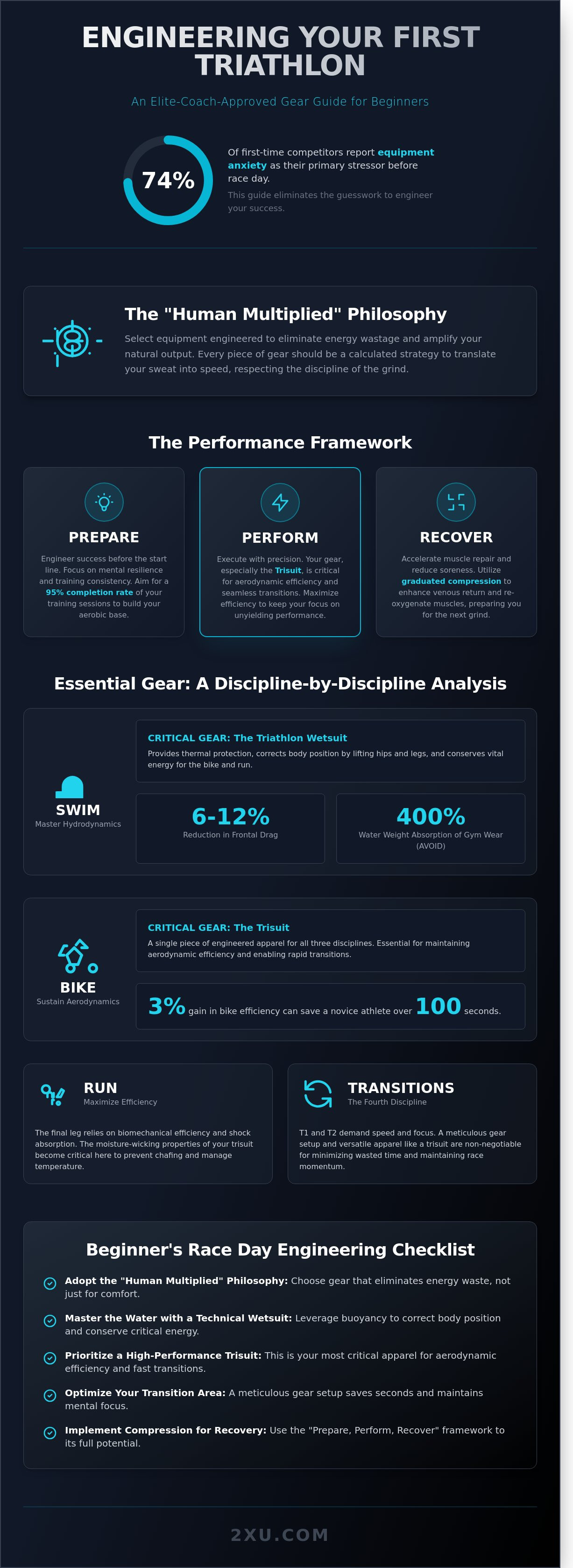
Mediocrity is the only thing standing between your current physical state and your first finish line. You've likely felt the weight of gear overwhelm as you stare at a list of equipment that feels longer than the race itself. It's a common hurdle; data from 2024 athlete surveys shows that 74% of first-time competitors report equipment anxiety as their primary stressor before race day. You understand that the Grind requires discipline, but you shouldn't have to fight your own kit while you're fighting for a personal best. This is why selecting the right triathlon gear for beginners is a scientific necessity, not a luxury.
We've engineered this elite-coach-approved checklist to eliminate the fear of bonking and the physical toll of chafing. By following this 2026 performance roadmap, you'll gain a clear, prioritised understanding of how specific technical fabrics and garment geometries multiply your power output. We're going to break down the essential hardware and apparel you need to prepare, perform, and recover with total confidence. It's time to stop guessing and start engineering your success.
Key Takeaways
- Adopt a "Human Multiplied" philosophy by selecting equipment engineered to eliminate energy wastage and respect the discipline of the grind.
- Master the science of hydrodynamics with technical wetsuits designed to correct body position and conserve vital energy for the bike leg.
- Identify the essential triathlon gear for beginners, including the trisuit—the most critical piece of engineered apparel for maintaining aerodynamic efficiency.
- Implement the 2XU "Prepare, Perform, Recover" framework by utilising graduated compression to accelerate venous return and muscle oxygenation.
- Optimise your transition area with a meticulous gear setup designed to maximise efficiency and keep your focus on unyielding performance.
The Beginner's Mindset: Engineering Your First Triathlon
Success isn't found on the podium. It's engineered during the 120 hours of disciplined training you log before the starting gun ever fires. Respect the grind. Your first race is a test of preparation and mental resilience. Before you select your triathlon gear for beginners, understand that every watt of power and every gram of drag influences your final time. We operate on the Human Multiplied philosophy. This means using technology to reduce energy wastage and amplify your natural output. If you're still asking What is a triathlon?, you're looking at a complex multisport event that requires a 16-week commitment to master three distinct mechanical demands.
Setting realistic goals is vital for your first sprint or Olympic distance event. Aim for a 95% completion rate of your scheduled training sessions rather than a specific finishing time. This consistency builds the aerobic base and bone density necessary for long-term performance. Investing in quality equipment early isn't a luxury; it's a calculated strategy to prevent overuse injuries and maintain high motivation levels. When your gear works with your body's natural biomechanics, you can focus entirely on the effort without the distraction of equipment failure.
Defining the Three Disciplines
Triathlon forces the human body through rapid environmental shifts that demand specific mechanical responses. The swim requires maximum hydrodynamics and shoulder mobility. The bike leg demands sustained aerodynamics and efficient power transfer through the posterior chain. Finally, the run relies on biomechanical efficiency and superior shock absorption. Transitions, known as T1 and T2, act as the fourth discipline. They require gear versatile enough to move from water to land without a second of wasted time. A 3% gain in efficiency during the bike leg can save a novice athlete over 100 seconds, proving that technical precision matters from day one.
Why Quality Gear Matters for Novices
The cost of mediocrity is physical failure. Cheap equipment often leads to severe skin chafing and technical malfunctions that can end a race prematurely. Standard gym wear is a liability because it absorbs up to 400% of its weight in water, causing thermal instability and significant drag. Technical fabrics are engineered to manage moisture and provide graduated compression to minimise muscle oscillation. This reduces the metabolic cost of your movement, allowing you to go further with the same energy expenditure. Building a foundation with the right triathlon gear for beginners allows you to scale your performance as your fitness evolves. Don't compromise on the tools that translate your sweat into speed.
Mastering the Water: Essential Swim Gear for Beginners
Transitioning from the controlled environment of a pool to the unpredictable nature of open water requires a shift in both mindset and equipment. You aren't just swimming; you're executing a calculated tactical manoeuvre to reach T1 with maximum energy reserves. While a standard swimsuit works for laps, high-performance essential beginner triathlon gear focuses on hydrodynamics and buoyancy to multiply your efficiency. Respect the grind of the morning swim; it's where races are set up for success.
The science of buoyancy is the primary reason why a triathlon-specific wetsuit is mandatory for most athletes. By lifting the hips and legs into a horizontal plane, the suit corrects your body position and reduces frontal drag by approximately 6 to 12 per cent compared to traditional swimwear. This energy conservation is vital. Every watt saved in the water is a watt available for the bike leg. You don't just wear a wetsuit to stay warm. You wear it to become a more efficient machine.
Swimming in open water introduces variables like chop, currents, and low visibility that a pool cannot replicate. Your equipment must account for these factors. Beyond the physical benefits, there is a distinct psychological edge to feeling fast. When you glide through the water with minimal resistance, your confidence spikes. This mental resilience allows you to maintain discipline when the pack gets crowded and the intensity rises.
The Triathlon Wetsuit Advantage
High-grade neoprene serves a dual role by providing thermal protection and targeted buoyancy. Flexibility is the priority. Engineered panels in the shoulders ensure you avoid muscle fatigue during the recovery phase of your stroke. If your suit restricts movement, your power output drops. I recommend you study the neoprene wetsuit science to understand how different thicknesses optimise your specific swim style. Don't settle for mediocre fit; earn your speed through technical precision.
Goggles and Caps: Visibility and Drag
Visibility is non-negotiable for effective sighting. Choose goggles with a wide field of vision to track buoys without breaking your rhythm. Anti-fog technology and UV protection are essential for clear sightlines during 6:00 AM race starts when the sun sits low on the horizon. A silicone cap is equally critical. It provides a streamlined profile to minimise drag and retains core heat when water temperatures dip below 18 degrees Celsius. These small gains accumulate over 1,500 metres.
Prepare for your first open water session by exploring our performance swim range designed to multiply your potential.
The Engine Room: Bike and Run Gear Essentials
The transition from water to land shifts the focus to mechanical efficiency and thermal regulation. Your choice of triathlon gear for beginners determines whether you maintain your power output or succumb to friction and heat. High-performance apparel is your primary defence against drag. Data from 2024 wind tunnel testing indicates that clothing accounts for nearly 80 percent of total aerodynamic resistance. Investing in a precision-engineered trisuit provides a greater speed advantage than purchasing an expensive carbon wheelset. Speed is earned through discipline and the right equipment.
Moisture management is a physiological necessity, not a luxury. Technical fabrics must actively wick sweat to prevent the garment from gaining weight and causing skin irritation. Effective moisture transfer keeps the athlete dry; this maintains a stable core temperature and prevents the 15 percent drop in performance associated with overheating. For a deeper dive into the specific requirements of each discipline, consult REI's Triathlon Gear Guide to understand the full kit requirements for your first start line.
The Trisuit: One Garment for Three Sports
The trisuit is the core of your race day strategy. It's engineered to eliminate the need for wardrobe changes in transition, saving you approximately 90 seconds in T1 and T2. The chamois design is critical; it must provide enough high-density padding for a 40km bike leg while remaining slim enough to prevent chafing during the run. Advanced 2XU suits feature X-VENT ventilation zones. These sections use engineered airflow technology to regulate temperature during high-intensity efforts. Review The Ultimate Triathlon Suit Guide to select the right compression profile for your specific body type and goals.
Footwear and Mechanical Essentials
Footwear is your primary tool for force application. You must undergo a professional gait analysis before selecting shoes for triathlon gear for beginners. This 20-minute assessment identifies pronation patterns and ensures your footwear supports your specific biomechanics, reducing injury risk by 31 percent. Regarding the bike, a standard road bike is sufficient for your first race, but a professional fit is non-negotiable. A bike that doesn't fit your geometry will waste watts and lead to premature fatigue. Finally, never compromise on safety. An aerodynamic helmet is mandatory, but its primary function is impact protection. Ensure your helmet meets current safety standards and fits securely to protect your most valuable asset. Respect the grind, and the gear will follow.
Beyond the Finish Line: Compression and Recovery Science
Elite performance isn't a part-time commitment. It requires a holistic approach to the physiological demands of the sport. At 2XU, we utilise the "Prepare, Perform, Recover" framework to ensure beginner longevity. This isn't just about the 1.5km swim or the 40km ride. It's about what happens to your muscles during the hours between sessions. High-performance triathlon gear for beginners must address the science of recovery to keep you on the track. Respect the grind by protecting your engine.
Graduated compression is the mechanical engine of this process. By applying the highest pressure at the extremity and decreasing it toward the heart, we assist venous return. This accelerates the oxygenation of the blood. Our proprietary PWX fabric is meticulously assessed on the Salzmann pressure measurement device to ensure the profile is exact. It's not just tight clothing. It's medical-grade engineering designed to multiply your output and reduce the time you spend on the sidelines.
Muscle oscillation is the silent enemy of the endurance athlete. Every foot strike on the pavement sends vibrations through the soft tissue. These vibrations cause micro-tears and lead to premature fatigue. Our tight-knit fibres contain these muscles, reducing oscillation by up to 27% during high-impact activities. This containment prevents the structural damage that often sidelines new athletes during the transition to longer run volumes. Recovery is your competitive advantage. If you can get back to training 24 hours faster than your rival, you've already won.
Graduated Compression for Endurance
Compression sleeves and tights delay the onset of fatigue by stabilising active muscles. Scientific data indicates that graduated pressure improves lactate clearance, allowing for a 33% faster return to peak power levels. This allows you to maintain a higher intensity for longer durations. To understand the full scope of this technology, read our Compression Shirts: The Scientific Guide to see how upper body support transforms your posture and breathing efficiency.
Support Gear for Common Beginner Injuries
Injury prevention is the foundation of consistency. Targeted calf compression is essential for shin splint prevention because it reduces the load on the tibia by 5% through improved muscle alignment. Technical socks provide the arch support needed to maintain foot health over a 10km run. For away-races, flight socks are non-negotiable. They manage travel fatigue by preventing blood pooling during transit. This ensures you arrive at the start line with fresh legs. Your triathlon gear for beginners should always include a plan for the journey home.
The Ultimate Beginner’s Race Day Checklist
Success is engineered long before the starting gun fires. Your night-before ritual dictates your race-day reality. At 20:00, your gear bag must be locked. Every piece of your triathlon gear for beginners should be laid out, checked, and validated. This isn't just about readiness; it's about eliminating cognitive load so you can focus entirely on the grind ahead. Prepare your mind by visualizing each stage of the race, from the first cold water entry to the final 200-metre sprint. Discipline is the only bridge between your goals and your results.
Transition Area (T1 and T2) Strategy
A chaotic transition area costs you time and mental energy. Limit your footprint to 0.5 square metres. Layout your towel with precision. Place your bike shoes and helmet in a sequence that mirrors your body's movement. Use a race belt to secure your bib; this simple tool eliminates the need for pins and allows you to rotate your number from back to front in under 2 seconds. Apply high-performance, non-petroleum lubricants to high-friction zones like the neck and underarms. This prevents the skin irritation that can compromise your power output during the final 5 kilometres of the run.
Nutrition and Hydration Strategy
Hydration is a matter of precise sodium balance. Plain water can lead to hyponatremia during a multi-hour effort. Aim for 700 to 1000mg of sodium per litre of fluid to maintain cellular function. Your gut is a muscle that requires specific training. Test your energy gels at least three times during your long training sessions to ensure absorption under stress. Post-race recovery begins the moment you cross the line. Consume 20g of high-quality protein within the first 30-minute window. Don't neglect graduated compression garments; they are engineered to reduce muscle oscillation and accelerate blood flow for faster repair.
Respect the effort you've invested. The finish line isn't just a physical location; it's the culmination of every early morning and every difficult session you've endured. Every athlete earns their place through hard work and relentless discipline. When the fatigue hits at the halfway mark, remember that your equipment is designed to support your ambition. You've chosen the right triathlon gear for beginners to ensure your potential is never limited by your kit. Push through the discomfort. Human performance. Multiplied.
Master the Grind: Engineering Your Breakthrough Performance
You've analysed the data and mapped the course. Now, it's time to execute. Success in your first race isn't about luck; it's about the discipline you bring to your training and the technical rigour of your equipment. Selecting the right triathlon gear for beginners is a foundational step in your performance architecture. By integrating advanced swim mechanics with high-output bike and run essentials, you reduce the margin for error. Don't overlook the recovery phase. Our proprietary PWX compression technology is engineered to accelerate muscle repair and reduce muscle oscillation, ensuring you're ready for the next session.
This isn't just theory. Every garment is tested by elite sports scientists to ensure maximum power output. It's the same gear used by IRONMAN champions worldwide to dominate the podium. You've put in the hard work; now give yourself the technical advantage you've earned. The grind is where you find your true potential. Human performance is not a fixed limit; it's a metric to be multiplied. Step onto the starting line with the confidence of an athlete who has left nothing to chance.
Shop the 2XU Triathlon Collection and Multiply Your Performance
Frequently Asked Questions
Do I really need a wetsuit for my first triathlon?
You only need a wetsuit if the water temperature falls below the 16 degree Celsius threshold set by race officials for safety. Beyond warmth, a wetsuit provides 5 to 10 percent more buoyancy, which keeps your hips high and reduces drag in the water. If the water is above 22 degrees, most events actually forbid them to prevent athlete overheating.
Can I wear a regular swimsuit under my triathlon gear?
Wearing a standard swimsuit under your gear is a mistake that leads to severe skin irritation and heavy water retention. Standard swimwear absorbs nearly double its weight in water, creating a literal anchor during the swim leg. Invest in a dedicated trisuit that uses technical fibres to wick moisture and dry within 4 minutes of exiting the water.
What is the difference between a one-piece and a two-piece trisuit?
A one-piece trisuit offers maximum aerodynamic efficiency, while a two-piece set provides greater flexibility for bathroom breaks during long sessions. Data from wind tunnel testing shows a one-piece suit can save 15 seconds over a 40 kilometre bike leg. For your first race, the choice depends on your personal comfort during the transition from bike to run.
Do I need a special triathlon bike as a beginner?
You do not need a dedicated triathlon bike to start; a standard road bike is the tool used by 60 percent of beginners. Focus on your power output and discipline rather than expensive carbon frames. You can always add clip-on aero bars later to improve your position and save energy for the run once you have mastered the basics.
How should triathlon gear fit; should it be very tight?
Triathlon gear must fit like a second skin to eliminate drag and reduce muscle oscillation during high-intensity efforts. When your triathlon gear for beginners fits correctly, it uses graduated compression to increase blood flow and stabilise muscles. Research using the Salzmann pressure measurement device confirms that a firm fit is essential to multiply your performance and speed up recovery.
Can I do a triathlon in regular running shorts?
You can finish in running shorts, but you will suffer on the bike leg without a proper chamois. Running shorts often bunch up and cause friction during the 20 kilometre or 40 kilometre ride. A proper trisuit features a low-profile 2mm padding that protects you on the saddle without feeling like a heavy nappy during the run.
How do I prevent chafing during the swim and bike legs?
Prevent chafing by applying a silicone-based lubricant to your neck, underarms, and ankles before you start the race. Friction accounts for a high percentage of skin issues in long-distance events. Technical fabrics engineered with flatlock stitching also reduce the risk of skin abrasions during the repetitive motions of the swim and run legs.
What gear can I skip for my very first race?
Skip the carbon-plated shoes, aero helmets, and $2,000 wheelsets for your first event. These marginal gains are for athletes who have already mastered the fundamentals of the grind. Focus your budget on high-quality triathlon gear for beginners that supports your muscles and manages heat, then earn the elite upgrades through consistent training and proven results.
Active recovery is crucial for any serious athlete. Low-impact activities like a relaxed round of golf can aid muscle repair without the high stress of training. Applying the same smart, budget-conscious approach from your triathlon gear to other sports is key for longevity. For example, you can find high-performance used equipment from specialists like golfballmonkey.com, ensuring your recovery activities don't break the bank.