
Neoprene Wetsuit Science: How It Multiplies Your Performance
In the unforgiving calculus of triathlon, the swim leg is a critical variable. Wasted energy in the water is a direct deficit on the bike and run, yet the science behind your speed often remains a black box of marketing claims and confusing technical jargon. Suboptimal body position and restricted movement are the silent saboteurs of your power output, turning a potential advantage into a fight for survival. The right neoprene wetsuit isn't just an advantage; it is a fundamental component of your race-day equation, engineered to deliver a tangible performance multiplier.
This is where mediocrity is eliminated. We are dissecting the advanced materials science that separates elite equipment from the rest. You will learn the precise physics of buoyancy and how proprietary coatings minimize surface drag to a near-frictionless state. Understand how strategically varied panel thickness enhances rotation and maximizes stroke efficiency, conserving critical energy stores. This knowledge is your new competitive edge, empowering you to select a wetsuit built for a faster split and justify your investment with undeniable results. Prepare to weaponize your swim.
Key Takeaways
- Discover how engineered buoyancy elevates your body position, creating a more efficient, streamlined profile to significantly reduce drag and increase speed.
- Understand the fundamental science of how neoprene's closed-cell molecular structure provides the critical thermal insulation required for peak performance.
- Learn to identify the advanced coatings and proprietary materials that differentiate an elite neoprene wetsuit from standard models.
- Decode wetsuit thickness ratings to strategically select a suit that balances thermal efficiency with the flexibility required for maximum power output.
The Fundamental Science: How Neoprene Works
To dominate in open water, an athlete must first master their environment. The foundation of this mastery lies in the advanced material science of the modern neoprene wetsuit. At its core, neoprene is a closed-cell synthetic rubber-a foam material engineered by trapping millions of microscopic nitrogen gas bubbles within a durable polymer matrix. This unique molecular structure is not accidental; it is precisely designed to deliver three critical performance advantages: unparalleled thermal insulation, strategic buoyancy, and dynamic flexibility. While open-cell neoprene exists for specialized deep-water diving, the closed-cell variant offers the superior durability and hydrodynamic surface essential for high-output swimming, triathlon, and surfing.
The Principle of Thermal Insulation
A high-performance wetsuit does not keep you dry; it leverages a controlled, thin layer of water to maintain optimal body temperature. Upon entry, a small amount of water permeates the suit, becoming trapped against the skin. Your body’s thermal energy rapidly heats this layer. The true innovation lies within the neoprene’s cellular structure. The trapped nitrogen bubbles, being poor conductors of heat, drastically reduce thermal conductivity and convective heat loss. This mechanism is the fundamental principle of How Wetsuits Work, establishing a stable microclimate that allows muscles to operate at peak efficiency, delaying fatigue and maximizing power output in cold conditions.
The Physics of Buoyancy
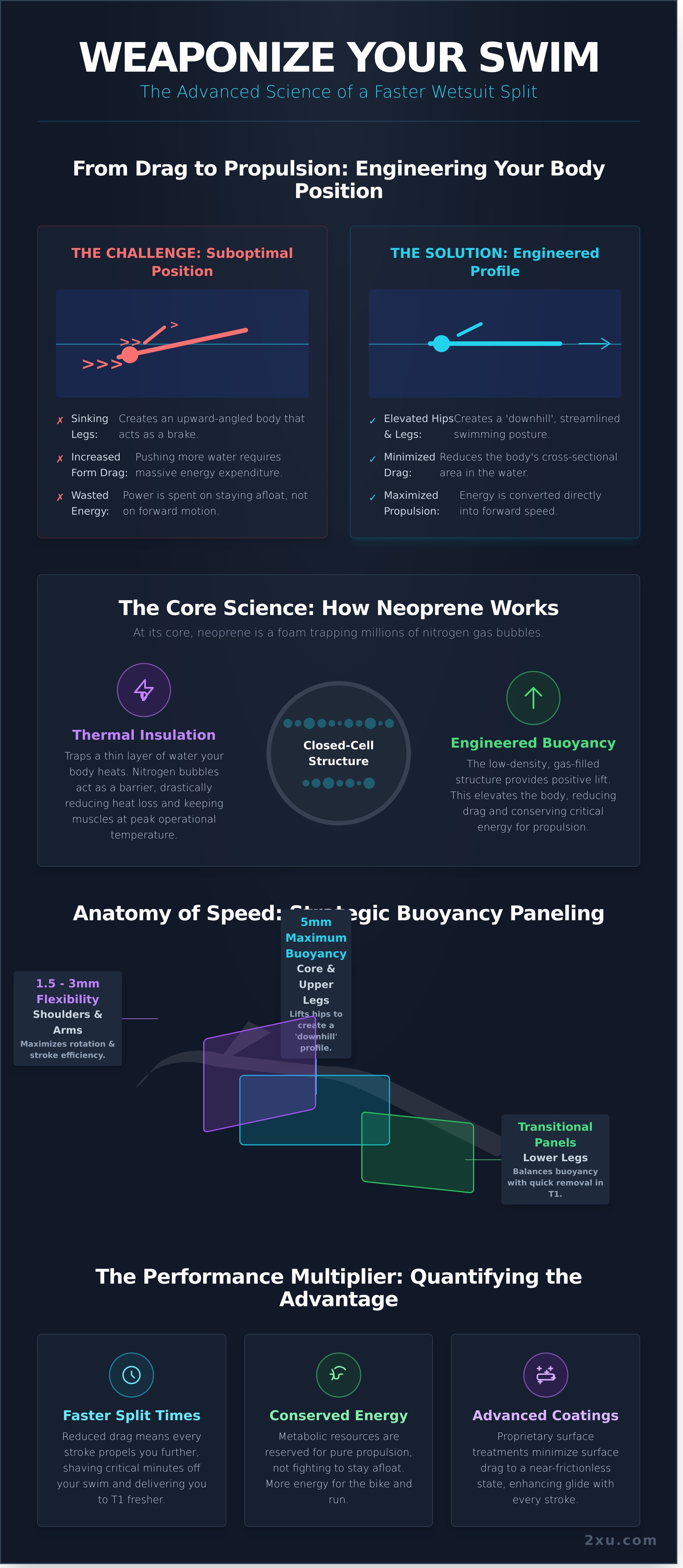
The same nitrogen-filled cells that provide insulation are also the engine of hydrodynamic advantage in a neoprene wetsuit. This gaseous composition significantly lowers the overall density of the athlete-plus-suit system, generating positive lift. In direct application of Archimedes' principle, the wetsuit increases the volume of water displaced, creating an upward buoyant force that elevates the core and legs higher in the water. This scientifically engineered lift is a critical competitive edge, promoting a more streamlined, horizontal body position. The result is a quantifiable reduction in form drag and surface friction, conserving precious energy and translating directly into faster, more efficient propulsion through the water with every stroke.
Engineering Buoyancy for a Faster Swim Split
Speed in open water is not merely a product of power; it is the result of superior efficiency. The greatest barrier to a faster swim split is hydrodynamic drag, and an athlete's body position dictates the magnitude of this resistive force. While the core function of neoprene is thermal protection, leveraging principles of The Science of Insulation, its strategic application in a performance neoprene wetsuit is engineered to manipulate hydrodynamics. By creating a higher, more streamlined profile in the water, we fundamentally reduce the energy required to overcome drag, directly translating to increased velocity.
Strategic Buoyancy Paneling
Many athletes, particularly those with a strong running background, fight a battle with sinking legs. This creates a suboptimal, upward-angled body position that acts like a brake. Our engineers counteract this with meticulously mapped buoyancy paneling. By incorporating maximum-buoyancy 5mm neoprene in the core and upper legs, we lift the hips and thighs, creating a 'downhill' swimming posture. This is balanced with proprietary technology like our Intermediate Zone Stretch (IZS) panels to ensure this lift doesn't compromise rotational freedom or stroke length.
Quantifying the Advantage: Reduced Drag and Energy Cost
A horizontal body profile is the single most effective way to minimize form drag. By elevating the lower body, a 2XU neoprene wetsuit dramatically reduces the body's cross-sectional area pushing against the water. This optimization has a dual benefit:
- Reduced Drag: Less resistance means every stroke propels you further for the same energy output.
- Conserved Energy: Your metabolic resources are no longer wasted on fighting to stay afloat. This energy is now available for pure propulsion.
The cumulative effect is profound. Scientific analysis and athlete data consistently demonstrate that this optimized body position can shave critical minutes off an IRONMAN-distance swim, delivering you to T1 fresher and faster than the competition.
Advanced Neoprene Technologies and Coatings
Mediocrity is not an option. While standard neoprene provides a baseline of insulation and flexibility, elite athletic performance demands materials engineered for superior output. The difference between a standard and a high-performance neoprene wetsuit is rooted in advanced material science-proprietary rubbers, hydrodynamic coatings, and internal liners all working in synergy to multiply your power and efficiency in the water.
Yamamoto Neoprene: The Performance Standard
At the core of the world’s most advanced wetsuits is Yamamoto neoprene. Unlike conventional petroleum-based neoprene, Yamamoto is derived from limestone, resulting in a material with a 99.7% closed-cell structure. This uniform, high-density cell composition yields scientifically proven advantages:
- Lighter Weight: Maximizes mobility and reduces fatigue.
- Minimal Water Absorption: Ensures consistent buoyancy and weight throughout your performance.
- Superior Stretch & Memory: Provides a second-skin fit that moves with the body without losing its shape.
Hydrodynamic Coatings: Super Composite Skin (SCS)
To conquer the water, you must first overcome its resistance. Super Composite Skin (SCS) is a specialized coating applied to the neoprene’s surface, engineered to dramatically reduce friction. By creating an ultra-slick, water-repellent layer, SCS lowers the surface drag coefficient. This technology effectively allows the athlete to glide through the water with greater speed and less energy expenditure, turning powerful strokes into maximum forward momentum.
Internal Liners and Their Role in Performance
The interior of a wetsuit is as critical to performance as its exterior. Advanced internal jersey liners are not just for comfort; they are an engineered component designed to enhance flexibility and reduce transition times. These proprietary fabrics work in concert with the neoprene to allow for unrestricted movement through the shoulders and back. Our scientifically engineered 520% stretch liner, for example, provides unparalleled flexibility, ensuring your form remains powerful and efficient from start to finish. Explore the technology ingrained in every 2XU wetsuit and prepare to multiply your performance.
Decoding Wetsuit Thickness for Optimal Performance
A performance-engineered neoprene wetsuit is more than a barrier against the cold; it is a strategic tool. Its most critical specification is thickness, a variable that directly governs thermal insulation, buoyancy, and your hydrodynamic profile. Understanding how to decode and select the correct thickness is non-negotiable for any athlete serious about achieving peak output on race day.
Understanding Thickness Ratings
The numerical rating on a wetsuit, such as 5/3mm or 4/3mm, represents a blueprint for targeted performance. The first, larger number indicates the neoprene thickness in millimeters across the torso and core. This design maximizes thermal retention and buoyancy where it is most critical. The second, smaller number refers to the thickness of the panels on the arms, shoulders, and legs. This differential construction is a deliberate engineering choice: thinner, more flexible neoprene is utilized in high-mobility zones to ensure an unrestricted range of motion and a powerful, efficient swim stroke.
Matching Wetsuit Thickness to Water Temperature
Selecting the correct wetsuit is a data-driven decision based on environmental conditions. Your choice must align with water temperature to prevent hypothermia or overheating, both of which severely degrade athletic performance. Use this scientifically-backed framework as your guide:
- 5/3mm Wetsuit: Engineered for extreme cold, sub-60°F (15°C) water.
- 3/2mm Wetsuit: The optimal balance for temperate conditions, 60-70°F (15-21°C).
- 1.5/2mm Wetsuit (Sleeveless/Full): Designed for warmer water, 70°F+ (21°C+), where minimal insulation is required.
Crucially, always verify the specific regulations for your event. Sanctioning bodies like IRONMAN enforce strict rules on mandatory and optional wetsuit use based on official water temperatures.
The Strategic Trade-Off: Warmth vs. Flexibility
Every neoprene wetsuit design represents a calculated trade-off. While thicker neoprene provides superior thermal protection and increases buoyancy-lifting the body for a more efficient swimming position-it comes at a metabolic cost. Thicker material inherently possesses less elasticity, requiring greater force to stretch through each stroke cycle. This can lead to premature shoulder fatigue, compromising endurance over long distances.
This is why elite-level suits feature ultra-thin, hyper-flexible neoprene across the shoulders and lats. This advanced paneling minimizes resistance, maximizes power output, and preserves energy. Your performance demands nothing less. Find the wetsuit engineered for your race conditions.
Engineered for Victory: The Wetsuit Advantage
Understanding the science behind your gear is the first step toward unlocking superior performance. A wetsuit is far more than a layer of rubber; it is a meticulously engineered performance tool. The fundamental thermal properties of neoprene keep your muscles at optimal temperature, while strategically engineered buoyancy panels elevate your position in the water to conserve energy and increase speed. Combined with advanced hydrodynamic coatings that slice through drag, the right neoprene wetsuit transforms your biomechanics, turning potential into power.
2XU wetsuits are the embodiment of this science, constructed with industry-leading Yamamoto Neoprene and engineered with the strategic buoyancy paneling and hydrodynamic SCS coating required for maximum velocity. This is technology designed to deliver measurable results. Do not just accept your limits-shatter them.
Human Performance. Multiplied. Explore 2XU Triathlon Wetsuits and equip yourself with a proven scientific advantage. Your next personal best is waiting to be conquered.
Frequently Asked Questions
What is the primary difference between a triathlon neoprene wetsuit and a surf wetsuit?
Each suit is engineered for a different performance objective. A triathlon wetsuit is designed for speed and hydrodynamic efficiency, featuring an ultra-slick SCS coating to minimize drag and strategically placed buoyancy panels to optimize body position. Its primary function is to reduce swim times. In contrast, a surf wetsuit is built for durability and warmth, with a robust, fabric-lined exterior designed to withstand abrasion from the surfboard and repeated impact from waves, prioritizing resilience over pure speed.
Can you actually swim faster in a neoprene wetsuit, and if so, by how much?
Yes. The performance gains are scientifically validated and significant. An advanced neoprene wetsuit enhances speed through two core mechanisms: superior buoyancy and reduced hydrodynamic drag. Buoyancy lifts the legs and core, creating a more efficient, streamlined plane in the water. This optimization, combined with an SCS coating that repels water, measurably reduces friction. Athletes can expect a time savings of 5 to 15 seconds per 100 meters, a critical advantage in any competitive swim.
How does Yamamoto neoprene differ from standard neoprene, and is it worth the cost?
Yamamoto neoprene is derived from limestone, whereas standard neoprene is petroleum-based. This fundamental difference results in a higher closed-cell structure, making Yamamoto lighter, more buoyant, and significantly less water-absorbent. For the performance-driven athlete, the investment is justified by superior outcomes. The material's enhanced flexibility reduces muscular fatigue and improves range of motion, while its thermal efficiency allows for maximum power output in cold conditions. It is an investment in multiplying your performance.
Why do some wetsuits feel restrictive, and how does advanced neoprene solve this?
Restriction stems from inferior materials with low elongation properties and paneling that fails to map to the body's biomechanics. This directly impedes stroke mechanics and increases energy expenditure. Advanced neoprene, such as Yamamoto 40 and 45 cell, is engineered for unparalleled flexibility, offering up to 700% elongation. When integrated into an anatomically intelligent panel design, this material eliminates restriction in the shoulders and lats, ensuring maximum reach and power transfer with every stroke.
How should I care for my high-performance neoprene wetsuit to maximize its lifespan?
Meticulous care is non-negotiable to protect your performance equipment. Immediately after every use, rinse the suit thoroughly with fresh, cold water, both inside and out. Never use detergents, solvents, or hot water, as they will degrade the neoprene and its critically bonded seams. To dry, hang the suit inside-out on a wide-shouldered hanger away from direct sunlight or heat. This protocol is essential to preserve the material's integrity and engineered performance characteristics.
Does the hydrodynamic SCS coating wear off over time?
The Super Composite Skin (SCS) is an advanced surface coating and, like any high-performance layer, is subject to wear. Abrasion, improper handling-such as fingernail tears-and incorrect storage are the primary causes of degradation. While some wear is inevitable over the suit's lifespan, its hydrodynamic advantages are maintained for a significant duration with proper care. To maximize longevity, avoid all sharp or abrasive surfaces and follow a strict rinse-and-dry protocol after every use.