
Best Wetsuit Brands: A Performance Comparison for Triathletes
Your power output is finite. Your equipment's potential should not be. Yet when navigating the complex market of triathlon wetsuits, it's easy to drown in a sea of marketing hype and unsubstantiated claims. Distinguishing genuine performance engineering from clever branding is the critical challenge that stands between you and a new personal best. Making the wrong investment isn't just a financial loss-it's a direct impediment to your race-day goals.
This is not another superficial roundup. This is a definitive analysis engineered to identify the best wetsuit brands for the serious competitor. We dissect the proprietary materials, hydrodynamic advantages, and biomechanically-driven construction that deliver measurable results. Gain the intelligence to select the brand that aligns with your specific performance targets, justify your investment in superior technology, and exit the water with a quantifiable advantage. Prepare to multiply your performance.
Key Takeaways
- Master the core evaluation criteria-materials, hydrodynamics, and construction-to scientifically assess any wetsuit's performance potential.
- Go beyond marketing claims with an objective, data-driven comparison of the best wetsuit brands, pinpointing their unique technological advantages.
- Develop a strategic framework to select the ideal wetsuit by aligning advanced features with your specific swimming biomechanics and competitive goals.
- Gain a competitive edge by understanding the proprietary engineering and scientifically-validated technologies that define 2XU's performance-obsessed design philosophy.
Deconstructing Excellence: The Core Tenets of a High-Performance Wetsuit Brand
To identify the best wetsuit brands, one must look beyond marketing claims and dissect the underlying science of speed and efficiency. An elite Wetsuit is not merely apparel; it is a piece of engineered equipment designed to multiply human performance in the water. The difference between a market leader and the rest is a relentless investment in research and development. This analysis will focus on the core pillars that define a superior product: advanced materials, precision hydrodynamics, and uncompromising fit.
Material Science: Beyond Standard Neoprene
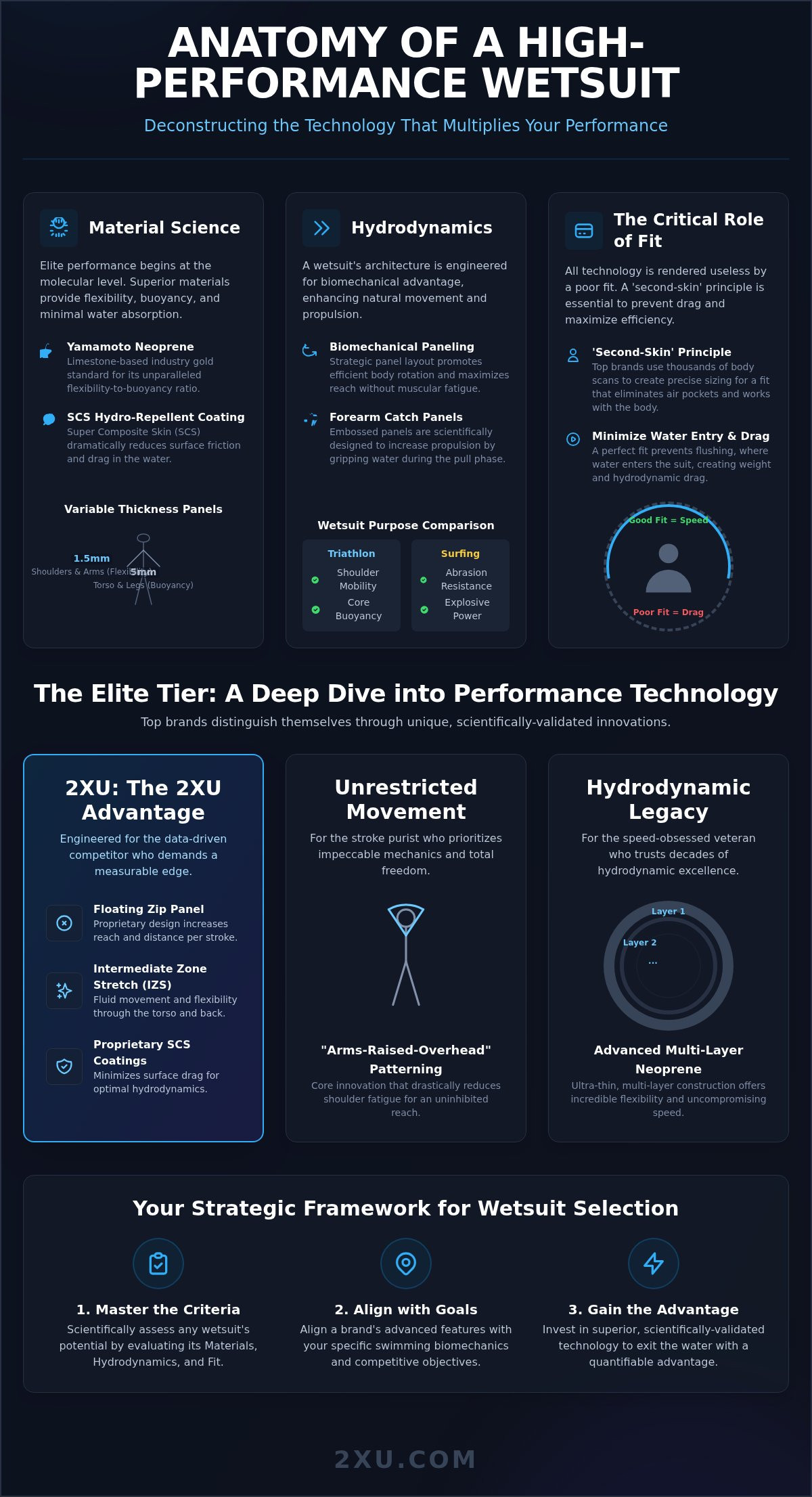
Elite performance begins at the molecular level. The industry gold standard is Yamamoto neoprene, a limestone-based material prized for its unparalleled flexibility-to-buoyancy ratio and closed-cell structure that absorbs minimal water. This advanced material is often enhanced with a proprietary SCS (Super Composite Skin) coating, a hydro-repellent layer that dramatically reduces surface friction and drag. Furthermore, top-tier suits utilize varied neoprene thicknesses-thicker panels on the torso and legs for buoyancy and core warmth, and thinner, more elastic panels around the shoulders and arms for unrestricted range of motion.
Hydrodynamics and Panel Construction
A wetsuit's architecture is engineered for biomechanical advantage. The strategic layout of neoprene panels is not aesthetic; it is designed to enhance an athlete's natural movement. This includes promoting efficient body rotation during a freestyle stroke and maximizing reach without muscular fatigue. Technologies like embossed forearm catch panels are scientifically designed to increase propulsion by gripping the water during the pull phase. This is why triathlon-specific cuts, which prioritize shoulder mobility and core buoyancy, differ fundamentally from surfing suits designed for explosive power and abrasion resistance.
The Critical Role of Fit and Sizing
All technology is rendered useless by a poor fit. The most advanced materials and hydrodynamic features cannot compensate for a suit that allows water to enter and create drag. The best wetsuit brands invest heavily in developing extensive and precise sizing charts based on thousands of athlete body scans. The objective is to achieve a 'second-skin' principle: a fit so exact that it minimizes water entry, eliminates air pockets, and provides compressive benefits without restricting breathing or movement. This meticulous approach ensures that the suit works with the body, not against it.
The Elite Tier: Top Wetsuit Brands for Triathlon & Open Water Swimming
When victory is measured in seconds, the equipment you choose is not an accessory-it is a critical component of your performance machine. In the fiercely competitive world of triathlon and open water swimming, a select few manufacturers have distinguished themselves as the best wetsuit brands, each pioneering unique technologies to shave time and maximize output. This analysis dissects the core philosophies of the elite tier, providing the data needed to align their engineered advantages with your specific physiological and performance goals.
2XU: Engineered for Multiplied Performance
2XU's approach is rooted in sports science and physiological validation. The brand’s philosophy dictates that a wetsuit must actively enhance performance, not merely provide buoyancy. This is achieved through proprietary technologies like the Floating Zip Panel for extended reach, Super Composite Skin (SCS) coatings to minimize surface drag, and Intermediate Zone Stretch (IZS) panels for fluid movement. Every element is engineered to optimize hydrodynamics and body position, directly influencing the Impact of Wetsuit Use on Swimming Performance. The ideal 2XU athlete is the data-driven competitor who demands a measurable edge and trusts in scientifically proven results.
Innovations for Unrestricted Arm Movement
One top-tier manufacturer has built its reputation on a singular obsession: eliminating the restriction of a traditional wetsuit to promote a faster, more natural swim stroke. Their core innovation involves patterning the suit with the arms raised overhead, completely redefining shoulder mobility. This design drastically reduces shoulder fatigue, allowing for an uninhibited reach. Complemented by strategic buoyancy placement along the body's longitudinal axis, these suits are engineered for swimmers who prioritize impeccable stroke mechanics and demand total freedom of movement through the water.
A Legacy of Hydrodynamic Excellence
Another pioneering brand, with decades of experience at the pinnacle of triathlon, has a philosophy built on a deep heritage of hydrodynamic excellence. They leverage this legacy to create suits that are uncompromisingly fast. Their constant innovation is evident in advanced materials, such as ultra-thin, five-layer neoprene that offers incredible flexibility without sacrificing thermal protection. Features like specialized quick-release panels are specifically designed for rapid removal, optimizing transition times. The ideal athlete for this brand is an experienced triathlete seeking race-proven technology from a name synonymous with podium finishes.
Balancing Speed, Comfort & Value
Further enhancing the elite tier, a leading brand has carved its place among the best wetsuit brands by meticulously balancing elite-level speed with exceptional comfort and value. This brand’s design philosophy centers on creating a high-performance experience that is accessible to a wide spectrum of athletes. Key technologies include advanced buoyancy panels-which trap air bubbles between fabric layers for superior lift-and signature quick-release cuffs for rapid transitions, demonstrating a commitment to race-day efficiency. This makes their suits an ideal choice for athletes, from determined beginners to seasoned pros, seeking top-tier features without compromise.
How to Select the Right Wetsuit Brand For Your Athletic Goals
Technological analysis is irrelevant without precise application. The superior wetsuit is not found in marketing, but in a systematic evaluation of your unique physiology, performance limiters, and race-day objectives. This framework moves you beyond brand noise to a definitive, data-driven decision, ensuring you select from the best wetsuit brands for your specific athletic profile.
Assess Your Swim Level and Profile
Your current athletic output dictates your technological needs. A candid assessment is your first step toward peak performance. Do not over-invest in features you cannot leverage or under-equip yourself for your ambition.
- Beginner: Your primary limiter is body position. Prioritize suits engineered with maximum buoyancy panels in the hips and legs to create an efficient, hydrodynamic profile and build muscular endurance.
- Intermediate: You require a synthesis of support and freedom. Seek wetsuits that balance targeted buoyancy with increased flexibility in the shoulders and lats, facilitating improved stroke mechanics without sacrificing core stability.
- Elite: Your focus is on marginal gains. Maximum flexibility for an unimpeded stroke, advanced hydrophobic coatings, and rapid-release ankle cuffs are non-negotiable. Every second is critical.
Match Brand Strengths to Your Weaknesses
The most advanced wetsuit is an engineered solution that directly counteracts your physiological weaknesses. Does inefficient body position drain your power reserves? Target brands renowned for proprietary buoyancy technologies like 2XU's Intermediate Zone Stretch (IZS) panels. If shoulder fatigue compromises your power output late in the swim, prioritize brands that engineer extreme mobility into their arm and shoulder construction. Identifying the correct technology is the critical variable in multiplying your performance.
Budget vs. Performance: A Realistic Framework
Investment must correlate directly with performance goals. While entry-level suits ($200-$400) provide core thermal protection and buoyancy, they lack the advanced materials that reduce drag and fatigue. Mid-range options ($400-$700) introduce more flexible neoprene and refined paneling. However, for the serious competitor, the elite tier ($700+) is where true innovation resides. These are the suits featured in expert reviews, like SwimSwam's breakdown of the Best Triathlon Wetsuits, because they utilize cutting-edge hydrodynamics and materials where victory is measured in fractions of a second. To make this elite technology more accessible, some retailers offer financing options through payment platforms like Strictly.
Find the 2XU wetsuit engineered for your performance level.
The 2XU Advantage: A Scientific Deep Dive into Performance Technology
Among the best wetsuit brands, 2XU distinguishes itself not merely through design, but through a relentless application of sports science and hydrodynamic engineering. The brand's philosophy, Human Performance. Multiplied., is evident in every panel and coating. This is not about comfort as a primary goal; it is about quantifiable speed. The following technologies are precisely why 2XU commands a premium-they are engineered to deliver faster swim splits by minimizing drag and maximizing power output.
Proprietary Yamamoto Neoprene & Hydrodynamic Coatings
At the core of every 2XU wetsuit is the world’s most advanced neoprene from the Yamamoto corporation. The use of premium grades like Yamamoto 45 Cell neoprene provides unparalleled flexibility and buoyancy. This material is then treated with a proprietary SCS (Super Composite Skin) hydrodynamic coating, a hydrophobic layer that actively repels water. The scientific result is a dramatic reduction in the surface friction coefficient, minimizing drag and allowing the athlete to glide through the water with superior efficiency.
Floating Zip Panel & CWEZ Technology
2XU directly targets biomechanical limiters with its innovative structural designs. The proprietary Floating Zip Panel is a prime example, engineered to decouple the zipper from the latissimus dorsi muscle. This design significantly enhances reach and freedom of movement during the catch phase of the stroke. This is complemented by the Embossed Concave Water Entrapment Zone (CWEZ) on the forearm. This textured panel is scientifically designed to increase surface area, creating greater purchase on the water to maximize propulsive power and increase distance per stroke.
Targeted Buoyancy and Body Positioning
Optimal body position is critical for swimming efficiency. 2XU achieves this through a system of precisely mapped buoyancy zones. By integrating thicker 3-5mm neoprene panels across the core and legs and thinner 1.5mm panels in the shoulders, the wetsuit actively elevates the swimmer's lower body. This creates a more streamlined, horizontal plane in the water, which drastically reduces form drag. For triathletes, this translates into significant energy conservation, preserving vital power for the bike and run legs. This meticulous engineering is what solidifies 2XU's position among the best wetsuit brands for performance-driven athletes.
Discover the full range of scientifically engineered wetsuits at 2xu.com.
The Final Decision: Multiply Your Performance
Selecting your next triathlon wetsuit is a critical performance decision. The analysis is clear: excellence is not accidental; it is engineered. Superior buoyancy, strategic flexibility, and advanced hydrodynamics are the core tenets that separate adequate gear from race-winning technology. Navigating the crowded field of the best wetsuit brands demands that you align this proprietary technology with your unique athletic goals. Your equipment must be as relentlessly committed to peak performance as you are.
This is the definitive advantage of 2XU. We don't just create wetsuits; we engineer performance systems. Constructed with scientifically proven Yamamoto neoprene and trusted by elite IRONMAN champions worldwide, every 2XU suit is a testament to data-driven results. Our proprietary technology is meticulously designed to reduce drag, enhance power output, and optimize your body position in the water, giving you a measurable advantage when every second counts. Don't just compete-dominate. Your new personal best is not a goal; it's an expectation.
Shop the 2XU Wetsuit Collection and Multiply Your Performance.
Frequently Asked Questions
What is the real difference between entry-level and elite wetsuit brands?
The primary differentiator among the best wetsuit brands is materials science and hydrodynamic engineering. Elite wetsuits utilize proprietary neoprene composites, like Yamamoto 45 cell, for unparalleled flexibility and buoyancy. They feature advanced panel construction, scientifically designed to enhance stroke mechanics and reduce drag coefficient. Entry-level suits use less advanced neoprene, prioritizing durability over measurable gains in speed and power output. The difference is a calculated investment in performance.
How long should a high-performance wetsuit from a top brand last?
The operational lifespan of a high-performance wetsuit is a function of use intensity and meticulous maintenance, not merely time. With proper care protocols-freshwater rinsing, correct drying, and storage-an elite suit should deliver optimal performance for 2 to 4 seasons of consistent use. Material degradation, particularly in high-flexibility zones like the shoulders and underarms, is the primary limiting factor. Exceeding this window risks compromised elasticity and reduced hydrodynamic efficiency.
Do wetsuit brands like 2XU, Roka, and Orca have different fits?
Yes, significant fit variations exist and are engineered for distinct anthropometric profiles. Each brand develops proprietary patterns based on extensive athlete data. For example, some brands may favor a longer torso design, while others engineer for broader shoulders. A correct, compressive fit is non-negotiable for performance, as it minimizes water ingress and maximizes hydrodynamic efficiency. It is imperative to consult brand-specific sizing charts to ensure an optimal, second-skin fit for your physique.
Can you use a triathlon wetsuit for surfing or other water sports?
This is not recommended. Triathlon wetsuits are engineered for a specific purpose: maximizing speed and flexibility for a forward swimming motion. Their exterior, often coated with SCS for reduced drag, is fragile and susceptible to abrasion from surfboards. Conversely, surfing wetsuits are built for durability and impact resistance, using tougher neoprene and reinforced panels. Using a triathlon suit for surfing will compromise its structural integrity and void its performance warranty.
What are the most important wetsuit technologies to look for in 2026?
In 2026, leading wetsuit technologies will be defined by advancements in material science and bio-integrated design. Look for suits utilizing graphene-infused linings for superior thermal regulation without added bulk. Expect to see increased use of air-cavity neoprene panels (like Yamamoto Aerodome) for targeted buoyancy. Furthermore, advanced hydrodynamic coatings that actively repel water at a molecular level will become the new standard for reducing surface friction and maximizing velocity in the water.
Why is Yamamoto neoprene considered the best material for performance wetsuits?
Yamamoto neoprene's superiority is rooted in its unique closed-cell structure, derived from limestone rather than petroleum. This results in a composition that is over 99.7% water-impermeable, offering higher thermal efficiency and buoyancy. Its nitrogen-gas-infused cells provide a superior stretch-to-memory ratio, ensuring maximum flexibility and power transfer through every stroke. This advanced material science translates directly into reduced fatigue and faster swim splits, making it the benchmark for elite performance.