
How to Care for Compression Garments: Protect Your Performance Investment
Your recovery is failing if your gear is failing. Treating elite compression like a standard gym shirt is a performance tax you can't afford to pay; it's a direct compromise on your physical potential. You demand excellence from your body every day, so it's only logical to demand the same from your equipment. It's a common frustration to see high-performance gear lose its graduated pressure or develop a permanent odour after only 45 training sessions. Mastering how to care for compression garments is the only way to protect your investment and ensure your power output remains uncompromised.
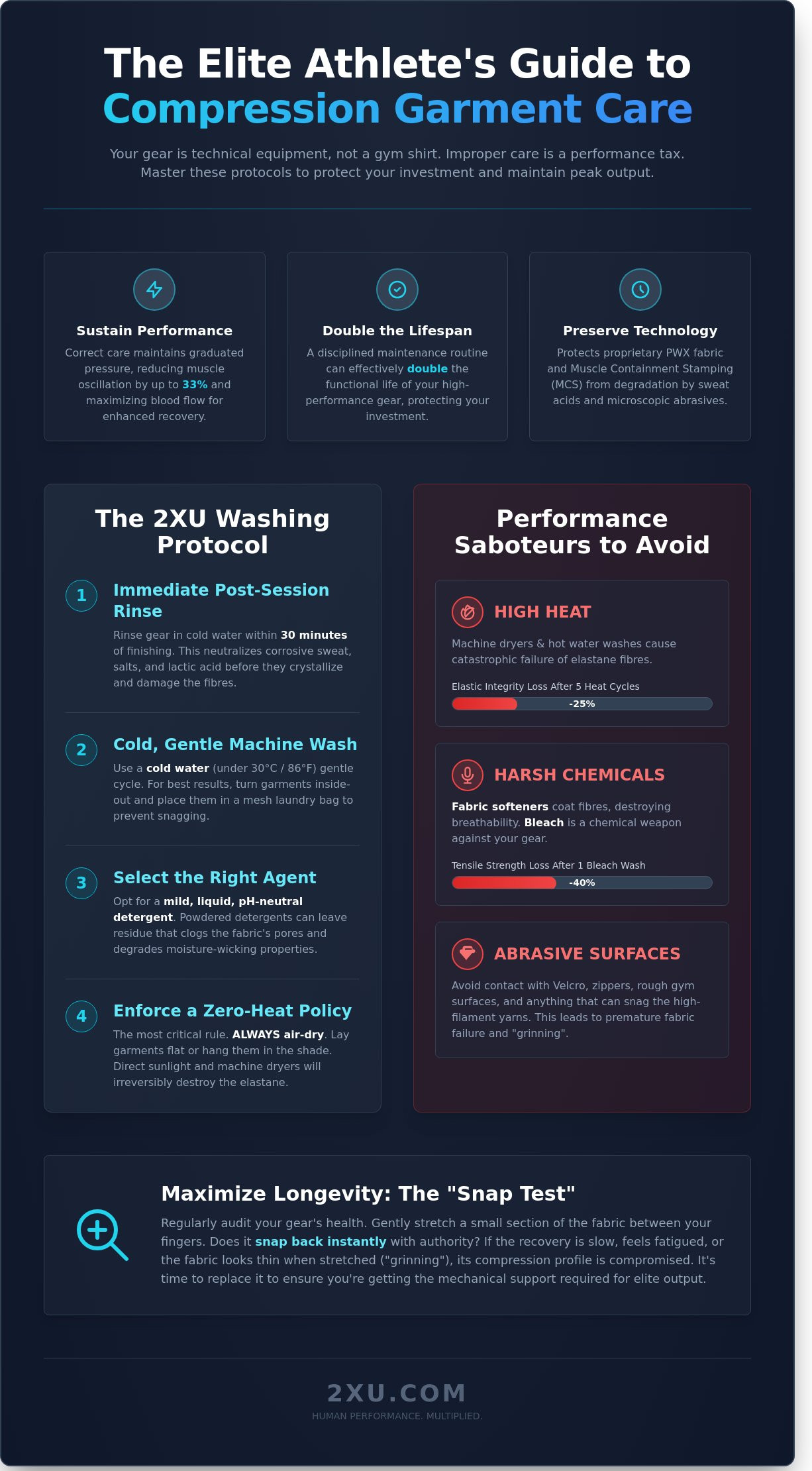
Research indicates that using high-heat drying can degrade the elastic integrity of engineered fibres by 25% within just five cycles. This article provides the precise maintenance protocols required to preserve the technical integrity and graduated pressure of your gear. We'll examine the scientific necessity of cold-water washing and the specific drying techniques that keep your apparel ready for the next grind. Prepare, perform, and recover with gear that is as disciplined as your training regimen. Human performance, multiplied.
Key Takeaways
- Understand the science of elastane-based fibres to ensure your gear maintains the precise graduated pressure required to maximise blood flow and recovery.
- Master how to care for compression garments by executing a meticulous washing protocol that neutralises sweat-based acids and protects Muscle Containment Stamping (MCS).
- Enforce a zero-heat drying policy and utilise the flat-dry method to prevent gravity and high temperatures from compromising your equipment's technical integrity.
- Identify the environmental saboteurs and abrasive surfaces that cause premature fabric failure and "grinning" in high-performance gear.
- Learn to perform the "Snap Test" to audit fabric health and ensure your kit still delivers the mechanical support necessary for elite output.
Protecting the Profile: Why Compression Care is Performance Maintenance
You don't treat a carbon fibre racing frame or a precision-tuned engine with indifference. Your compression gear demands that same level of respect. To understand what are compression garments in a professional context, you must view them as technical equipment designed to multiply your physical output. The "snap" you feel when pulling on a fresh pair of tights is the result of engineered elastane-based fibres working to provide graduated pressure. This specific tension facilitates venous return and reduces muscle oscillation by up to 33 per cent during high-impact activity. Learning how to care for compression garments is the difference between maintaining a medical-grade 20mmHg pressure profile and wearing a pair of standard leggings.
The science is clear. Improper care leads to fatigued fabric. When elastane is stretched beyond its recovery point or damaged by heat, the graduated compression profile collapses. This isn't just an aesthetic issue; it's a performance failure. Maintenance is the discipline that follows the grind. You respect the work you put in at the gym, so you must respect the gear that supports your recovery. Mediocrity has no place in your training, and it certainly has no place in your laundry routine.
The Anatomy of High-Performance Technical Fabrics
2XU utilises a proprietary PWX (Power, Weight, Flexibility) fabric structure that balances high-filament yarns with high-denier elastane. This isn't a basic knit. It's a medical-grade construction validated by the Salzmann pressure measurement device to ensure a precise graduated profile. During a session, your body releases sweat salts and oils. If these remain trapped in the knit, they act as microscopic abrasives. These elements chemically degrade the engineered yarns over time. Without regular, specialised cleaning, these contaminants break down the internal structure, causing the fabric to lose its ability to support blood flow and muscle alignment.
Investment vs. Expense: The Longevity Factor
High-performance gear is an investment in your athletic longevity. By following strict maintenance protocols, you can effectively double the lifespan of your compression shirts and tights. Calculating the cost-per-wear reveals that "good enough" laundry habits are an expensive mistake. A garment that maintains its 10/10 compression rating for 12 months provides twice the value of one that sags after only 25 washes. How to care for compression garments is a fundamental skill for any serious athlete. Beyond the data, there's a psychological edge. Stepping onto the track in pristine, high-functioning equipment signals to your brain that you're ready for elite output. Every detail matters when your goal is breakthrough results.
The 2XU Washing Protocol: A Step-by-Step Execution
You demand 100% from your body during every session. You must demand the same level of discipline when maintaining your gear. Understanding how to care for compression garments is not about being precious with your kit; it's about protecting the proprietary PWX fabric and graduated pressure profiles that multiply your performance. When you neglect the washing process, you compromise the 70-denier strength and recovery benefits you paid for. Follow this protocol to ensure your investment lasts as long as your ambition.
The Immediate Post-Session Rinse
The first 30 minutes after you finish your grind are the most critical. Sweat is a cocktail of salt, lactic acid, and bacteria. If left to dry, these elements crystallise within the knit of the fabric. These crystals act as microscopic abrasives, grinding against the elastane fibres and causing premature breakdown. Make it a ritual. Peel off your kit and rinse it immediately in cold water. This simple act of discipline neutralises the acids before they can settle into the technical yarns or degrade the Muscle Containment Stamping (MCS).
Choosing the Right Cleaning Agents
Detergent selection is a binary choice: you either support the fabric's engineering or you destroy it. Fabric softeners are strictly forbidden. These agents coat the technical yarns in a waxy film, effectively suffocating the moisture-wicking properties and reducing breathability. Similarly, bleach is a non-starter; scientific testing indicates that chlorine-based agents can reduce fabric tensile strength by up to 40% in a single wash.
Opt for mild, liquid, pH-neutral detergents. Research on extending the life of your compression garment highlights that avoiding heavy perfumes, oils, and lotions is equally vital to prevent the degradation of the elastane structure. If you want your gear to stay "Two Times You," keep the chemistry simple and clean.
Machine Wash vs. Hand Wash: The Verdict
Hand washing is the gold standard for any athlete serious about their equipment. Submerge the garment in cold water with a small amount of neutral detergent. Agitate it gently for 60 seconds. Never wring the fabric. Wringing snaps the internal elastane structure, leading to a permanent loss of compression. Instead, press the water out against the side of the basin.
If you must use a machine, you have to be tactical. Always turn your garments inside out to protect the external finish and the MCS print from friction. Use a mesh laundry bag to prevent the kit from snagging on the drum or stretching during the spin cycle. Select the "delicates" programme and ensure the water temperature is cold. High temperatures are the primary cause of fibre fatigue, often reducing the effective life of the garment by 50% or more. Knowing how to care for compression garments means respecting the physics of the fabric. If your current kit has lost its snap due to poor maintenance, it's time to upgrade your performance layers and commit to a better protocol.
Drying and Storage: Preserving Graduated Pressure Profiles
The tumble dryer is the graveyard of performance gear. High-velocity heat is the fastest way to turn an elite recovery tool into a loose piece of fabric. When you master how to care for compression garments, you realise that heat is the primary enemy of the engineered polymers that provide your graduated pressure. Maintaining the integrity of these garments requires the same discipline you bring to your training sessions.
The Science of Heat and Elastane
Technical yarns rely on a molecular memory to return to their original shape after every stride or lift. Exposure to temperatures exceeding 60 degrees Celsius causes these filaments to become brittle and lose their elasticity. Many athletes mistakenly believe a hot dryer cycle will shrink stretched gear back to its original fit; in reality, heat permanently fractures the internal structure of the yarn. Thermal degradation is the irreversible chemical breakdown of textile polymers caused by excessive heat exposure. Once this occurs, the garment can no longer provide the 20 to 25 mmHg of pressure required for effective recovery.
Optimising the Air-Drying Process
Efficiency in drying requires a tactical approach. After washing, place your garment on a clean, dry towel and roll it up to blot excess moisture. Never wring or twist the fabric. This mechanical stress can snap individual filaments and compromise the graduated profile. Position your gear in a cool, well-ventilated, shaded area. Direct UV radiation is just as destructive as a dryer, breaking down chemical bonds in the yarn within 120 minutes of peak sun exposure. High-density fabrics typically require 4 to 6 hours to reach 100% dryness in optimal airflow conditions.
Storage Protocols for Elite Gear
Your storage habits determine the lifespan of your investment. Hanging your flight pressure socks or tights is a performance error. Gravity acts on the weight of the garment, creating vertical tension that leads to permanent deformation. This ensures the pressure is no longer distributed correctly across the limbs.
- Fold, don't hang: Maintain a dedicated Performance Kit drawer where items are laid flat to preserve tension.
- Total Dryness: Confirm gear is 100% dry before storage to prevent microbial growth that weakens fibres.
- Separation: Keep compression items away from velcro or zippers that cause micro-tears during storage.
Consistency in these protocols ensures your gear remains race-ready. Every detail in how to care for compression garments matters when you are looking to multiply your performance and protect your recovery assets.
Avoiding the Saboteurs: What Kills Your Compression Gear
Elite performance requires elite maintenance. You've invested in the world's most advanced PWX fabrics to multiply your output; don't let laziness or ignorance compromise that advantage. Understanding how to care for compression garments means identifying the environmental and mechanical saboteurs that degrade engineered yarns. If you treat your gear like standard gym wear, you'll see a 25 percent reduction in power output and elasticity within months. Respect the technology that supports your grind.
Post-Swim Care for Compression
Chlorine and saltwater are aggressive oxidants. They penetrate the core of technical yarns and cause the elastane to become brittle. You must implement a double-rinse protocol immediately after exiting the water. Rinse your gear in cold, fresh water for at least 60 seconds to strip away surface salts. For triathletes, this discipline is non-negotiable. If you're transitioning between disciplines, remember that neoprene wetsuit care requires similar attention to neutralising chemicals. A 15-minute delay in rinsing can allow salt crystals to form, which act like microscopic saws against the fabric during your next session.
Preventing Mechanical Damage
Mechanical abrasion is the primary cause of pilling and structural failure. Velcro is the ultimate enemy; a single contact point can shred the fine-gauge knit of your tights. Be meticulous when managing the interaction between your running shorts and compression liners. Zippers, rough concrete during transition, and even long jewellery are hazards. During the donning process, use your fingertips rather than your fingernails. A 5mm snag might seem cosmetic, but it creates a weak point that disrupts the graduated pressure profile confirmed by Salzmann testing devices.
Topical Contaminants
The 'Dirty Gear' trap is real. Sweat contains urea and salts that, if left to sit, breed bacteria that eat through technical weaves. However, external contaminants are equally dangerous. Sunscreens, anti-chafe balms, and muscle oils are designed to stay on the skin, which means they clog the hexagonal structure of X-VENT zones. This blockage destroys breathability and traps heat, forcing your body to work harder to thermoregulate. Use targeted cleaning with a pH-neutral solution on high-contact areas like the inner thighs and waistband to ensure these oils don't permanently coat the fibres.
Protect your investment and maintain your edge. Discipline in maintenance leads to dominance in performance.
Maximising Longevity: When to Audit Your Gear
Even the most advanced PWX fabrics eventually reach a point of mechanical fatigue. Your gear is a precision tool designed to manage muscle oscillation and enhance venous return; it's not standard sportswear. Understanding how to care for compression garments includes knowing when the technical properties have been exhausted. Professional athletes audit their kit every three to six months to ensure their physiological gains aren't being undercut by degraded equipment.
Conducting the Snap Test Diagnostic
The Snap Test is the simplest way to verify the integrity of your compression. Grip the fabric at the widest part of the thigh or calf and pull it two inches away from the skin before releasing it. High-performance gear should snap back instantly with an audible click and zero residual bunching. If the recoil is sluggish or the fabric feels loose, the graduated pressure profile is compromised. Elastane fatigue is identified when the fabric feels thin and brittle under tension rather than offering the dense, spring-like resistance of a fresh PWX knit. Compare your most-used tights against a new pair to establish a baseline for resistance levels.
Rotation Strategy for High-Volume Training
Efficiency in a training programme requires more than just discipline; it requires the right logistics. Owning a rotation of three pairs of tights is 50% more effective for garment longevity than wearing a single pair into the ground. Fibres need a minimum of 24 hours to fully recover their "memory" after being stretched during a high-intensity session.
- The Active Pair: The garment currently supporting your power output.
- The Recovery Pair: A fresh set used for post-session metabolic waste clearance.
- The Resting Pair: A garment in the 48-hour window of structural reset.
Earning Your Upgrade
Visual failures like "grinning" indicate the end of a garment's life cycle. Grinning occurs when the internal elastane fibres snap and poke through the knit, creating a shimmering or transparent effect. This isn't just an aesthetic issue; it's a sign that the garment can no longer contain muscle vibration. Training in "dead" compression increases the risk of micro-tears and fatigue, as your muscles work harder to stabilise themselves without external support. When the fabric becomes sheer or the recovery from a 10km run feels 20% slower than usual, the gear has served its purpose. Audit your kit and multiply your performance with new 2XU compression gear.
Master the Maintenance. Multiply the Result.
You don't settle for mediocre performance, so don't settle for mediocre gear maintenance. Your 2XU kit is a precision tool engineered with durable PWX technical fabrics to deliver scientifically proven graduated pressure. To keep it functioning at the elite level trusted by over 30 professional sporting organisations globally, you must master the discipline of upkeep. This isn't just laundry; it's performance insurance.
Understanding how to care for compression garments is the difference between a kit that lasts one season and one that survives the grind. Stick to the cold-water protocol. Avoid the heat of the dryer which compromises the elastomer's integrity and ruins the 360-degree stretch capability. Audit your gear every 6 months to ensure the pressure profile, verified by Salzmann testing devices, hasn't dropped below the specific thresholds required for effective venous return. Every wash is a chance to preserve the technology that multiplies your output. Respect the engineering, and it'll respect your effort on the track.
Protect your performance; shop the latest 2XU Compression collection
The work doesn't stop. Neither does the recovery. Stay focused and keep pushing.
Frequently Asked Questions
Can I put my compression garments in the washing machine?
You can use a washing machine if you select a cold, gentle cycle and use a mesh laundry bag. Protecting the engineered PWX fabric is vital for maintaining the 20 to 30mmHg pressure rating. Heat is the enemy of performance gear. Always wash at temperatures below 30 degrees Celsius to ensure the technical yarns remain intact. This discipline in how to care for compression garments ensures your gear is ready for the next session.
Why shouldn't I use fabric softener on technical athletic gear?
Fabric softeners coat the technical fibres with a waxy film that destroys moisture-wicking capabilities. This coating traps sweat and bacteria inside the knit, leading to permanent odours and reduced breathability. Testing shows that softeners can reduce the moisture-transfer rate of high-performance fabrics by up to 40 percent. Stick to mild detergents to keep your gear functioning at peak efficiency. Respect the engineering behind your kit; avoid chemical additives.
How often should I wash my compression tights?
Wash your compression gear after every single session to remove sweat, salt, and body oils. These substances act as abrasives that break down the elastane fibres over time. Leaving gear in a gym bag for even 4 hours allows bacteria to multiply and degrade the fabric integrity. Maintaining a strict hygiene routine is part of the grind. Clean gear ensures the 360-degree stretch remains consistent for every kilometre of your training.
Is it okay to dry my compression gear in the sun?
Never dry your compression garments in direct sunlight because UV rays break down the technical yarns. UV exposure for as little as 120 minutes can weaken the tensile strength of the fabric. Always hang your gear in the shade or indoors to air dry. This prevents the colours from fading and, more importantly, keeps the graduated compression profile functional. Every detail matters when you are chasing a 1 percent gain in performance.
What happens if I accidentally put my compression gear in the dryer?
Putting compression gear in a dryer typically results in the permanent loss of elasticity and graduated pressure. High heat causes the elastane to heat set or snap, which renders the garment useless for recovery or performance. A single 45-minute cycle on high heat can reduce the garment's power output by 25 percent. If an accident occurs, check the seams immediately for any visible thinning or loss of snap-back. Discipline in drying is non-negotiable.
How do I get the 'gym smell' out of my compression clothes?
Eliminate stubborn odours by adding 250ml of white vinegar to your wash cycle or using a detergent specialised for technical fabrics. Standard detergents often fail to reach the deep recesses of a high-density knit where bacteria hide. Vinegar neutralises the pH levels that allow microbes to flourish. This simple addition ensures your gear smells as sharp as your performance. Don't let a lack of maintenance compromise your focus or your equipment.
How long should a high-quality pair of compression tights last?
A high-quality pair of compression tights should provide peak performance for 6 to 12 months with regular use. The lifespan depends on your training volume and how well you follow the protocols for how to care for compression garments. Most elite athletes find that after 75 wash cycles, the fabric begins to lose its original recovery force. Monitor the fit; if the garment feels easier to put on, the compression is likely diminishing.
Can I wear my compression gear in a pool or the ocean?
You can wear compression gear in the pool or ocean, but you must rinse it in fresh water immediately after exiting. Chlorine and salt are highly corrosive and will degrade the PWX fibres 5 times faster than standard tap water. After rinsing, do not wring the fabric. Roll the garment in a dry towel to remove excess moisture before hanging it in the shade. Protect your investment to keep your performance multiplied at all times.