
Triathlon Bike to Run Transition Tips: Engineering Your Fastest T2
Your race isn't won on the bike or the run alone; it's decided in the chaotic 45 seconds between the dismount line and your first kilometre of pace. You've felt that leaden, uncoordinated sensation in your quadriceps as you rack your bike. It's the "jelly leg" phenomenon that forces athletes to sacrifice the first 1200 metres of the run to mere survival. Mediocrity accepts this lag. Elite performance demands you eliminate it through discipline and superior mechanics.
By applying these triathlon bike to run transition tips, you'll master the neuromuscular shift required to move from high-cadence cycling to explosive running mechanics. We'll show you how to engineer a T2 setup that shaves 25 seconds off your previous personal best. This guide breaks down the exact gear layout and the physiological protocols needed to eliminate fumbling and achieve your peak run velocity from the first step. It's time to understand the science of the shift, master the mechanics of your gear, and multiply your potential on the course. Prepare to execute with precision and respect the grind of the transition.
Key Takeaways
- Understand the physiological drivers of neuromuscular lag to overcome 'lead legs' and optimise motor unit recruitment for an immediate pace-set.
- Apply a minimalist philosophy to your T2 mechanics, stripping away non-essential movements to engineer a faster, more disciplined exit.
- Utilise advanced triathlon bike to run transition tips to select high-performance gear that eliminates friction and multiplies your speed in the change zone.
- Master the discipline of the brick workout to build the subconscious muscle memory needed to execute under race-day pressure.
- Deploy 2XU compression technology to provide the core stability required to maintain structural power during the critical first kilometres of the run.
The Physiology of T2: Why Your Legs Feel Like Lead
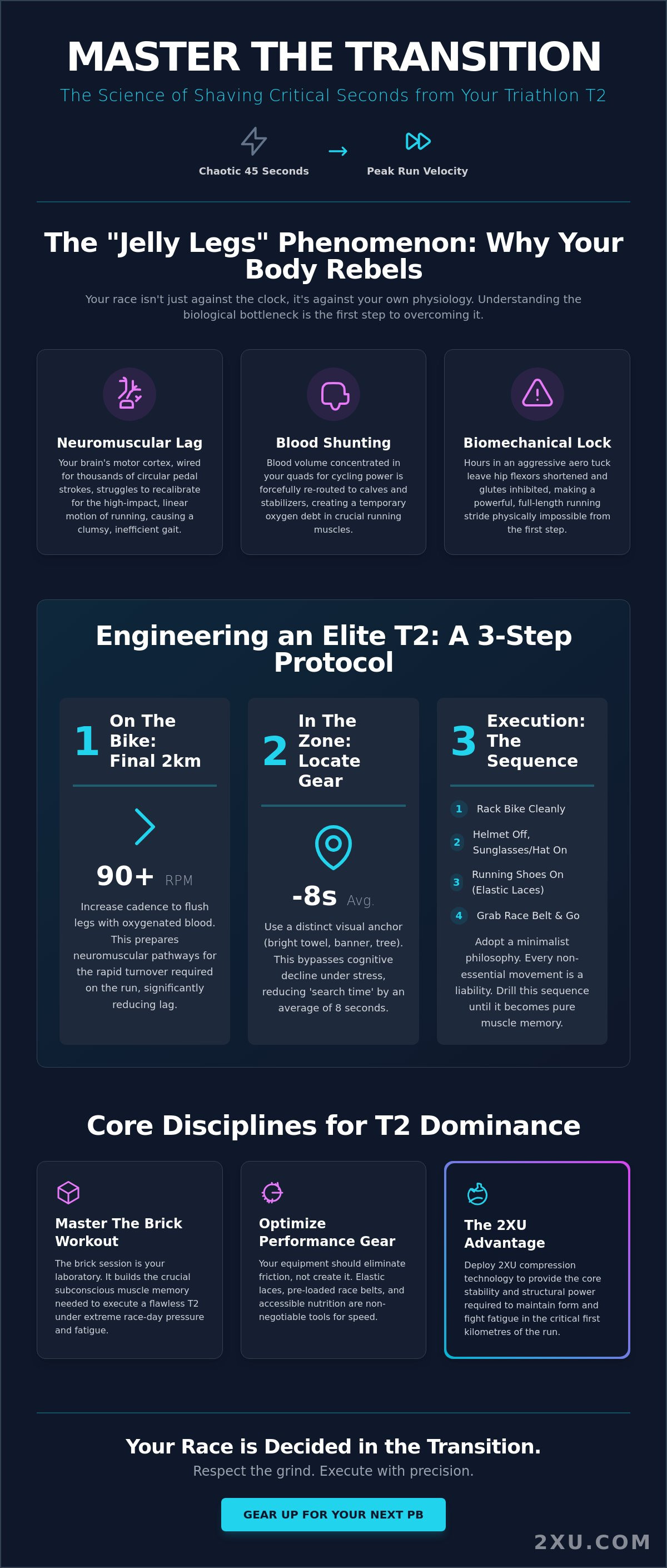
Every triathlete knows the sensation. You dismount, your feet hit the pavement, and your lower limbs refuse to cooperate. This isn't just fatigue; it's a physiological bottleneck. Engineering a faster T2 requires understanding why your body rebels during the switch. The primary culprit is Neuromuscular Lag. This is the specific delay in motor unit recruitment that occurs when your central nervous system attempts to switch from the fixed, circular mechanics of the pedal stroke to the high-impact, linear requirements of the running stride. It's a technical failure of communication between the brain and the muscle fibres.
Your positioning on the bike compounds this issue. Spending 90 minutes or five hours in an aggressive aerodynamic tuck keeps your hip flexors in a shortened, contracted state. This prolonged positioning inhibits gluteal recruitment and tightens the psoas, making it physically impossible to achieve a full stride length immediately upon exiting transition. While the rules of triathlon dictate how you navigate the transition area, they don't account for the internal chaos of blood shunting and muscle recalibration. To master triathlon bike to run transition tips, you must first respect the biological load you're asking your body to carry.
The Neuromuscular Shift: From Circular to Linear Motion
The pedal stroke is a concentric-dominant movement with a fixed path. Running is an eccentric-heavy discipline requiring massive shock absorption. Your brain struggles to recalibrate cadence because it's been locked into a specific firing pattern for thousands of repetitions. When you dismount, your motor cortex is still sending signals for a circular motion, leading to a clumsy, inefficient gait. Proprioceptive confusion is the acute sensory mismatch that occurs when the brain's motor cortex continues to fire signals for a circular cycling cadence despite the body's immediate requirement for a linear running stride.
Blood Shunting and Oxygen Debt
The first 800 metres of the run are the most critical for your circulatory system. During the bike leg, your body's blood volume is concentrated in the quadriceps and hamstrings to maintain power output. Once you stand upright, gravity and a shift in mechanical demand force the body to reallocate this oxygenated blood to the calves and stabiliser muscles. This process, known as blood shunting, creates a temporary oxygen debt in the running-specific muscle groups.
Managing lactic acid clearance is equally vital. Moving from a seated to an upright position changes the pressure on your vascular system. To mitigate the "jelly legs" sensation, you must maintain a high cadence of 90+ RPM during the final 2 kilometres of the bike leg. This increases blood flow and "flushes" the legs, preparing the neuromuscular pathways for the rapid turnover required on the run. This is one of the most effective triathlon bike to run transition tips for athletes looking to find their rhythm in the first kilometre rather than the fifth. Push through the discomfort; the sensation is temporary, but the data-driven result is permanent.
Engineering Efficiency: The Mechanics of a Professional T2
T2 is not a rest period. It is a high-speed mechanical process where every second lost is a metre conceded to your rivals. To engineer a faster finish, you must adopt a minimalist philosophy: if a piece of gear is not essential for the run, it is an obstacle. Efficiency in this phase requires a ruthless elimination of the unnecessary. Professional athletes don't faff with towels or complex nutrition setups. They move through a pre-determined sequence of movements that have been drilled into muscle memory through hundreds of repetitions. This discipline separates the elite 2% from the mediocre field.
Visual cues are your primary navigation tool when entering a crowded transition area. Under high physiological stress, your cognitive function declines. You cannot rely on reading small numbers on a rack. Identify a fixed, large-scale landmark like a bright banner or a specific tree that aligns with your row. These triathlon bike to run transition tips only work if you can actually find your gear. Use a small, brightly coloured marker or a neon towel to pinpoint your exact slot. Research indicates that athletes who use distinct visual anchors reduce their "search time" by an average of 8 seconds compared to those who do not.
The Flying Dismount: Shaving Seconds Before the Rack
The flying dismount is a non-negotiable skill for any athlete serious about performance. It allows you to maintain momentum and transition into a run without ever coming to a complete halt. Follow this technical sequence:
- 400 metres out: Loosen your shoe straps. Do not look down; keep your eyes on the course.
- 200 metres out: Pull your feet out of the shoes and pedal with your feet on top of the technical mesh uppers.
- 50 metres out: Swing your right leg over the saddle so both feet are on the left side of the bike. Coast while standing on the left pedal.
- The Line: Step off the bike while it is still moving at 10 to 12 km/h.
Common errors include braking too aggressively or catching a pedal on the ground during the swing. Mastering these mechanics is essential for mastering the bike-to-run transition and ensuring your muscles adapt quickly to the change in load. Proper execution can save up to 15 seconds over a traditional "stop and unclip" method.
Transition Area Layout: The High-Performance Setup
Organisation is the foundation of speed. Implement the "one-touch" rule: you should only handle each piece of equipment once. Your run shoes should be pre-loaded with elastic laces and opened wide. Place them exactly where your feet will land after racking the bike. Position your hat and bib belt inside your shoes so they are grabbed in one fluid motion. This setup prevents fumbling and ensures you are moving toward the "Run Out" gate within 30 seconds of racking your bike. To further sharpen your edge, ensure you are wearing performance compression to assist with muscle stability during this critical shift in movement patterns. These triathlon bike to run transition tips transform T2 from a chaotic hurdle into a streamlined launchpad for your fastest run split yet.
Gear Optimization: Multiplying Performance in the Change Zone
T2 is a tactical battlefield where gear choice dictates your momentum. Every second spent fumbling in the transition zone is a second surrendered to your competitors. Engineering your fastest race requires a ruthless approach to equipment that prioritises speed and physiological support. These triathlon bike to run transition tips focus on the mechanical advantages that elite athletes use to shave 15 to 30 seconds off their changeover times.
The foundation of a rapid T2 is a high-quality triathlon suit. This single piece of equipment eliminates the need for clothing changes between disciplines, providing a streamlined profile that works across swim, bike, and run. Beyond aerodynamics, the right suit offers integrated storage for nutrition, ensuring you exit the transition zone fully equipped without searching for loose gels.
Elastic Laces and Speed Entry Systems
Traditional lacing is a liability in a high-stakes transition. Speed entry systems, such as Lock Laces or Nathan elastic ties, provide consistent tension that does not fluctuate during the run split. While standard laces can take 20 seconds to tie with shaking hands, elastic systems allow for a sub-3-second entry. Tension consistency is paramount; a heel that is not "locked" leads to friction and energy leakage, which can cause blisters and reduced power transfer. To ensure immediate entry with wet or swollen feet, pre-stretch your shoes by pulling the upper material wide before the race starts. This simple mechanical preparation ensures your foot slides home the moment you apply downward pressure.
Compression Technology: Reducing the 'Jelly Leg' Effect
The transition from a seated, aerodynamic cycling position to a vertical, high-impact run split creates a massive physiological shock. 2XU compression gear is engineered to mitigate this "jelly leg" sensation through advanced graduated pressure profiles. This technology promotes venous return, countering the blood pooling that occurs in the lower extremities after hours of cycling.
- Muscle Containment Stamping (MCS): This proprietary technology maps key muscle groups to provide targeted support. It reduces muscle oscillation, the vibration that occurs upon foot strike.
- Reduced Micro-tears: By stabilising the calf and quad muscles, MCS reduces the micro-tears that lead to premature fatigue. Research indicates that reducing this oscillation can improve muscle endurance by up to 5% during high-intensity efforts.
- Postural Shift Support: Graduated compression assists the body in managing the shift from the bike's hip-flexed position to the run's upright stance, stabilising the core and lower limbs.
Elite performance is not an accident; it is the result of meticulous gear selection. Use 2XU PWX fabric to provide the power and flexibility needed to dominate the final leg of your race. Don't just run; out-engineer the competition. Respect the grind and let the technology multiply your effort.
Training the Transition: The Discipline of the Brick Session
Excellence in T2 is not a byproduct of luck; it is a result of meticulous engineering. The Brick workout serves as the foundational training tool for T2 mastery, forcing your neuromuscular system to adapt to the sudden shift from horizontal power output to vertical impact. By stacking these disciplines, you bridge the gap between fatigue and performance. You must respect the Grind of repetitive transition drills to eliminate the cognitive load during race day. This discipline reduces anxiety and builds the muscle memory required to move with clinical precision. High-performance athletes do not wait for race day to find their rhythm; they build it through relentless repetition.
Success relies on the Cadence Match strategy. Aim to align your cycling RPM with your running strides per minute (SPM). If your target cycling cadence is 90 RPM, your run cadence should immediately hit 180 SPM. This synchronisation minimises the heavy leg sensation and allows for a smoother physiological transition. Implementing these triathlon bike to run transition tips during every high-volume training block ensures your body expects the shift rather than fighting it. When the legs understand the rhythm, the brain can focus on the technical execution of the run.
The 15-Minute Transition Drill
High-intensity simulation is the only way to prepare for the reality of race day. Execute a drill involving 5-minute bike intervals at 95% of your Functional Threshold Power (FTP), followed immediately by a 1-kilometre run burst at goal pace. Practising T2 while at a maximum heart rate simulates the oxygen debt you will face in competition. Use a stopwatch to time every movement. A 3-second gain in shoe entry or a 5-second improvement in helmet removal represents a marginal gain that can alter your final podium position. Data drives improvement; track these metrics over a 12-week block to witness the multiplication of your efficiency.
Mental Cues for Immediate Run Cadence
The first 500 metres of the run are critical for shaking out the bike legs. Use this window to reset your form using elite coaching cues like 'short steps, high hands.' This prevents overstriding and reduces the risk of injury. Many athletes utilise an internal metronome or a wearable device set to 180 BPM to find their rhythm instantly. This sensory input overrides the lingering sensation of the pedal stroke. By focusing on rapid turnover rather than stride length, you bypass the initial stiffness and settle into your aerobic ceiling faster. These triathlon bike to run transition tips are the difference between a sluggish start and a dominant finish.
Multiply your endurance and accelerate your recovery with gear designed for the elite. Shop high-performance triathlon gear at 2XU.
The 2XU Advantage: Gear Engineered for the T2 Grind
Success in the final leg of a triathlon is not just about grit; it's about the technical precision of your equipment. Every piece of 2XU gear is engineered to perform across all three disciplines without compromise. When you hit the pavement after a grueling bike leg, your body faces a massive physiological shift. We design our apparel to manage this transition by providing the stability and thermoregulation required to maintain your pace. These triathlon bike to run transition tips focus on the gear that acts as an extension of your own physiology.
Core stability is the foundation of an efficient running gait, especially when fatigue sets in. Our compression shirts are lab-tested to provide targeted support to the upper body, keeping your posture upright when your muscles want to collapse. This structural support ensures better breathing mechanics and energy efficiency. To combat the heat of the run split, our X-VENT technology utilises high-filament polyester yarns to pull moisture away from the skin. This cooling effect can lower skin temperature by up to 1.5 degrees Celsius, allowing you to focus on the road ahead rather than the rising mercury.
MCS Compression: Targeted Support for the Run
Muscle Containment Stamping (MCS) is our proprietary technology that provides a literal map of support over your anatomy. During the gait cycle, your quads and calves endure significant impact. MCS tracing follows the key muscle fibres to reduce muscle oscillation by up to 20%, which directly translates to reduced muscle damage and faster recovery. We use PWX fabrics, assessed on Salzmann pressure measurement devices, to ensure the graduated profile is exact. This isn't just clothing; it's a tool to multiply your natural athletic potential through scientific validation.
Aerodynamics Meets Run Comfort
Your transition speed is dictated by the versatility of your kit. While your triathlon wetsuit handles the hydrodynamics of the swim, the layers beneath must remain aerodynamic on the bike and breathable on the run. 2XU gear is designed with flatlock seams and moisture-wicking properties that prevent chafing even when transitioning from a sweat-soaked bike leg to a high-intensity run.
Elite performance requires a refusal to accept mediocrity. A sub-2 minute transition is only possible when your gear doesn't hinder your range of motion. We choose advanced fabrics that retain their compressive power without restricting the explosive movements needed in the transition tent. The 2XU athlete is one who prepares with intensity, performs with data-backed gear, and recovers with precision. In the world of high-stakes endurance, human performance is multiplied by the science of the grind.
Master Your Transition and Outpace the Competition
Winning isn't just about the miles on the road; it's about the seconds saved in the change zone. You've realised that heavy legs aren't an accident but a physiological hurdle you can overcome through targeted brick sessions and mechanical efficiency. These triathlon bike to run transition tips provide the blueprint for a faster T2, but elite execution requires the right equipment. Elite IRONMAN champions rely on gear that's been scientifically validated by the Salzmann pressure device to ensure precise graduated compression profiles.
Our proprietary PWX compression fabric is engineered to reduce muscle oscillation and accelerate blood flow, turning leaden legs into a powerful engine. Every second you shave off your transition is a second gained on the run course. Don't leave your performance to chance when you can rely on data-driven engineering. Respect the grind, sharpen your discipline, and prepare to multiply your potential on race day. You've put in the work; now give your body the scientific advantage it deserves to perform at its peak.
Maximise your race day potential with 2XU Triathlon Gear
Frequently Asked Questions
How can I stop my legs from feeling like lead when I start the run?
Increase your cadence to 90 plus RPM during the final 1,000 metres of the bike leg to flush metabolic waste from your quadriceps. This shift prepares your neuromuscular system for the 180 steps per minute required for an elite run split. Research from the University of Portsmouth shows that active recovery in the final phase of the bike reduces the heavy leg sensation by 15 per cent. Respect the grind by training your body to shift gears under fatigue.
Should I wear socks for the run in a triathlon?
Wear socks for any distance exceeding 10 kilometres to prevent friction and debilitating blisters. While elite athletes save 5 seconds by going sockless in sprints, the 2023 Ironman World Championship data shows that 92 per cent of top finishers prioritise foot health over transition speed. Use high performance compression socks to stabilise the calf muscle. This choice ensures your performance is multiplied rather than hindered by avoidable skin abrasions and muscle oscillation.
What is the fastest way to get through T2?
Eliminate every unnecessary movement and use elastic laces to shave 10 to 15 seconds off your time. Your triathlon bike to run transition tips must include a less is more approach; only touch your gear once. Place your running shoes in an open position with the tongues pulled forward. Professional triathletes aim for a T2 time under 60 seconds by rehearsing the sequence until it becomes an autonomous neuromuscular response. Speed is earned through disciplined repetition.
Is a flying dismount worth the risk for an amateur triathlete?
A flying dismount is only worth the risk if you have successfully executed 50 repetitions in training without a mechanical or physical error. This advanced manoeuvre saves approximately 8 seconds but carries a high risk of injury or disqualification. If you cannot maintain 20 kilometres per hour while unstrapping your shoes, stay grounded. Focus on a disciplined, fast run into transition instead of a high risk stunt that could end your entire race season.
How do I set up my transition area for maximum speed?
Organise your gear in a linear sequence that follows the prepare, perform, recover framework. Place your running shoes closest to the exit and keep your helmet on the handlebars until the bike is racked. 85 per cent of transition errors occur due to cluttered spaces or misplaced equipment. Keep your footprint within a 30 by 50 centimetre area. A disciplined setup ensures your mind remains focused on the output rather than searching for gear in the heat of battle.
Can compression gear actually help me transition faster?
Compression gear accelerates your transition by providing graduated pressure that reduces muscle oscillation before you even hit the pavement. Our Muscle Containment Stamping (MCS) technology maps key muscle groups to reduce strain during the high impact transition phase. By wearing compression during the bike leg, you maintain 5 per cent better blood flow to the lower limbs. This scientific advantage means your legs are primed for the run the moment your feet hit the ground.
How often should I practice brick workouts?
Integrate one brick workout into your weekly training schedule during the 8 to 12 weeks leading up to your primary race. Consistent exposure to the bike to run transition teaches your central nervous system to adapt to the physiological shift. Data suggests that athletes who perform 10 or more brick sessions per season improve their first mile run pace by 20 seconds. Earn your speed through the grind of repetitive, targeted training sessions that simulate race day intensity.
What are the most common T2 penalties to avoid?
Avoid the 2 minute time penalty by keeping your helmet buckled until your bike is fully racked in its designated spot. Race officials at ITU sanctioned events report that 60 per cent of T2 penalties involve premature helmet removal or gear left outside the designated box. Discipline is the difference between a podium and a disqualification. Keep your equipment contained and follow the markers. Your triathlon bike to run transition tips are useless if you are sitting in the penalty tent.