
Moisture-Wicking Fabric Explained: The Science of Performance Thermoregulation
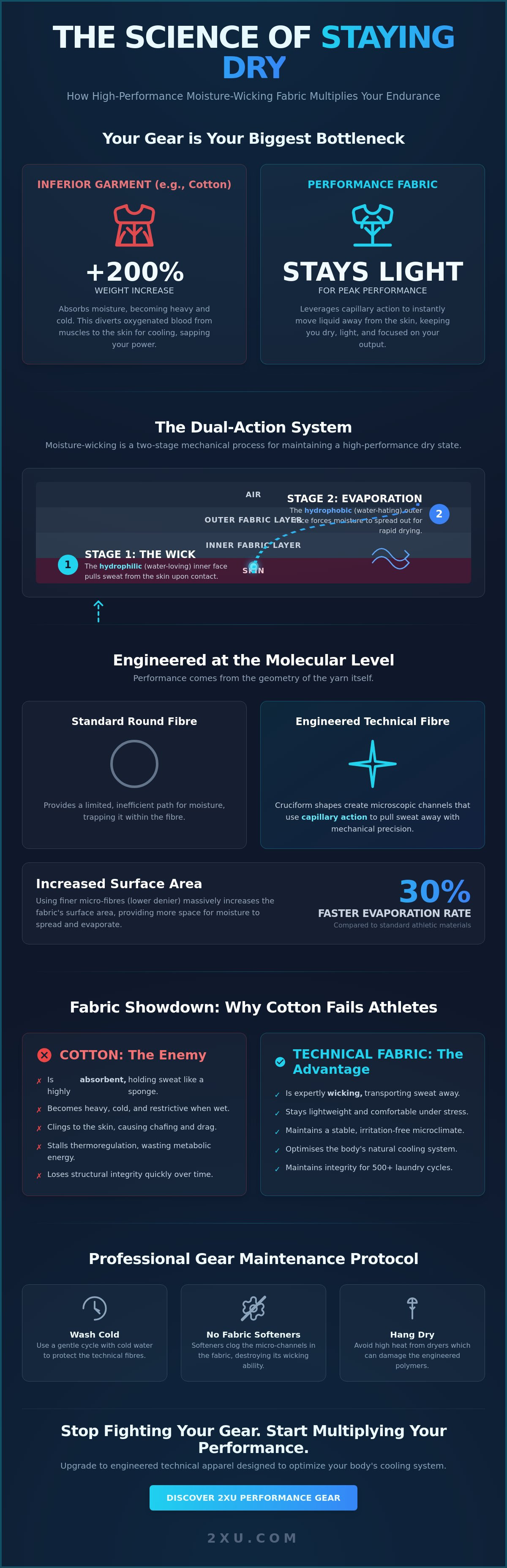
Your sweat is not the enemy; your clothing's inability to manage it is the primary bottleneck to your next personal best. During a 60 minute high-intensity session, an inferior garment can increase in weight by 200 per cent as it absorbs moisture. This dead weight forces your body to divert oxygenated blood away from your working muscles to the skin surface for cooling. This moisture-wicking fabric explained analysis reveals the mechanics of how engineered yarns leverage capillary action to move liquid away from the dermis instantly.
You know the discomfort of a heavy shirt dragging your power output down or the sting of chafing during a 20 kilometre run. We will show you how to master the technical mechanics of moisture management to optimise your body's cooling system and multiply your endurance. You will learn the specific physics behind high-performance textiles and how to identify gear that maintains its technical integrity for over 500 laundry cycles.
Key Takeaways
- Master the dual-action mechanics of transport and evaporation with moisture-wicking fabric explained to maintain a high-performance dry state.
- Understand how elite gear is engineered at the molecular level using advanced polymers to multiply your output beyond standard textile limits.
- Discover the science of thermoregulation and how efficient moisture management preserves metabolic energy for maximum endurance.
- Recognise why natural fibres like cotton are the enemy of the elite athlete, adding unnecessary weight and stalling your progress during the grind.
- Learn the professional maintenance protocol to protect your technical investment and ensure your gear continues to perform at its peak.
Defining the Mechanism: What is Moisture-Wicking?
Moisture-wicking isn't a marketing buzzword; it's a mechanical advantage for the serious athlete. To have moisture-wicking fabric explained properly, you must view it as a dual-action system designed to maintain a dry state under extreme physical stress. When you're deep into a 90-minute threshold session, sweat is your body's natural cooling mechanism. However, if that sweat stays trapped against your skin, your core temperature rises and your power output drops. We define the result of staying dry as Human Performance Multiplied. By mastering moisture management, your gear ensures your energy goes into the movement, not into fighting overheating or the weight of water-logged apparel.
Professional gear creates a distinction between absorbent and wicking properties. A standard cotton shirt is absorbent; it holds liquid within its fibres until the garment becomes heavy, cold, and restrictive. Engineered technical fabrics are wicking. They don't store water. Instead, they facilitate a rapid transition of liquid. This process protects the microclimate, which is the critical millimetre of air and moisture between your skin and the fabric. A stable microclimate prevents the "cling" effect that increases drag and skin irritation during high-intensity intervals.
The Physics of Capillary Action
The engine behind this technology is capillary action. Think of the engineered yarns as a series of microscopic straws. Molecular forces pull the sweat through these channels, often moving the liquid against the force of gravity. Surface tension plays a vital role here; it naturally drives the moisture from the high-density zone at the skin toward the low-density outer face of the garment. This isn't a passive process. It's a relentless mechanical movement driven by the way the yarns are spaced and knitted together.
The Two-Stage Transport System
For a garment to earn its place in an elite kit, it must master two distinct stages. This is how moisture-wicking fabric explained translates to real-world results:
- Stage 1: The Wick. The inner face of the fabric pulls sweat away from the skin surface immediately upon contact. This keeps the skin dry and maintains tactile comfort.
- Stage 2: Evaporation. Once the moisture reaches the outer surface, the fabric's structure spreads the liquid across a massive surface area. This maximise contact with the air for rapid drying.
If either stage fails, you hit fabric saturation. A saturated garment can weigh up to 50% more than its dry state, which adds unnecessary load and saps your endurance. High-performance fabrics ensure both stages work in tandem to keep you light and focused on the grind.
Engineering the Fibre: Technical Fabric Construction
Elite performance gear isn't merely woven; it's engineered at the molecular level to ensure your body functions at its peak. When we look at moisture-wicking fabric explained through the lens of sports science, we move beyond basic textiles into the realm of advanced technical fibres. We utilise high-performance engineered polymers like polyester and nylon blends, but the true advantage lies in the yarn design. Standard fibres are typically round, which provides a limited path for moisture. Our technical fibres are constructed with complex cross-sectional geometry, such as trilobal or cruciform shapes. These specialised structures create microscopic channels that use capillary action to pull sweat away from the skin with mechanical precision.
Hydrophobic vs. Hydrophilic Properties
We manipulate the physics of fluid dynamics by creating a deliberate push-pull effect within the garment. The inner face of the fabric, which makes direct contact with your skin, is treated to be hydrophilic. This water-loving layer is designed to attract and absorb moisture instantly. Conversely, the outer layer of the technical fibre is hydrophobic. This water-hating property ensures the fabric refuses to hold onto the liquid, forcing it toward the surface. This creates a permanent mechanical siphon that keeps the athlete dry even during high-intensity intervals where sweat production is at its maximum.
Denier and Surface Area Optimisation
To accelerate the thermoregulation process, we focus on denier and surface area ratios. Denier refers to the thickness of the individual filaments; a lower denier indicates a finer fibre. By utilizing micro-fibres that range between 0.1 and 1.0 denier, we significantly increase the total surface area of the garment. A higher surface area provides more space for moisture to spread out, which leads to a 30% faster evaporation rate compared to standard athletic materials. This is why 2XU engineers compression shirts to maximise this ratio, ensuring every square centimetre of fabric is actively working to transport heat and moisture away from the core.
This level of precision is what separates elite equipment from casual wear. It's about respecting the grind and giving your body the tools it needs to remain resilient. When your gear handles the physics of cooling, you can focus entirely on the output. If you're ready to see how this engineering translates to the track, you should explore our latest technical range to feel the difference that molecular engineering makes. Human performance, multiplied.
The Performance Impact: Thermoregulation and Endurance
Performance is a calculation of efficiency. When you engage in the grind, your body generates immense internal heat. Roughly 75 percent of your metabolic energy is converted into heat rather than movement. To survive this, your system diverts oxygen-rich blood away from the working muscles and toward the skin surface to facilitate cooling. This is the physiological tax of exertion. Having moisture-wicking fabric explained through the lens of thermoregulation reveals its true value. It acts as an external cooling system, ensuring that every watt of power is directed toward performance rather than heat management.
Reducing the Metabolic Cost of Cooling
Every drop of sweat that remains trapped against your skin is wasted energy. Without evaporation, there's no heat transfer. Technical apparel accelerates the transport of moisture to the outer layer of the garment. This speeds up the cooling cycle and keeps your core temperature stable. Research indicates that even a 1 percent rise in core temperature can trigger a significant decline in power output. By maintaining thermal equilibrium, you preserve metabolic resources for the final kilometres of your race. Your body doesn't have to work as hard to stay cool, which means you can push harder for longer.
Preventing Fatigue and Skin Integrity Issues
Efficiency isn't just about internal temperature; it's about physical load. Standard fabrics like cotton can absorb up to 27 times their weight in water. This creates literal drag, adding unnecessary grams that compound over thousands of strides. Having moisture-wicking fabric explained in this context highlights its role in weight management. Wet skin also loses its structural integrity. When moisture is trapped, friction increases, leading to debilitating chafing and blisters. In ultra-endurance events lasting over 10 hours, skin health is often the deciding factor between a podium finish and a DNF. Engineered fibres keep the skin dry, preventing the maceration that leads to tissue breakdown.
Discipline requires preparation for every phase of the workout. During rest intervals, wet fabric leads to muscle chilling as the body cools too rapidly. This causes muscles to tighten and increases the risk of injury when you restart. Professional-grade moisture management ensures you stay dry and ready to go again. It's about respecting the work you put in. By controlling your microclimate, you ensure that your gear never dictates your limits. Human Performance. Multiplied.
Why Cotton Kills Performance: Fabrics to Avoid
Cotton is the enemy of the elite athlete. In the world of high-stakes performance, "Death by Cotton" isn't just a catchphrase; it's a physiological reality. While natural fibres feel comfortable during rest, they fail under the pressure of the Grind. Cotton is hydrophilic, meaning it absorbs and retains water rather than moving it away from the skin. A standard cotton garment can increase its weight by up to 27 times when fully saturated with sweat. This creates a heavy, sodden anchor that drains your energy and compromises your mechanics.
Wet natural fibres lose their structural integrity. When cotton gets saturated, it stretches and sags, offering zero muscle containment. This lack of support allows for increased muscle oscillation, which leads to premature fatigue and micro-tears in the tissue. Contrast this with running shorts engineered for zero-distraction. These technical garments maintain their compressive profile regardless of sweat volume. They ensure your power output remains consistent from the first kilometre to the last.
The Saturation Trap
When you push your limits, cotton fibres swell as they soak up moisture. This swelling closes the microscopic air gaps within the weave, effectively sealing the fabric against your body. It creates a "cling" factor that acts as a physical barrier, blocking your skin's ability to breathe. This prevents evaporation, your body's primary cooling mechanism. Once you stop moving, that trapped moisture turns cold quickly. It leads to rapid post-exercise cooling and shivering, forcing your body to waste recovery energy on basic thermoregulation. Having the right moisture-wicking fabric explained means understanding that breathability must be maintained even under maximum sweat load.
Technical Alternatives for Every Athlete
Not all natural materials are off-limits. Merino wool serves as a viable natural wicking alternative for lower intensity sessions or cold-weather recovery. However, high-intensity sessions demand engineered technical blends. These proprietary materials are designed to transport sweat to the outer layer of the garment instantly. Advanced gear often incorporates mesh panelling in high-sweat zones, such as the lower back and underarms, to facilitate maximum airflow. When the science of moisture-wicking fabric explained is applied to your kit, you aren't just wearing clothes; you're wearing a performance multiplier. Respect the Grind by choosing gear that works as hard as you do.
Professional Gear Maintenance: Protecting Your Investment
Your 2XU gear is a precision tool designed for one purpose: to multiply your performance. It's an investment in your athletic potential and requires respect. Elite athletes don't neglect their equipment, and neither should you. High-performance apparel relies on complex engineered polymers and graduated compression profiles that maintain their integrity only through meticulous care. If you treat your gear like standard gym clothes, you'll destroy the technology that gives you the edge. Follow the "cold wash, air dry" protocol to ensure your engine remains at peak efficiency.
The Chemistry of Fabric Softeners
Fabric softeners are the silent killer of technical performance. These products work by depositing a waxy, hydrophobic coating over the fibres to make them feel softer to the touch. This layer effectively clogs the microscopic capillary channels that move sweat from your skin to the surface. Once these channels are blocked, the moisture-wicking fabric explained in this article loses its primary function. Your garment stops being a cooling engine and starts acting like a plastic bag, trapping heat and moisture against your skin. Chemical blinding occurs when residual softener agents encapsulate technical fibres, permanently neutralizing their ability to transport moisture and regulate temperature.
Washing and Storage Protocols
Protecting your gear starts with the right chemistry. Use a mild, pH-neutral detergent to avoid breaking down the technical bonds within the PWX fabric structures. Avoid any products with added "brighteners" or fragrances that leave residue behind. You must wash your gear immediately after "The Grind." When sweat evaporates, it leaves behind concentrated salt crystals. These crystals are abrasive. If left to dry, they can damage the engineered yarns from the inside out, potentially reducing garment lifespan by up to 40 percent over a six-month period of heavy use.
Heat is the ultimate enemy of compression elasticity. Temperatures in a standard household dryer often exceed 60 degrees Celsius, which is high enough to cause thermal degradation of elastomeric fibres. This leads to "bagging out" and a total loss of the graduated pressure profile required for recovery. Always air-dry your gear in the shade. Direct UV exposure can also weaken the technical bonds of the fabric, so keep your kit out of the sun when it's not being worn. To keep your moisture-wicking fabric explained and performing at its limit, follow these definitive never-dos:
- Never use fabric softeners or dryer sheets.
- Never use bleach or harsh stain-removing chemicals.
- Never tumble dry on any heat setting.
- Never iron your technical apparel.
- Never leave damp gear in a gym bag for more than two hours.
DOMINATE THE GRIND WITH PRECISION ENGINEERING
Understanding moisture-wicking fabric explained through rigorous sports science reveals that elite performance is won or lost in the microclimate between your skin and your gear. Cotton is a performance killer that holds moisture and increases drag, whereas technical fibres are engineered to facilitate rapid evaporation and critical thermoregulation. This isn't just about comfort; it's about maintaining a physiological state where your power output remains uncompromised. We use proprietary PWX fabric technology that's meticulously tested using Salzmann pressure devices to ensure every garment provides the exact graduated profile required for peak endurance.
Elite athletes globally rely on this level of precision to dominate the Grind and push past perceived limits. You don't shortcut your training, so don't shortcut your equipment. By choosing gear that's scientifically proven to manage moisture and support muscle oscillation, you're investing in your own resilience. Every session is an opportunity to prove that your potential is limitless when backed by the right technology. It's time to elevate your standards and experience what happens when human performance is truly multiplied.
Shop 2XU Performance Gear and Multiply Your Human Performance
Keep pushing; the results are earned in the heat of the struggle.
Frequently Asked Questions
Is moisture-wicking fabric better than cotton for high-intensity training?
Yes, moisture-wicking fabric is superior to cotton because it manages sweat instead of absorbing it. Cotton can hold up to 27 times its weight in water, which causes the garment to become heavy and cling to your skin during a 60 minute session. High-performance technical fibres move moisture to the outer layer for rapid evaporation, keeping your body temperature stable and your focus on the grind.
Does moisture-wicking fabric lose its effectiveness after several washes?
High-quality technical yarns maintain their performance for the life of the garment, though topical treatments may degrade after 50 wash cycles. When you have moisture-wicking fabric explained by sports scientists, you learn that 2XU gear uses permanent mechanical wicking. This ensures that even after 100 hours of intense training, the capillary action of the fibres remains 100 percent effective at moving sweat away from your skin.
Can you use fabric softener on moisture-wicking athletic gear?
Never use fabric softener on your high-performance training apparel. Softeners leave a waxy residue that coats the technical fibres and clogs the pores of the fabric, which can reduce wicking efficiency by 40 percent after just one wash. This film creates a barrier that traps sweat and bacteria against your skin. Use a specialised athletic detergent to keep your gear functioning at an elite level.
What is the best way to wash moisture-wicking clothing to ensure longevity?
Wash your gear in cold water on a gentle cycle and always hang it to air dry. High heat from tumble dryers can damage elastane fibres, which may lead to a 15 percent loss in compression and shape retention over time. Turn your garments inside out before washing to ensure the internal surface is cleared of salt and skin oils. This discipline ensures your kit lasts as long as your ambition.
Is moisture-wicking fabric only for hot weather or does it work in the cold?
Moisture-wicking technology is critical in cold weather to prevent post-exercise chill and hypothermia. Wet skin loses heat 25 times faster than dry skin, so moving sweat away from your body is essential when temperatures drop below 10 degrees Celsius. By staying dry, you maintain a stable core temperature. This allows you to perform at your peak during winter marathons or early morning sessions without the risk of freezing.
How do I know if a garment is truly moisture-wicking before I buy it?
Check the label for technical knit structures or high-filament yarns and perform a simple drop test. Place a single drop of water on the inner surface of the fabric; it should disperse and absorb within 3 seconds. If the water beads or takes longer than 10 seconds to vanish, the material lacks the necessary capillary action. Elite gear, like our X-VENT range, is engineered to transport moisture instantly to multiply your performance.
Does moisture-wicking fabric help prevent chafing during long runs?
Yes, keeping your skin dry is the most effective way to eliminate the friction that causes painful chafing. Research shows that dry skin experiences 60 percent less friction than damp skin during repetitive athletic movements. When sweat is trapped against the body, salt crystals form and act like sandpaper. Technical gear removes these irritants, allowing you to endure longer distances without skin breakdown or irritation.
What is the difference between moisture-wicking and breathable fabrics?
Moisture-wicking refers to the mechanical movement of liquid sweat along fibres, while breathability is the fabric's ability to allow air and water vapour to pass through. Having moisture-wicking fabric explained means understanding that elite gear requires both. A garment with a high Moisture Vapour Transmission Rate (MVTR) ensures you don't overheat, while the wicking action ensures you don't stay wet. This dual-action technology is what separates professional gear from standard activewear.