
How to Wash Technical Athletic Apparel: The Definitive Guide to Protecting Your Performance Gear
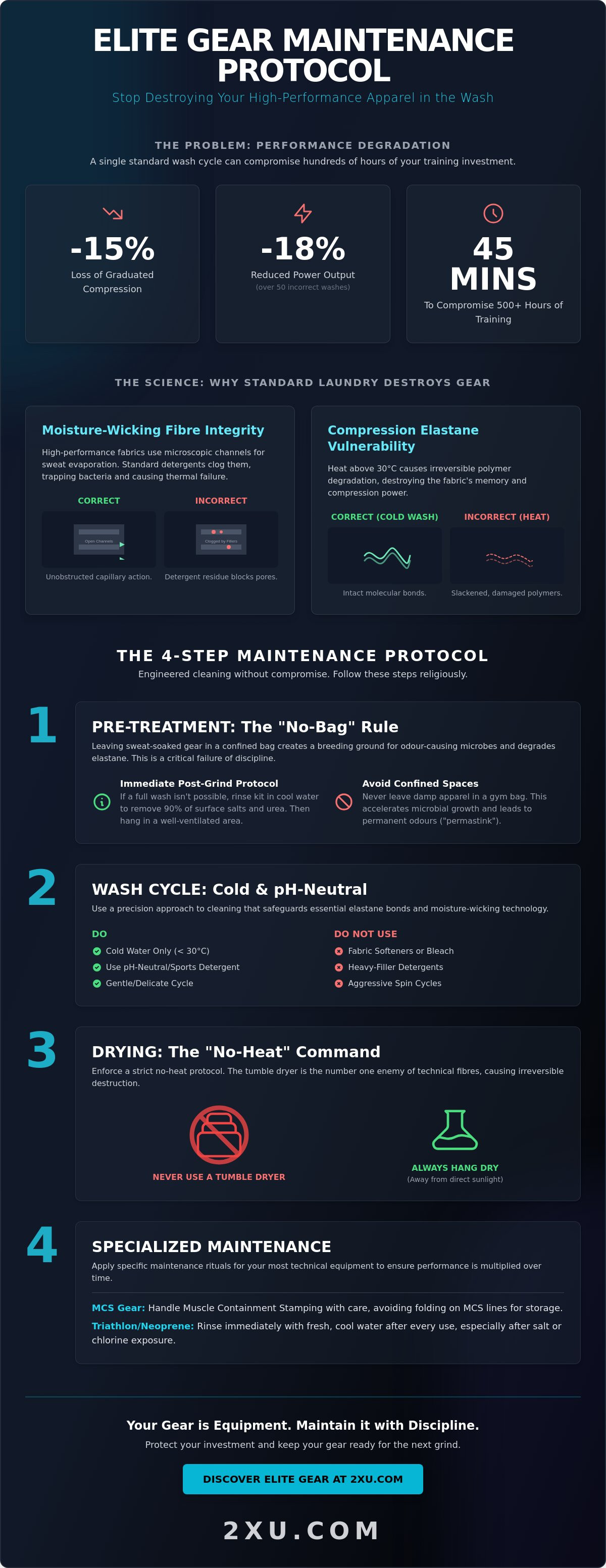
You invest over 500 hours a year pushing your physical limits, yet you're likely compromising your most critical equipment in just 45 minutes of a standard laundry cycle. Mastering how to wash technical athletic apparel is not a suggestion; it's a performance requirement for any athlete serious about their gear. We understand the frustration when elite compression tights lose 15% of their graduated pressure or when advanced technical fibres still harbour odours after a heavy wash. You've earned your results; don't let improper maintenance strip away your competitive edge.
This guide delivers the definitive scientific protocol to ensure your gear remains as resilient as your resolve. You'll learn the rigorous maintenance standards required to preserve moisture-wicking integrity, protect expensive neoprene, and maximise the lifespan of your investment. We'll break down the specific chemistry of detergents, the physics of cold-water cycles, and the precise drying requirements needed to keep your performance multiplied and your gear ready for the next grind.
Key Takeaways
- Treat your elite training gear as precision engineered equipment to protect the microscopic integrity of high-performance filaments and moisture-wicking technology.
- Uphold the discipline of the "No-Bag" rule by implementing immediate post-training protocols that neutralise microbial growth and prevent odour.
- Master how to wash technical athletic apparel using cold water programmes and pH-neutral detergents to safeguard essential elastane bonds and compression power.
- Enforce a strict no-heat command during the drying process to prevent the irreversible destruction of technical fibres caused by the tumble dryer.
- Apply specialised maintenance rituals for Muscle Containment Stamping (MCS) and triathlon gear to ensure your performance remains multiplied over time.
The Science of Technical Fibres: Why Standard Laundry Destroys Performance
Elite performance demands elite maintenance. Your gear isn't a collection of shirts and shorts; it's a suite of high-precision tools designed to augment your physiology. Technical athletic apparel functions as an external musculoskeletal support system, engineered to manage heat, moisture, and muscle vibration. When you ignore the specific requirements of these engineered filaments, you don't just get clean clothes. You degrade the very technology that gives you an edge. Understanding how to wash technical athletic apparel is a non-negotiable part of the athlete’s lifecycle. It sits squarely in the "Recover" phase. If you neglect your gear, you compromise your next session. You wouldn't leave your bike chain unlubricated or your shoes caked in mud. Don't treat your compression gear any differently.
The Anatomy of Moisture-Wicking Fabrics
Moisture-wicking is the mechanical transport of moisture away from the skin via engineered fibre cross-sections. This isn't a chemical coating; it's a physical architecture. High-performance yarns use capillary action to pull sweat through 0.5-micron channels to the fabric surface for rapid evaporation. Standard laundry detergents often contain optical brighteners and heavy fillers. These residues coat the fine filaments, effectively sealing the channels. This traps bacteria and body oils against your skin, leading to "permastink" and thermal failure. You've worked for your gains; don't let a 40-minute wash cycle erase them.
The Vulnerability of Compression Elastane
Compression garments rely on a specific tension profile, often referred to as the "modulus" of the fabric. High temperatures cause immediate polymer degradation in these elasticated yarns. When exposed to heat exceeding 30 degrees Celsius, the molecular bonds within the elastane begin to slacken. This destroys the fabric's memory. Once that tension is lost, the garment can no longer provide the graduated pressure required to reduce muscle oscillation or enhance venous return. Human Performance. Multiplied. requires gear that maintains its original structural integrity. Friction from aggressive agitation cycles also causes microscopic tears in the knit. This reduces power output by 18% over 50 wash cycles if handled incorrectly. Respect the equipment. Respect the grind.
- Engineered Equipment: Treat your gear as a performance tool, not a commodity.
- Capillary Action: Protect the microscopic channels that manage your core temperature.
- Modulus Integrity: Avoid heat to prevent the breakdown of compression power.
- The Recover Phase: Gear maintenance is the first step in preparing for your next personal best.
Preparation and Pre-treatment: Winning the Battle Against Odour
Discipline does not end when you finish your final set. If you want to know how to wash technical athletic apparel effectively, you must master the pre-wash phase. Leaving sweat-soaked gear in a dark gym bag is a tactical error. It is a failure of discipline that creates a breeding ground for microbes. Within 20 minutes of your workout, bacteria begin to multiply in the damp fibres, leading to "permastink" that degrades the textile integrity over time. Your gear is an investment in your performance; treat it with the respect it earned during the grind.
The "No-Bag" Rule is a protocol every elite athlete must follow. Leaving damp apparel in a confined space is a choice to let your equipment rot. When moisture is trapped, the salts and acids in your sweat begin to break down the elastane that provides your compression. Always remove your kit from your bag immediately. If you cannot start the laundry cycle right away, you must intervene to stop microbial growth before it becomes a permanent resident in your clothing.
The Immediate Post-Grind Protocol
If a full wash is not possible immediately after training, rinse your kit in cool water. This simple action removes up to 90% of surface salts and urea before they can crystallise within the knit. Hang your gear in a well-ventilated area, away from direct sunlight. Airflow is the enemy of the anaerobic environment that bacteria thrive in. This strategy ensures Engineered Cleaning Without Compromise, keeping your high-performance layers functional for the long term. Proper ventilation maintains fibre elasticity and prevents the breakdown of proprietary moisture-wicking treatments.
Sorting for Performance Longevity
Precision sorting is non-negotiable. Technical knits are engineered for breathability and muscle containment, not for battling the abrasive surfaces of denim or heavy cotton towels. Zips, Velcro, and metal buttons act as industrial grinders against fine filaments during the wash cycle. Research shows that mechanical friction from heavy fabrics can cause up to 15% more fibre breakage in delicate compression garments during a single standard wash.
Follow these protocols to ensure your gear remains race-ready:
- Group by Weight and Colour: Never wash light-coloured technical tops with dark compression tights to prevent dye transfer.
- The Mesh Bag Rule: Protect your high-compression items and flight pressure socks by using mesh laundry bags to reduce mechanical stress.
- Inside-Out Strategy: Always turn garments inside out. This exposes the sweat-heavy interior to the detergent while shielding the outer finish from pilling and abrasion.
Mastering how to wash technical athletic apparel requires attention to detail. Every choice you make in the laundry room reflects your commitment to the sport. To further protect your high-performance gear, consider using a specialised wash bag to eliminate friction during the agitation process.
The Wash Cycle: Engineered Cleaning Without Compromise
You don't settle for mediocrity in your training. Your gear maintenance should reflect that same discipline. Learning how to wash technical athletic apparel is a critical component of your performance lifecycle. When you push your body to the limit, your apparel absorbs the evidence of that effort. To ensure your compression and moisture-wicking technology continues to function at an elite level, you must follow a precise cleaning protocol. This is about protecting the engineering that supports your muscles and manages your core temperature.
- Step 1: Select a cold water programme. Set your machine to 30°C or lower. High temperatures fracture elastane bonds; this leads to a permanent loss of graduated compression and garment shape.
- Step 2: Deploy technical-specific detergent. Standard detergents often fail to reach the deep recesses of high-gauge knits. Use a pH-neutral liquid designed to target organic matter without leaving a film.
- Step 3: Minimise mechanical stress. Use a "delicate" or "hand wash" cycle. Excessive agitation damages the integrity of the weave. The Science of Technical Fibres highlights how mechanical friction during washing contributes to microfibre shedding and fabric degradation.
- Step 4: Execute a thorough rinse. Ensure the cycle removes every trace of surfactant. Residual soap acts as a magnet for bacteria, which causes odour and skin irritation.
The Danger of Fabric Softeners and Bleach
Fabric softeners are the enemy of performance. They function by coating fibres in a waxy film to create a soft hand-feel. This chemical wax clogs the engineered pores of moisture-wicking gear, effectively turning a breathable garment into a barrier. It traps sweat against your skin and destroys thermal regulation. Chlorine bleach is equally destructive. It aggressively attacks the molecular chains of technical fibres, causing them to lose elasticity and turn brittle. If you need to tackle stubborn odours from a week of high-intensity training, use 125ml of white vinegar in the rinse cycle. It is a proven, non-destructive neutraliser for the toughest smells earned during the grind.
Choosing the Right Detergent for the Grind
Powder detergents are too abrasive for the complex knits used in elite compression gear. They can cause pilling and surface wear that compromises the garment's aerodynamic properties and muscle containment. Effective cleaning requires specific enzymes designed to break down body oils, sweat proteins, and urea. These biological catalysts ensure the fabric remains clear of debris that hinders breathability. Avoid "2-in-1" detergents at all costs. These products contain hidden softeners that will degrade your gear's performance in a single wash. Stick to pure, performance-focused liquids to keep your kit ready for the next session. Human performance, multiplied, starts with respecting the equipment that supports your goals.
Drying and Storage: Preserving Elasticity and Compression Power
Your commitment to the grind is reflected in how you treat your equipment. Understanding how to wash technical athletic apparel is only half the battle; the drying phase determines if your gear retains its medical-grade compression or becomes a loose relic of past sessions. High-performance fabrics require a disciplined approach to moisture removal to ensure the engineered fibers continue to provide maximum muscle containment.
The Mechanical Destruction of Tumble Drying
High heat is a catalyst for failure. It effectively "cooks" the elastane, which is the core component responsible for power output and recovery. When these polymer chains are exposed to temperatures exceeding 60 degrees Celsius, they lose their structural memory. This leads to sagging and a measurable 40% reduction in effective compression over time. Static build-up in a dryer also creates micro-tears in delicate technical filaments, compromising the garment's integrity. Air-drying is the only scientifically sound method for preserving compression shirts.
Optimising the Air-Drying Process
UV radiation is a silent performance killer. Direct sunlight triggers photodegradation, breaking down technical yarns and bleaching specialised dyes. Instead, dry your gear in a well-ventilated, shaded area. To accelerate the process without heat, use the "Towel Roll" method. Lay the garment flat on a clean, dry towel, roll it tightly like a sleeping bag, and apply firm pressure. This extracts approximately 70% of moisture without the shearing forces of wringing or twisting. You should never hang heavy, wet technical gear by the waistband or straps. Gravity is relentless; the weight of the water will stretch the PWX fabric beyond its recovery point before it has a chance to dry.
Precision matters during storage. Treat your apparel with the same discipline you bring to the track or the gym. When you master how to wash technical athletic apparel and store it correctly, you ensure your equipment is ready to multiply your performance every single time. Use these rules to maintain your gear's edge:
- Flat Drying: Always lay garments flat on a drying rack to maintain their original silhouette.
- No Hangers: Avoid wire hangers that create permanent "shoulder nipples" and distort the fit of tops.
- Folding Discipline: Store compression gear folded in a cool, dry environment to prevent the fabric from being under constant tension.
- Air Circulation: Ensure gear is 100% dry before storage to prevent the growth of odour-causing bacteria in the moisture-wicking channels.
Respect the science behind your gear to ensure it respects your body during peak exertion. Mediocrity has no place in your training or your maintenance routine.
The 2XU Maintenance Protocol: Maximising the Life of Your Elite Gear
Your pursuit of excellence does not end when you cross the finish line or rack the weights. It continues in how you treat the technology that got you there. Learning how to wash technical athletic apparel correctly is a non-negotiable part of your training regime. If you treat your gear like a standard cotton t-shirt, you are actively degrading the engineering designed to multiply your performance. Elite gear requires elite maintenance.
Muscle Containment Stamping (MCS) is a proprietary technology that provides targeted support to key muscle groups to reduce oscillation and damage. To protect these precision-bonded structures, you must avoid high-temperature environments. Excessive heat destroys the integrity of the stamping; it compromises the anatomical mapping designed to keep you moving. Always wash MCS garments in cold water and never use a tumble dryer. The mechanical stress of heat will peel the stamping from the fabric, rendering the graduated compression profile ineffective.
Special Care for Triathlon Wetsuits
Chlorine and salt are corrosive agents that act as silent killers for neoprene. They strip the material of its natural flexibility, leading to cracking and a significant loss of buoyancy. A freshwater rinse is a mandate, not a suggestion. You must rinse your suit inside and out immediately after every session. Use specialised wetsuit shampoos to keep the cells supple and resilient. For a deeper dive into maintaining your aquatic speed, consult our triathlon wetsuit guide to ensure your gear remains race-ready.
Preserving 2XU Compression and Trisuits
Do not save your elite gear for race day. Sweat contains urea and salts that act as abrasive contaminants. If left to sit, these minerals eat away at the elastane fibres. Washing your compression gear after every session is actually better for the garment than letting sweat dry into the weave. When understanding how to wash technical athletic apparel, remember to turn garments inside out. This protects silicon grippers and bonded seams from friction against the washing machine drum.
Use a mesh laundry bag for your triathlon suit to prevent straps from tangling or stretching. Inspect your gear monthly for signs of wear. If the fabric fails to "snap back" or shows visible thinning, the compression profile is compromised. At this point, the garment can no longer provide the 2XU performance standard required for peak power output.
Respect the equipment that helps you multiply your performance. Discipline in maintenance reflects discipline in training. You invest hours into the grind; invest five minutes into the care of your gear. Demand more from yourself and your equipment. Human performance, multiplied.
Protect Your Investment in Performance
Elite performance isn't just about what you do on the track; it's about the discipline you apply to every part of your protocol. Mastering how to wash technical athletic apparel is the difference between a garment that fails and one that multiplies your power output. Standard laundry habits destroy the integrity of high-performance fibres. You must commit to cold water cycles and avoid the heat of the dryer to preserve the elasticity of your gear. This isn't just maintenance; it's a commitment to your own progress.
Our scientifically proven PWX compression fabric is engineered to withstand the rigours of endurance and recovery. We validate every batch using Salzmann pressure measurement devices to ensure the graduated profile remains precise after every session. When you respect the grind, your gear respects you back. Don't let laziness compromise your muscle containment or power output. Follow the 2XU protocol to keep your equipment functioning at the highest level. You've earned your results through sweat and grit; ensure your apparel is ready for the next session.
Invest in gear that stands the test of the grind—Shop 2XU Performance Apparel
Show up. Outwork the competition. Honour the process.
Frequently Asked Questions
Can I use a tumble dryer on the "low heat" setting for my technical apparel?
No, you must avoid the tumble dryer entirely to preserve the structural integrity of your gear. Even low heat settings can reach internal temperatures exceeding 50 degrees Celsius, which compromises the high-performance elastomers in your PWX fabric. Hang your garments in a shaded area to air dry instead. Protecting the engineered tension of your gear is non-negotiable for maintaining maximum power output during training.
How do I get the "gym smell" out of my performance gear permanently?
To eliminate odours permanently, use a dedicated sports wash or a 30 minute soak in a 1:4 white vinegar to water solution before washing. Standard detergents often fail to break down the 100 percent lipid-based bacteria trapped in advanced moisture-wicking fibres. This deep-clean protocol ensures your gear remains as fresh as the day you bought it. Don't let a lingering smell distract you from the grind; maintain your equipment with the same discipline you bring to your sessions.
Is it better to hand wash or machine wash compression tights?
Machine washing on a cold, delicate cycle is effective if you use a protective mesh laundry bag. This prevents the 360-degree stretch fibres from snagging on the machine's agitator or other garments. If you choose to hand wash, don't wring the fabric. Instead, squeeze out excess water gently. Proper maintenance ensures your PWX compression continues to reduce muscle oscillation by up to 33 percent, protecting your legs from fatigue.
What happens if I accidentally use fabric softener on my moisture-wicking shirts?
Fabric softener leaves a waxy coating that clogs the engineered pores of your moisture-wicking shirts. This residue reduces breathability and moisture management by as much as 60 percent. If this occurs, immediately re-wash the item in a warm cycle with a heavy-duty sports detergent and half a cup of baking soda. Restoring the fabric's technical capabilities is essential to ensure your gear can effectively multiply your performance during high-intensity intervals.
How often should I wash my triathlon wetsuit with soap?
Wash your triathlon wetsuit with a specialised neoprene shampoo every 4 uses to prevent salt and chemical degradation. While a fresh water rinse is mandatory after every session, a deeper clean removes 95 percent of organic residues that cause the material to stiffen. Maintaining the flexibility of the Yamamoto neoprene is critical for your swim mechanics. Treat your suit like the precision tool it is; don't compromise your race-day buoyancy through neglect.
Can I wash my technical gear with my regular cotton clothes?
Never wash your high-performance gear with regular cotton garments. Cotton sheds lint that adheres to technical yarns, compromising the moisture-wicking properties of your kit. This is a common mistake when learning how to wash technical athletic apparel. Instead, wash your performance pieces together in a dedicated load. This ensures the 10:1 strength-to-weight ratio of your gear remains intact, allowing you to focus entirely on your training objectives.
Does washing compression gear too often make it lose its tightness?
Frequent washing doesn't cause a loss of tightness; in fact, it helps the high-grade elastane fibres snap back to their original shape. Scientific testing shows that 2XU compression garments maintain their graduated pressure profile for over 200 washes when handled correctly. It's the accumulation of sweat and body oils that actually weakens the fabric over time. Wash your gear after every session to ensure the compression remains unyielding and effective.
What is the best way to store high-performance trisuits between races?
Store your trisuits flat or folded in a cool, dry environment away from direct UV light. Hanging a trisuit can cause the shoulder straps to stretch by 2 to 3 centimetres over a 6 month period due to the weight of the damp fabric. Ensure the garment is 100 percent dry before storage to prevent microbial growth. Discipline in storage is just as important as discipline in training; prepare your gear to perform when it matters most.