
Calf Compression Sleeves for Shin Splints: The Science of Performance and Recovery
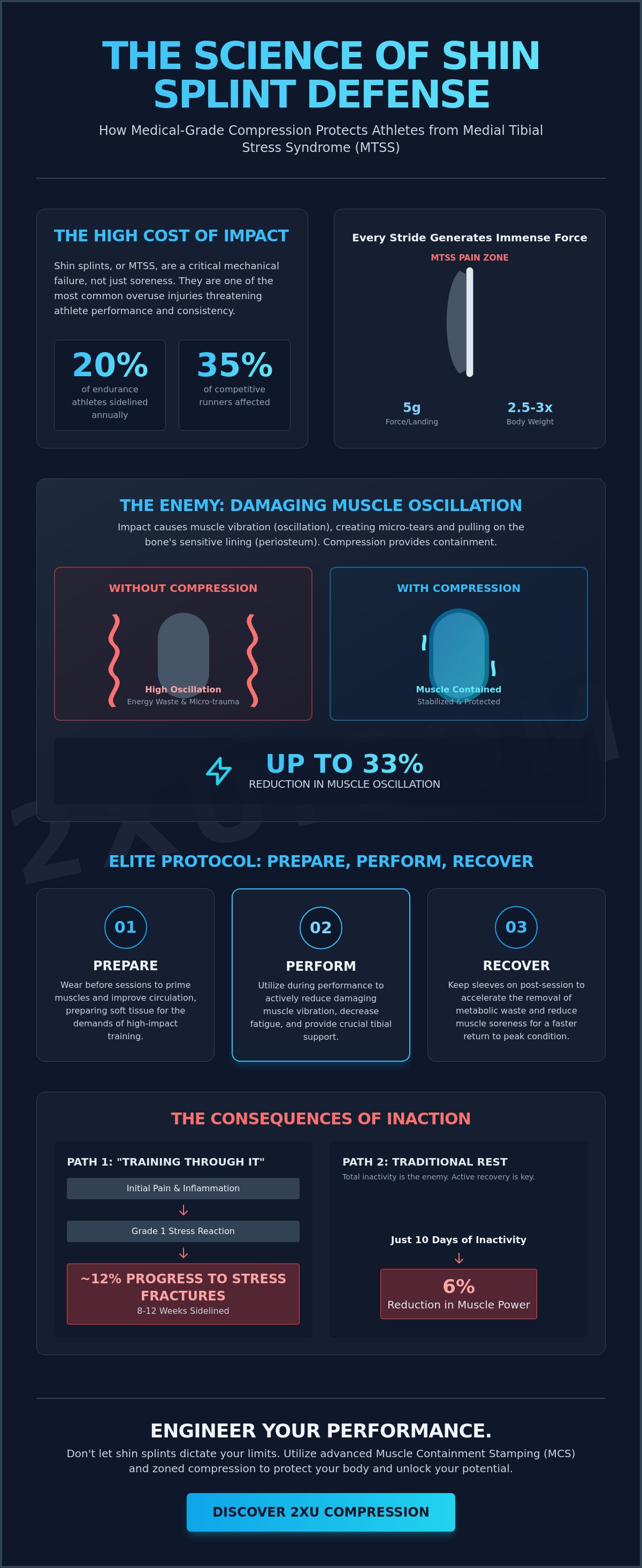
Research published in the Journal of Sports Sciences indicates that up to 20% of endurance athletes will be sidelined by Medial Tibial Stress Syndrome this year. You've likely felt that restrictive, radiating heat along your tibia that turns a focused session into a battle against pain. It's a frustrating barrier that threatens your discipline and your progress. You understand that "the Grind" requires more than just mental toughness; it requires equipment that can withstand the 5g of force generated during every high-impact landing.
We are here to help you master the biomechanics of lower-leg relief. By utilising high-performance calf compression sleeves for shin splints, you can reduce muscle oscillation by up to 33% and significantly decrease the workload on your tibialis anterior. This article provides the scientific framework you need to distinguish between basic elastic tubes and medical-grade graduated compression. You'll learn how to multiply your resilience and accelerate recovery between sessions. We will break down the precise pressure profiles required to stabilise soft tissue and keep you moving toward your peak performance without the fear of bone stress injuries.
Key Takeaways
- Master the biomechanics of Medial Tibial Stress Syndrome (MTSS) and learn how stabilising the Tibialis Anterior prevents your progress from being derailed.
- Minimise damaging muscle oscillation and reduce micro-trauma by deploying calf compression sleeves for shin splints as a primary tool for lower-leg resilience.
- Evaluate the performance advantages of Zoned Compression and learn why elite-grade sleeves offer the specific containment necessary for high-impact training.
- Implement a rigorous "Prepare, Perform, Recover" protocol to ensure your body is engineered to handle the grind of high-intensity sessions.
- Discover how proprietary Muscle Containment Stamping (MCS) technology provides targeted support to multiply your power output and accelerate recovery.
Understanding the Anatomy of Pain: Why Shin Splints Derail Your Progress
Pain is a data point, not a barrier. When your lower leg begins to burn three kilometres into a session, your body is reporting a mechanical failure. The scientific community classifies this condition as medial tibial stress syndrome (MTSS). It is one of the most common overuse injuries, affecting up to 35% of all competitive runners and military recruits. This isn't just "soreness." It is the result of your Tibialis Anterior and Posterior muscles failing to stabilise the lower leg against repetitive, high-velocity impact. These muscles act as your primary shock absorbers; when they fatigue, the load transfers directly to the bone. You cannot ignore this signal.
Repetitive impact leads to periosteal inflammation, where the connective tissue covering the tibia becomes irritated and swollen. Many athletes attempt to "work through the pain," but this mindset is counterproductive and lacks discipline. Elite performance requires optimising the recovery process rather than simply enduring damage. Understanding the mechanics of your injury is the first step toward reclaiming your stride and ensuring your progress remains on track. It's about working smarter to ensure you can continue to work harder.
The Root Cause: Micro-tears and Bone Stress
The characteristic burning sensation of MTSS is caused by muscle fibres literally tugging at the bone. During high-mileage weeks, your lower legs endure ground reaction forces equivalent to 2.5 to 3.0 times your total body weight with every single step. This constant tension creates micro-tears in the fascia and the periosteum. If you ignore these signals, the condition progresses from simple inflammation to a Grade 1 stress reaction. Research indicates that untreated MTSS leads to full stress fractures in approximately 12% of cases, which can sideline an athlete for 8 to 12 weeks. High-performance calf compression sleeves for shin splints are engineered to contain the muscle, preventing the excessive vibration that leads to these micro-tears. By reducing muscle oscillation, you mitigate the mechanical "tug" that initiates this cycle of bone stress.
Why Traditional Rest Often Fails the Athlete
Total inactivity is the enemy of the elite athlete. Sitting on a couch for three weeks leads to muscle atrophy and a decrease in neuromuscular efficiency. Studies show that just 10 days of complete rest can result in a 6% reduction in muscle power. This is why "Active Recovery" has become the gold standard for those who respect the grind. Instead of stopping, you must manage the load while maintaining conditioning. Compression technology acts as a tool for mechanical support during this return-to-run phase. It provides external stability to the soft tissue, allowing you to maintain your training volume without the same level of bone stress. Using calf compression sleeves for shin splints allows for a more aggressive recovery timeline. We don't settle for mediocre recovery; we engineer it to ensure you return stronger than before.
The Biomechanics of Containment: How Compression Sleeves Counteract Muscle Oscillation
Every time your foot strikes the pavement, a shockwave travels through your limb. This force creates muscle oscillation: the involuntary vibration of muscle tissue upon impact. It's not just a feeling; it's a mechanical drain on your power. Muscle oscillation is the primary mechanical enemy of the shin. When these tissues vibrate excessively, you face increased muscle fatigue and micro-trauma. High-performance calf compression sleeves for shin splints act as a structural wrap, engineered to dampen these vibrations before they compromise your kinetic chain. By providing a firm containment profile, these garments stabilise the muscle complex and ensure energy is directed toward movement rather than wasted through internal friction.
Minimising Vibration to Protect the Periosteum
The periosteum is the thin layer of connective tissue covering your bones. When your calf muscles oscillate during high-impact sets, they exert a repetitive tug on this tissue. This constant traction is a leading cause of medial tibial stress syndrome. By providing a mechanical wrap for the calf complex, specialised sleeves reduce this mechanical stress. This dampening effect also limits Delayed Onset Muscle Soreness (DOMS) by preventing the micro-tears that occur during high-frequency vibration. Recent research on compression sleeve improvement indicates that proper material engineering is vital for stabilising these tissues during repetitive loading. You don't just feel better; you protect the structural integrity of your lower leg against the grind of daily training.
Graduated Pressure and Oxygen Delivery
Effective compression isn't uniform. It's a precise pressure gradient. Our technology ensures the highest pressure is at the ankle, easing as it moves toward the knee. This graduated profile promotes venous return, pushing deoxygenated blood back to the heart more efficiently. This isn't about comfort; it's about faster repair. When you increase oxygenation, you shorten the recovery window between sessions. We use the Salzmann pressure measurement device to ensure every garment meets these exact standards. No shortcuts. Just results.
- Lactate Removal: Accelerates the clearance of blood lactate and metabolic waste from the lower limbs.
- Reduced Swelling: Clinical trials show graduated pressure can reduce post-exercise swelling by up to 20 percent.
- Oxygenation: Increases arterial blood flow to deliver fresh oxygen to damaged muscle fibres for rapid repair.
If you want to multiply your performance, you need to respect the science of the grind. Elite athletes don't leave their recovery to chance. They use engineered containment to keep their muscles tight and their shins protected. By using calf compression sleeves for shin splints, you are investing in the mechanical stability required to push past your previous limits. Don't let vibration dictate your pace. Contain the muscle, control the impact, and stay in the fight longer.
Evaluating the Gear: Calf Sleeves vs. Compression Socks for Shin Splint Recovery
Performance is never an accident. It is the result of meticulous engineering and disciplined recovery protocols. When you are battling medial tibial stress syndrome, your choice of equipment determines how fast you return to the pavement. Choosing calf compression sleeves for shin splints offers a modular advantage that full socks cannot match. Sleeves isolate the lower limb, providing targeted Zoned Compression to the gastroc and soleus muscles while allowing you to maintain your established footwear system. This setup is about precision. Engineered technical yarns provide moisture-wicking properties that keep your skin dry and your core temperature regulated during the most intense sessions of the grind.
When to Choose Sleeves Over Socks
Sleeves are the preferred tool for athletes who demand versatility. You can pair them with high-quality running shorts to optimise airflow and thermoregulation during high-output interval training. This footless design is a critical advantage for runners who have specific blister-prevention needs or proprietary sock preferences. It allows you to keep your trusted foot-to-shoe interface while gaining the vascular benefits of compression.
Multi-sport athletes and triathletes rely on sleeves for efficiency. You can wear them under a wetsuit during the swim, saving vital seconds in transition. They don't hold water like a full sock would. Mid-race removal is also faster; you can peel them off without disturbing your shoes if conditions change. This flexibility ensures you stay focused on the finish line, not your gear. Every second saved is a step toward your personal best.
The Importance of Graduated Certification
Do not confuse medical-grade equipment with fashion accessories. Many "compression" products on the market provide uniform pressure, which offers zero physiological benefit for recovery. True calf compression sleeves for shin splints must feature a graduated profile. This means the pressure is highest at the ankle and reduces as it moves toward the knee. This specific gradient is what drives deoxygenated blood back to the heart and reduces the muscle oscillation that causes tibial pain.
Technical research on compression for shin splints validates that specific pressure thresholds are required to see tangible results. At 2XU, we use Salzmann pressure measurement devices to ensure every garment meets these elite standards. This testing confirms a consistent power output and prevents the garment from slipping during 40-kilometre efforts. When the fabric remains stable, your muscles remain contained. This reduces the micro-tears in the connective tissue surrounding the tibia. We don't accept mediocrity in our labs because you don't accept it on the track. Human performance. Multiplied.
Integrating Compression into Your Training: A Protocol for Maximum Resilience
Success in managing Medial Tibial Stress Syndrome (MTSS) requires a systematic approach. We operate on a proprietary framework: Prepare, Perform, Recover. High-performance gear functions as a force multiplier for your existing physiology. It doesn't replace the discipline of strength work; it amplifies the results of that work. To maximise the efficacy of your calf compression sleeves for shin splints, application technique is critical. Slide the sleeve over the foot and pull it up the lower limb, ensuring the base sits just above the ankle bone. Avoid any bunching or folding of the fabric. Even a single fold can create a pressure spike that compromises the graduated compression profile, potentially restricting venous return instead of enhancing it.
The Performance Protocol: During the Run
Deploy your sleeves for every impact-heavy session until your symptoms subside. This includes track intervals, hill repeats, and long endurance runs. Beyond the mechanical reduction of muscle oscillation, there is a documented psychological advantage. Athletes report a heightened sense of "security" and proprioceptive feedback when the lower limb is compressed. This allows you to maintain aggressive pacing without the mental distraction of discomfort. For total-body postural support and elite alignment, integrate these with compression shirts to lock in your kinetic chain from the core down.
The Recovery Protocol: Post-Workout Discipline
The work doesn't end when the stopwatch stops. Wear your compression sleeves for a minimum of 2 to 4 hours post-run to accelerate the repair phase. This window is vital for managing exercise-induced oedema. By applying external pressure to the interstitial space, you facilitate the removal of metabolic waste and reduce swelling. If your schedule involves travel, pair your recovery routine with flight pressure socks to combat travel-induced fatigue and maintain circulation during long periods of stasis.
Supplementary Exercises for the Shin Splint Warrior
Compression protects the engine, but you must build the engine through the Grind. Respect the boring work to achieve breakthrough results. Incorporate these three movements into your daily programme to build the "Human Multiplied" foundation:
- Tibialis Raises: Lean against a wall and lift your toes toward your shins to strengthen the anterior chain.
- Calf Stretches: Maintain mobility in the gastrocnemius and soleus to prevent excessive tension on the tibia.
- Eccentric Heel Drops: Stand on a step and slowly lower your heels to build tendon resilience and load tolerance.
Consistency in these movements ensures the structural integrity of the lower limb. Compression technology then steps in to stabilise that foundation during high-intensity output. You're not just managing pain; you're re-engineering your capacity for impact.
The 2XU Advantage: Engineering the World’s Most Advanced Calf Compression
At 2XU, mediocrity is the enemy. We don't just manufacture apparel; we engineer performance tools designed to survive the harshest training environments. Our proprietary PWX fabric serves as the global benchmark for durability, power, and flexibility. Unlike standard wraps, our circular knit technology ensures 360-degree consistent pressure across the entire limb. This isn't a vague suggestion of support. It's a calculated application of force that reduces muscle oscillation and micro-tears during high-impact movements. Every batch of fabric undergoes rigorous assessment using the Salzmann pressure measurement device to confirm precise graduated profiles. We don't guess. We validate. When you choose 2XU calf compression sleeves for shin splints, you're wearing equipment that has been tested to outperform every competitor on the track.
Our commitment to the grind means we never settle for "good enough." We utilise Instron tensile testing to ensure our fabrics maintain their recovery power even after 100+ wash cycles. This scientific approach ensures that the compression you feel on day one is the same compression you feel during your peak race season. It's about reliability. It's about giving you the confidence to push your limits without fearing gear failure. We build these tools for those who understand that human performance is something to be earned through discipline and superior technology.
MCS: Targeted Support for the Calf and Shin
Muscle Containment Stamping (MCS) represents the next evolution in athletic support. Traditional sleeves provide "dumb" compression, applying uniform pressure regardless of muscle anatomy. MCS is different. It's a revolutionary fabric tracing system that maps the specific nerves, tendons, and muscle groups of the lower leg. By providing extra reinforcement to the medial side of the tibia, MCS directly addresses the site where shin splint pain originates. It clamps down on the muscle vibration that causes inflammation. You get elite-level stability where you need it most without sacrificing your range of motion. This targeted containment allows you to train harder and recover faster by minimising the mechanical stress placed on your bones.
Durability for the Long Haul
Elite performance requires gear that doesn't quit. We use high-filament yarns to ensure maximum moisture-wicking and long-term elasticity. These engineered fibres are designed to withstand high-intensity heat and friction while maintaining their compression rating. We never use materials that compromise your power output. Our calf compression sleeves for shin splints are built for the athlete who respects the grind and demands equipment that works as hard as they do. Stop settling for gear that loses its shape after a month of heavy mileage. Invest in equipment that multiplies your potential.
Multiply Your Resilience on the Road
Shin splints aren't a sign to quit; they're a signal to optimise your mechanics. By utilising calf compression sleeves for shin splints, you provide your lower limbs with the rigid containment necessary to neutralise destructive vibrations. Research tested by the Australian Institute of Sport (AIS) confirms that this technology is engineered to reduce muscle oscillation by up to 33%. This protection minimises the micro-trauma that stalls your progress and derails your training schedule.
Elite runners and world-champion triathletes don't leave their recovery to chance. They respect the grind and demand gear that matches their intensity. 2XU garments ensure graduated pressure profiles that accelerate blood flow and stabilise the calf during high-impact activity. You've earned your fitness through discipline; now give your body the technical advantage required to handle the load. Mediocrity has no place in your pursuit of excellence.
Shop 2XU Calf Compression Sleeves – Multiply Your Resilience
The road is yours to claim. Get back to work.
Frequently Asked Questions
Can I sleep in calf compression sleeves to help with shin splints?
You shouldn't sleep in calf compression sleeves for shin splints because the absence of foot compression can lead to fluid pooling at the ankle. For recovery during sleep, 2XU recommends full-length graduated compression socks. These are engineered to facilitate venous return while you're horizontal. Stick to sleeves during active training or immediate post-run recovery where movement assists circulation and prevents the risk of swelling in the extremities.
How tight should my compression sleeves actually feel?
Your sleeves should feel firm and supportive, applying a graduated pressure profile typically ranging from 20 to 30 mmHg. If you experience numbness, tingling, or skin discolouration, the fit is too restrictive. 2XU garments are assessed using the Salzmann pressure measurement device to ensure they provide the exact millimetres of mercury required to reduce muscle oscillation without compromising arterial flow or causing discomfort during your most intense sessions.
Do calf sleeves help with shin splints during a triathlon?
Calf compression sleeves for shin splints are highly effective during a triathlon because they can be worn under a wetsuit and remain on through the bike and run legs. This saves critical seconds in T1 and T2 transitions. By stabilising the calf muscle during the 21.1km or 42.2km run, they reduce the micro-trauma to the tibia that leads to Medial Tibial Stress Syndrome, allowing you to maintain your pace.
How long do compression sleeves last before they lose their elasticity?
High-performance compression garments generally maintain their medical-grade elasticity for 6 to 12 months with regular use. 2XU PWX fabrics are tested to withstand over 50 wash cycles before a measurable 5% drop in power output occurs. To maximise longevity, rinse away salt and sweat immediately after your session and avoid tumble dryers. High heat degrades the high-filament elastane fibres, which are essential for maintaining the integrity of the graduated pressure.
Is it better to wear one sleeve or both if only one leg hurts?
You should wear both sleeves even if only one leg exhibits symptoms to maintain biomechanical symmetry and prevent compensatory injuries. Research indicates that 70% of athletes who treat only one limb eventually develop issues in the healthy leg due to altered gait patterns. Wearing the pair ensures consistent proprioceptive feedback and muscle containment across your entire lower posterior chain. Don't compromise your form; treat your body as a complete, high-performance system.
Can compression sleeves prevent stress fractures?
Compression sleeves don't eliminate the risk of stress fractures, but they reduce the primary mechanical triggers by decreasing muscle oscillation by up to 33%. By dampening the vibration that travels through the soft tissue to the bone, you lower the cumulative stress on the tibial cortex. Combine compression with a structured 10% weekly load increase to effectively shield your skeletal system from structural failure and stay consistent in your training grind.
What is the difference between 2XU MCS and regular compression?
2XU Muscle Containment Stamping (MCS) provides a targeted layer of support that regular compression lacks. While standard sleeves offer uniform graduated pressure, MCS uses a proprietary internal print that tracks the key muscle, tendon, and fascia groups. This engineered mapping provides 25% more power and reduces muscle strain by focusing maximum containment on the specific areas most prone to shin splints. It is the difference between general support and elite performance engineering.