
How to Use Compression Gear for Recovery: The Elite Athlete’s Protocol
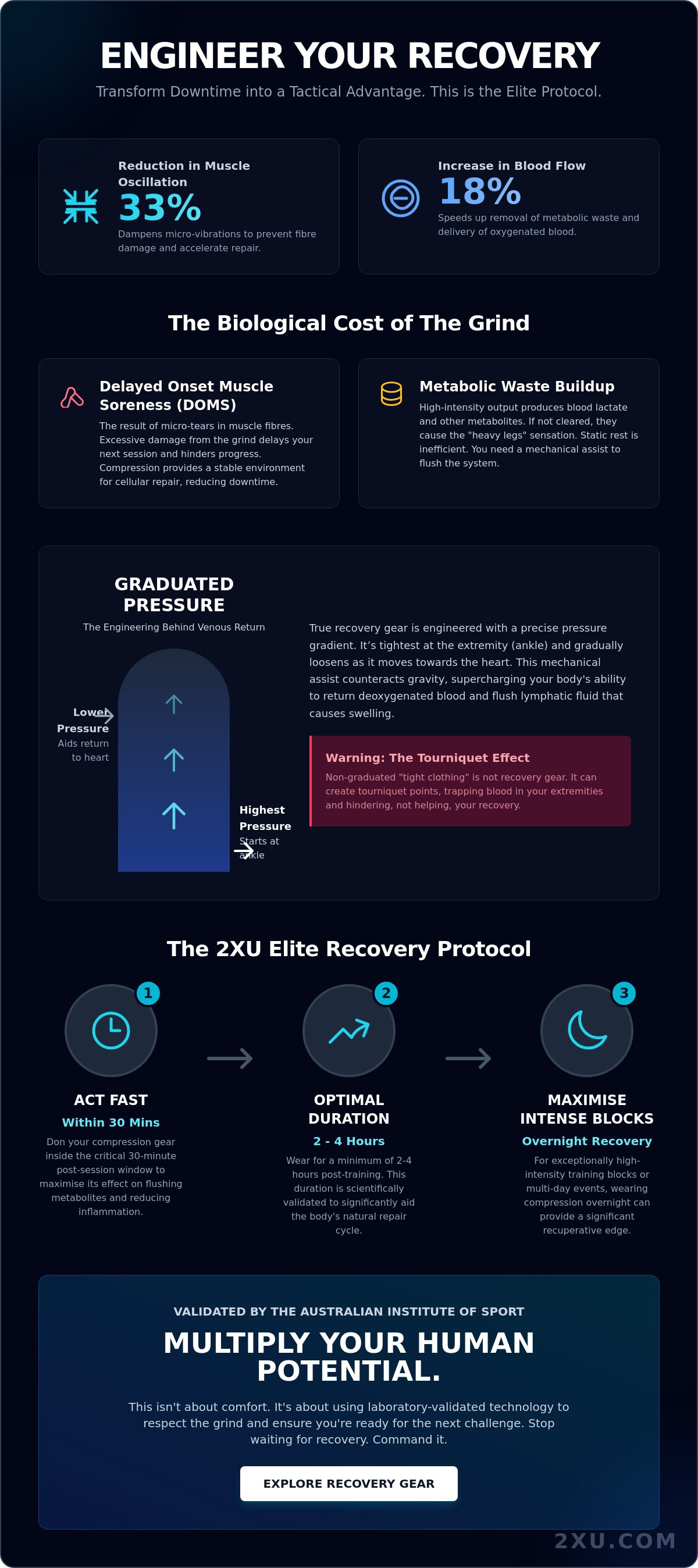
Recovery isn't a passive state; it's a tactical phase of performance engineering that determines the ceiling of your next training block. If you're waiting for muscle soreness to dissipate on its own, you're losing ground to the competition. Mastering how to use compression gear for recovery allows you to take control of biological repair through precise pressure gradients. By utilising extra-firm graduated compression in the 25-28 mmHg range, research suggests you can achieve a 33% reduction in muscle oscillation and an 18% increase in blood flow. This isn't about comfort. It's about using laboratory-validated technology to ensure your legs don't feel like lead when the starting gun fires.
You understand that the grind demands discipline, but your biology requires a precise protocol to sustain elite output. We're cutting through the noise to deliver a scientific framework for post-training recuperation. You'll learn the exact duration for wearing your gear, including the critical 2-4 hour window and overnight strategies for high-intensity blocks. This article provides the definitive elite athlete’s protocol to reduce downtime and multiply your physical potential. Prepare to transform your recuperation into a disciplined system of athletic advancement.
Key Takeaways
- Identify how mechanical physiological support dampens muscle oscillation to prevent the micro-vibrations that cause fibre damage.
- Master the tactical timing of how to use compression gear for recovery by donning garments within the 30-minute window after your session ends.
- Utilise graduated pressure gradients to assist the muscle pump and accelerate the return of deoxygenated blood to the heart.
- Determine the specific benefits of full-length tights versus targeted sleeves to map your recovery gear to your primary muscle groups.
- Implement the same laboratory-validated protocols developed in partnership with the Australian Institute of Sport to multiply your performance potential.
The Biological Blueprint of Fatigue: Why Recovery is a Tactical Choice
Elite performance isn't just about the work you do on the track or in the gym. It's about how you manage the biological aftermath. Recovery is the third pillar of the athletic journey: Prepare, Perform, Recuperate. If you neglect the final stage, you're essentially sabotaging the first two. Compression garments engineered for recovery are not just tight clothing; they are specialised tools designed for mechanical physiological support. They provide the external structure required to accelerate repair and maintain muscle integrity after high-intensity output. Choosing to use these tools is a tactical decision to shorten the gap between your sessions and increase your total training volume over time.
Understanding DOMS and Muscle Oscillation
Delayed Onset Muscle Soreness (DOMS) is the tax you pay for pushing physical limits. This soreness stems from micro-tears in the muscle fibres, which trigger an inflammatory response. While some inflammation is necessary for adaptation, excessive damage delays your next training block. High-impact training, such as sprinting or plyometrics, introduces significant mechanical stress. Muscle oscillation is the involuntary vibration of muscles during impact. These micro-vibrations cause additional fibre damage and increase muscle fatigue during the session. By utilising medical-grade compression, you stabilise the muscle group and minimise this movement post-exercise. This containment prevents further irritation of damaged tissues and provides a stable environment for cellular repair. When you master how to use compression gear for recovery, you're effectively putting your muscles in a protective "cast" that allows for movement while preventing the micro-trauma associated with oscillation.
The Metabolic Cost of the Grind
During high-intensity output, your body functions like a high-performance engine running at redline. This process generates a significant build-up of blood lactate and other metabolic waste products. If these metabolites remain stagnant in the extremities, they contribute to the "heavy legs" sensation and prolong feelings of fatigue. Static rest is often a trap; it's the least efficient way to clear your system because it relies solely on your heart's resting output to move fluid. Your body requires a mechanical assist to flush this waste effectively. Understanding how to use compression gear for recovery involves viewing your anatomy as a machine that needs active maintenance. Engineered pressure gradients help shift deoxygenated blood and metabolic waste products back toward the heart through the venous system. This process ensures your biological systems are primed for the next training block rather than being bogged down by the remnants of the last one. Respecting the grind means respecting the cleanup process required to sustain it.
Graduated Pressure: The Engineering Behind Venous Return
To understand how to use compression gear for recovery effectively, you must first master the physics of graduated pressure. True recovery gear isn't just tight; it's engineered with a specific gradient that applies the highest pressure at the ankle or wrist, gradually decreasing as it moves toward the heart. This architecture is designed to counteract the effects of gravity and the mechanical limitations of the venous system after a brutal session. By providing this external mechanical assist, you essentially supercharge the body's ability to return deoxygenated blood, a process often validated by scientific evidence for compression recovery. This isn't just about blood flow. It's about facilitating lymphatic drainage to flush the interstitial fluid that causes post-exercise swelling and stiffness.
Don't confuse generic sportswear with performance engineering. If the pressure isn't graduated, it's useless for recovery. In fact, non-graduated tight clothing can actually impede circulation by creating "tourniquet" points that trap blood in the extremities. To achieve a true physiological shift, your gear must provide firm, consistent pressure that remains stable under load. Mastering how to use compression gear for recovery requires a shift in perspective: you are applying a mechanical solution to a biological problem. Explore our range of high-performance compression clothing to integrate these standards into your routine.
The Physics of Blood Flow Optimisation
Your veins contain a series of one-way valves designed to prevent blood from pooling in your feet. During intense training, these valves are under immense pressure. Graduated compression supports these valves by narrowing the vein diameter, which increases the velocity of blood flow back to the heart. This improved venous return creates a vacuum effect that increases arterial inflow, delivering fresh oxygen to damaged tissues faster. While many focus on the legs, compression shirts play a critical role in supporting core and upper body circulation for triathletes and swimmers. This total-body approach ensures that no part of your machine is left to stagnate.
Medical-Grade Standards in Athletic Gear
The efficacy of recovery gear is measured in millimetres of mercury (mmHg). To trigger a significant physiological change, 2XU utilises extra-firm graduated compression in the 25-28 mmHg range. This level of pressure is verified using the Salzmann pressure measurement device, ensuring every garment meets the RAL-GZ 387 pressure gradient standards. We achieve this through specialised circular knit technology, which provides 360-degree pressure and prevents the power loss common in standard warp-knit fabrics. This engineering ensures that the pressure you feel on the first day is the same pressure you'll feel after months of the grind.
The 2XU Recovery Protocol: How to Maximise Your Downtime
Recovery is not a suggestion; it is a tactical requirement for anyone serious about the grind. Most athletes fail because they view recuperation as a passive afterthought rather than a disciplined protocol. To truly master how to use compression gear for recovery, you must adhere to a strict timeline that begins the moment your heart rate drops. We define the "Golden Window" as the 30-minute period immediately following your session. During this window, your metabolic rate is still elevated, and your circulatory system is primed for flushing waste. Delaying this process allows inflammatory markers to settle, increasing the duration of DOMS and delaying your return to peak output.
The Immediate Post-Session Phase
Success in the second half of your training day depends on three critical steps:
- Step 1: Hydrate immediately and transition into clean, dry recovery compression garments. Never apply compression to damp or sweaty skin, as this compromises the fabric's ability to maintain a consistent 360-degree pressure profile.
- Step 2: Focus on lower limb elevation for the first 20 minutes. Synergising graduated pressure with gravity maximises the speed of venous return and reduces initial swelling.
- Step 3: Maintain the gear for at least 180 minutes. This duration ensures the full cycle of metabolic waste flushing is completed before you transition back to normal activity.
Overnight Recovery and Long-Haul Travel
For multi-day events or heavy training blocks, the protocol extends into the night. Sleeping in compression garments allows you to capitalise on the body’s natural growth hormone peak, which occurs during deep sleep. This sustained pressure provides mechanical support for tissue repair while you are immobile, preventing the morning stiffness that often follows high-intensity output. Travel is another hidden performance killer that requires discipline. Utilising flight pressure socks during transit prevents venous pooling and DVT, ensuring you arrive at your destination ready to execute. When learning how to use compression gear for recovery during extended wear, ensure your fit is exact. A garment that is too small can restrict circulation, while one that is too large fails to provide the necessary mmHg for physiological change.
Targeted Compression: Mapping Gear to Muscle Groups
Precision is the hallmark of the elite athlete. You don't just throw on gear; you deploy it based on the specific physiological load of your training session. Understanding how to use compression gear for recovery requires mapping the garment to the muscle groups that endured the highest mechanical stress. While total systemic recovery is the ultimate goal, the architecture of your gear must match the architecture of your fatigue. Different sessions demand different tools to ensure the biological repair process is as efficient as the training itself.
Lower Body: Tights vs. Sleeves
Full-length compression tights are the gold standard for total systemic recovery. Because they cover the entire limb, they provide a continuous gradient from the ankle to the hip, ensuring that deoxygenated blood is moved efficiently through the entire venous system. This is essential for clearing the metabolic debt of endurance sessions or heavy leg days. Calf sleeves, however, serve a specialised purpose. They are tactical tools for targeted gastrocnemius and soleus repair. Use them when your training involves high-impact running or plyometrics where muscle oscillation in the lower leg was the primary driver of fatigue. Tights offer superior stabilisation for the IT band and quadriceps, preventing the lateral movement that leads to secondary irritation post-grind.
Foot and ankle swelling is a common byproduct of the muscle pump failing during periods of inactivity. Compression socks are non-negotiable for managing this. They provide targeted pressure to the distal extremities, preventing the fluid accumulation that causes stiffness and reduces range of motion in the ankle joint. By maintaining a firm 360-degree pressure profile, these garments ensure that your foundation is ready for the next block of effort.
Upper Body: Recovery for Endurance and Power
Upper body recovery is often neglected by runners but remains vital for swimmers, throwers, and triathletes. Compression tops are engineered to aid in postural recovery, pulling the shoulders back to open the thoracic cavity and assist respiratory muscle fatigue. This is particularly critical for triathlon wetsuit users. The transition from a horizontal swim to a vertical bike or run creates a massive shift in blood volume. Post-race, your upper body needs support to clear the metabolic waste of the swim while your lower body handles the bike and run debt. Using specialised compression ensures this transition doesn't leave you with a lingering metabolic deficit.
For athletes in high-grip or pulling sports, targeting the forearms and biceps is essential to maintain mechanical stability. Integrating these recovery tools within a triathlon suit race-day strategy means having your recovery gear ready the moment you cross the finish line. Don't leave your repair to chance. Shop our full collection of elite recovery gear to ensure your performance potential is always multiplied.
Multiplied Performance: The 2XU Commitment to Scientific Validation
Scientific validation is the foundation of the 2XU mission. Our partnership with the Australian Institute of Sport (AIS) ensures that every garment we produce is tested against the most rigorous standards in professional athletics. We don't rely on subjective "feel" or anecdotal evidence. Instead, we utilise laboratory testing to prove that our engineering leads to measurable physiological improvements. Our data-driven approach confirms that precise pressure gradients lead to:
- A 33% reduction in muscle oscillation to prevent micro-trauma during impact.
- An 18% increase in blood flow for faster metabolic clearance.
- Sustained power output during subsequent high-intensity training blocks.
This commitment to data is what defines the "Human Multiplied" philosophy. Gear should not be an accessory; it must be a functional extension of the athlete’s own biology. Mastering how to use compression gear for recovery is the only way to sustain the intensity required for breakthrough results. The "Grind" is unforgiving. If you cannot recover, you cannot train at the threshold necessary for adaptation. By implementing our scientific protocols, you aren't just resting; you are actively engineering your next performance.
Laboratory Proven: Not Just Tight, But Powerful
Standard athletic wear often relies on basic yarns that lose their tensile strength after a few sessions. 2XU utilises proprietary high-performance fibres and circular knit technology to ensure that the 25-28 mmHg of pressure remains consistent over time. Our fabrics are engineered to withstand the rigours of professional sport and repeated wash cycles without compromising the graduated pressure profile. This durability is essential for maintaining the mechanical stability of your muscle groups across an entire season. When you invest in elite gear, you're investing in a tool that maintains its power as long as you maintain your discipline.
Earn Your Place: Recovery for Every Athlete
While our technology is developed alongside elite bodies, the path to improvement is open to anyone willing to put in the work. You don't need a professional contract to respect your recovery as much as your training. You only need the discipline to follow the protocol. Every athlete can earn their place at the top through hard work and precise recuperation. Now that you understand how to use compression gear for recovery, it is time to execute. Respect the process. Multiply your potential. Shop the 2XU Recovery Collection and secure your performance future.
Take Command of Your Physical Potential
Mastery of the recuperation phase is what separates those who plateau from those who prevail. You've learned that recovery is a tactical choice requiring precise pressure gradients and disciplined timing. By adhering to the 30-minute post-session window and selecting gear mapped to your specific muscle fatigue, you've established a protocol for sustained elite output. Understanding how to use compression gear for recovery isn't just about wearing tight clothes. It's about deploying laboratory-validated technology to accelerate biological repair and maintain mechanical stability.
As an official partner of the Australian Institute of Sport, 2XU provides the tools needed to shorten your downtime. Our proprietary circular knit technology delivers 360-degree graduated pressure that is independently proven to reduce muscle recovery time by up to 33%. This isn't a shortcut; it's an engineering solution for the dedicated athlete who respects the grind. Your effort has earned you a place at the starting line. Now, ensure your body is ready to execute.
Optimise your recovery with 2XU high-performance compression gear. Put in the work, respect the protocol, and watch your performance multiply.
Frequently Asked Questions
How long should I wear compression gear after a workout for recovery?
You should wear your recovery garments for a minimum of 2 to 4 hours immediately following your session. This duration is the physiological threshold required to complete metabolic clearance and reduce initial swelling. For particularly strenuous training blocks or multi-day competitions, wearing the gear overnight is the most effective protocol to ensure you are ready for the next day's grind.
Can I sleep in compression tights to speed up my recovery?
Yes, sleeping in compression is a tactical advantage for athletes undergoing high-volume training. It provides sustained mechanical support for tissue repair while your body is immobile, capitalising on the natural growth hormone peak that occurs during deep sleep. This prevents the morning stiffness often associated with high-intensity output and ensures your biological repair processes are working at their maximum capacity while you rest.
Is it better to wear compression socks or full tights for leg recovery?
Full-length tights are the superior choice for total systemic recovery because they support the entire venous system from the ankle to the hip. This ensures a continuous graduated pressure profile that moves deoxygenated blood back to the heart more efficiently than isolated garments. Use compression socks specifically for managing distal swelling in the feet and ankles or when you require targeted repair for the lower limbs only.
Does compression gear actually reduce muscle soreness (DOMS)?
Engineered compression is proven to reduce muscle recovery time and the severity of Delayed Onset Muscle Soreness by up to 33%. It achieves this by dampening muscle oscillation and flushing the inflammatory markers that settle in the muscle fibres after impact. By providing an external cast-like structure, the gear prevents further irritation of damaged tissues, allowing you to return to your training programme with less downtime.
How tight should recovery compression gear feel compared to performance gear?
Recovery compression should feel significantly firmer than performance gear because it must compensate for the lack of a natural muscle pump while you are stationary. We utilise a medical-grade graduated pressure range of 25-28 mmHg for our recovery range to ensure a measurable physiological shift. If the garment does not feel intensely supportive, it is likely failing to provide the pressure required for effective venous return.
Should I use compression gear for recovery after every training session?
You should deploy recovery gear after any session that involves high-impact, high-intensity, or long-duration effort. While not strictly necessary for light mobility work, mastering how to use compression gear for recovery after every hard session ensures your performance potential is always multiplied. Consistency in your recuperation protocol is what allows you to sustain a higher total training volume across your entire season.
What is the difference between active and passive recovery compression?
Active compression is engineered for stability and muscle containment during the perform phase of your training. Passive recovery compression is designed specifically for use while you are immobile or resting, featuring higher pressure gradients to move blood without the assistance of movement. Choosing the correct garment for your state of activity is essential to ensure you are not trapping metabolic waste in the extremities.
How do I wash my compression gear to ensure it maintains its pressure?
Wash your garments in cold water on a gentle cycle and always air dry them away from direct heat. Never use a tumble dryer, as the intense heat destroys the elastic integrity of the fabric and compromises the 360-degree pressure profile. Proper maintenance ensures that the proprietary circular knit technology continues to deliver the precise mmHg required for elite physiological repair over hundreds of wash cycles.