
What Gear Do I Need for a Sprint Triathlon? The Elite Performance Checklist
What if your greatest obstacle on race day isn't your aerobic capacity, but the mechanical drag of your apparel? You have respected the grind and committed to the discipline of training, yet the fear of forgetting a critical component in transition remains a valid concern. When asking yourself, "what gear do I need for a sprint triathlon", you aren't just looking for a checklist; you are seeking a performance advantage. Many athletes worry that poor equipment choices will lead to early fatigue or transition confusion, but elite results are built on precision and engineered reliability.
This guide provides a scientific breakdown of the essential gear engineered to multiply your physical output and streamline your race morning. You will learn how specific apparel selections, from high-performance trisuits to USAT-compliant helmets, improve your splits through superior hydrodynamics and mechanical stability. We provide a professional list that replaces anxiety with data-driven confidence, ensuring your gear functions as a seamless extension of your ambition. By the end of this analysis, you will understand exactly how to optimise your kit for maximum speed and efficiency.
Key Takeaways
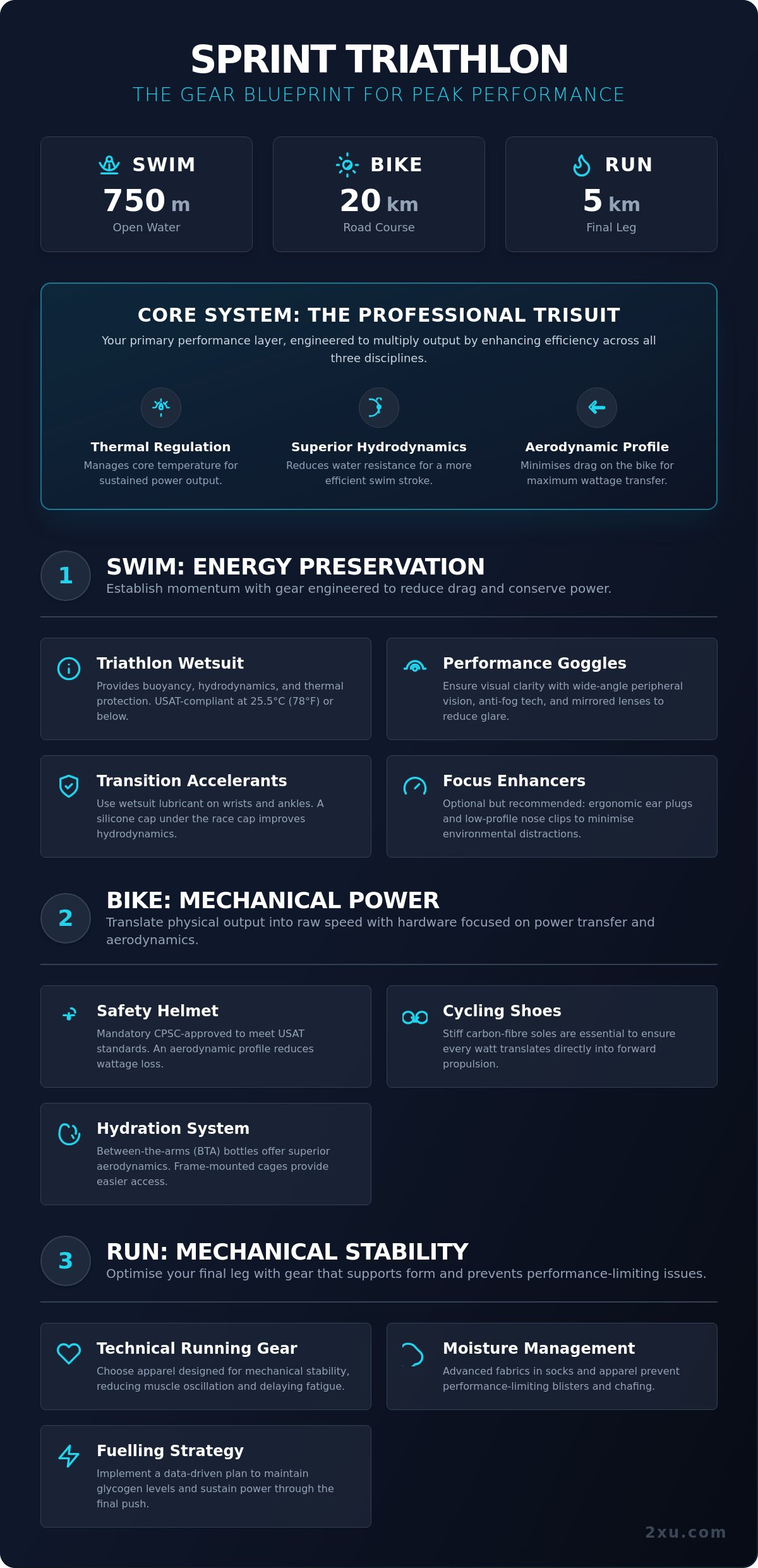
- Master the aquatic discipline by understanding how wetsuit engineering provides essential buoyancy and thermal protection for the 750m open water leg.
- Identify exactly what gear do I need for a sprint triathlon to streamline transitions and maintain mechanical efficiency over the 20km bike course.
- Optimise your final leg with technical running gear designed to ensure mechanical stability and prevent performance-limiting blisters through advanced moisture management.
- Discover how a professional-grade trisuit multiplies your physical output by enhancing aerodynamics and thermal regulation across all three stages.
- Implement a data-driven fuelling and recovery strategy to maintain glycogen levels and sustain power during high-intensity sprint efforts.
Mastering the First Discipline: Swim Essentials for Sprint Distance
The swim leg is where your race begins, yet it's often where poorly prepared athletes lose their momentum before they've even touched the bike. A standard sprint distance typically demands a 750-metre effort, often in open water environments that test your psychological resilience and mechanical efficiency. Understanding what a triathlon entails at this intensity is critical; you aren't just swimming, you are navigating a high-stakes arena where every second of drag costs you power. When determining what gear do I need for a sprint triathlon, the aquatic phase requires equipment that serves as a technical extension of your stroke.
Your primary objective in the water is the preservation of energy for the subsequent legs. This is achieved through specialised triathlon wetsuits, which provide a critical trifecta of benefits: buoyancy, hydrodynamics, and thermal protection. For races sanctioned under 2026 USAT regulations, wetsuits are permitted when water temperatures are 25.5 degrees Celsius (78 degrees Fahrenheit) or lower. Beyond the suit, visual clarity is non-negotiable. You need goggles engineered with wide-angle peripheral vision and advanced anti-fog technology to sight buoys effectively during the grind of a mass start. While race organisers provide a mandatory latex cap for identification, wearing a high-grade silicone base layer underneath can improve heat retention and create a smoother hydrodynamic profile.
The Science of Buoyancy and Hydrodynamics
Engineering your fastest swim requires a deep understanding of body position. Advanced triathlon wetsuit design utilises varying neoprene thicknesses to optimise your horizontal alignment in the water. Thicker panels in the core and upper legs increase lift, while thinner, more flexible zones in the shoulders allow for an uninhibited range of motion. Surface drag is further mitigated through specialised hydrodynamic coatings that reduce water resistance, effectively multiplying your stroke efficiency. These engineered materials are designed to ensure you exit the water with a lower heart rate and a higher capacity for the bike leg.
Essential Swim Accessories
The small details often dictate the success of your T1 transition. Visual clarity must be maintained through high-performance anti-fog solutions, ensuring you don't lose time off-course due to obscured vision. To accelerate your transition, apply specialised wetsuit lubricants to your wrists and ankles; this reduces friction and allows the suit to slide off instantly. For athletes sensitive to open water conditions, the following accessories are recommended to maintain focus:
- Ergonomic Ear Plugs: Prevent water ingress and potential equilibrium issues.
- Low-Profile Nose Clips: Reduce sinus irritation from salt or chlorinated water.
- Sighting-Specific Goggles: Mirror-coated lenses to mitigate solar glare during morning starts.
Respect the discipline of the swim by investing in gear that validates your training. By eliminating mechanical drag and environmental distractions, you ensure that your physical output translates directly into a competitive split time.
The Technical Checklist: Biking and Transition Hardware
Exiting the water marks the shift from hydrodynamic efficiency to mechanical power. For a 20km sprint course, your choice of machinery dictates your ability to maintain a high power threshold while preparing the body for the final run. While specialised triathlon rigs offer superior aerodynamics, a well-tuned road bike remains a formidable tool for this distance. When considering what gear do I need for a sprint triathlon, focus on power transfer and safety. Your helmet must be CPSC-approved to meet USAT standards; an aerodynamic profile reduces wattage loss without compromising structural integrity. Stiff carbon-fibre soles in your cycling shoes are essential to ensure every watt produced by your quadriceps translates into forward propulsion.
Optimising Your Bike Setup
Success is found in the margins of your setup. Tyre pressure must be calculated based on rider weight and surface conditions to minimise rolling resistance; over-inflation can lead to vibration-induced fatigue. Ensure your gearing is indexed for the specific elevation of the course to prevent mechanical failure under load. Safety officials will inspect your handlebar end caps; ensure they are securely plugged to avoid disqualification at the check-in gate. These small adjustments multiply your output by ensuring your equipment never hinders your physical potential.
T1 Transition: Swim to Bike
T1 is a race within a race where discipline earns you seconds. A small, high-absorbency transition towel allows you to clear debris from your feet instantly, preventing friction and blisters inside your shoes. Use a race belt to secure your bib; this allows you to keep the number on your back during the cycle and rotate it to the front for the run. High-clarity sunglasses are mandatory to protect your focus from UV radiation and high-speed debris. For those looking to sharpen their transition speed, integrating performance-driven athletic accessories can shave critical seconds off your total time.
Powering the Final Leg: Running Gear and Mechanical Stability
The final 5km is where the grind truly begins. You aren't just running; you are managing the physiological fallout of the swim and bike legs. When determining what gear do I need for a sprint triathlon, the final leg requires equipment that stabilises your mechanics as fatigue sets in. Cotton is your enemy in this environment. Technical fibres in high-performance socks manage moisture and reduce friction, preventing performance-limiting blisters that can derail your pace. Choose running shorts with integrated liners to eliminate chafing and provide the necessary mechanical support during the final push to the finish line.
Headwear is often overlooked but serves a vital role in thermoregulation. A lightweight visor or hat shields your eyes from solar glare and assists in heat dissipation, keeping your core temperature within optimal ranges. This is not about comfort; it's about maintaining a high physical output when your body is demanding a reprieve. Every piece of gear must serve a purpose in multiplying your endurance and protecting your focus.
Mechanical Stability and Compression
Muscle oscillation is a primary driver of fatigue during the run. Each foot strike sends a shockwave through your lower limbs, causing micro-trauma and unnecessary energy expenditure. Compression sleeves and tights mitigate this by providing external structural support to the calves and quads, dampening vibration and preserving muscle integrity. This technology also enhances venous return, accelerating the removal of metabolic waste from the tissues. Graduated compression multiplies endurance by reducing muscle damage and improving circulatory efficiency during high-intensity efforts.
T2 Transition: Bike to Run
T2 is the final hurdle before the run begins. Elastic laces are a mandatory upgrade for any serious athlete, potentially saving up to 30 seconds by allowing you to slide into your shoes without the mechanical delay of tying knots. Your transition layout must be methodical and practised. Place your gear in the order of use: socks, shoes, visor, and race belt. The shift from the cycling grind to the running stride is a psychological pivot that requires immediate discipline. You must force your legs to find their rhythm within the first few hundred metres. Knowing what gear do I need for a sprint triathlon means having a kit that facilitates this transition with zero friction.
Beyond the Basics: Nutrition, Hydration, and Recovery Science
High-intensity sprint efforts are physiologically demanding. While the duration is shorter than an Ironman, the metabolic cost of maintaining a near-threshold pace for 60 to 90 minutes is significant. When assessing what gear do I need for a sprint triathlon, you must look beyond the hardware and consider the biological fuel that powers your mechanics. Successful athletes don't just train their muscles; they optimise their internal chemistry. Pre-race fuelling should focus on saturating glycogen stores to ensure you have the explosive energy required for the swim start and the bike surges. On-course nutrition is about precision. Consuming high-carbohydrate gels and specific electrolytes prevents the "bonk" by maintaining blood glucose levels and supporting neural firing under stress.
Sun protection is a performance requirement, not an afterthought. You need high-performance sunscreen engineered to remain effective through the abrasive environment of the open water swim and the high-velocity airflow of the bike leg. UV exposure increases core temperature and accelerates fatigue. Protecting your skin is a strategic move to preserve your physical output for the final 5km run.
The Biology of Performance Hydration
Hydration is a complex balancing act of sodium, potassium, and magnesium. These minerals are critical for muscle contraction and preventing the debilitating effects of cramping. You cannot rely on thirst as a metric for readiness. Calculate your sweat rate during high-intensity training grinds to determine your specific fluid and electrolyte loss per hour. This data allows you to customise a hydration plan that ensures your biological systems remain stable from the first stroke to the final stride. Test every gel and electrolyte mix during your preparation to ensure gastrointestinal stability on race day.
Post-Race Recovery Gear
The elite athlete understands the tripartite framework of readiness, action, and recuperation. Your race does not end at the finish line; it ends when your body has fully recovered. Biological recovery is accelerated through the use of high-pressure compression clothing. Compression tights apply graduated pressure to the limbs, facilitating the removal of metabolic by-products and reducing delayed onset muscle soreness. If you are travelling to an event, the use of flight pressure socks is essential to combat travel fatigue and maintain circulatory health. Combine this with a specific nutrition protocol featuring a 3:1 or 4:1 ratio of carbohydrates to protein to initiate immediate muscle repair. To ensure you are fully equipped for every stage of the journey, invest in professional-grade compression clothing to multiply your recovery speed.
As you move from active recovery to archiving your achievements, custom t-shirt quilt makers offer a systematic way to repurpose your collection of race-day shirts into a durable, functional keepsake.
Engineering Your Race: Why a Professional Trisuit Multiplies Your Output
The trisuit is the most critical piece of equipment in your arsenal. It is not merely apparel; it is a technical requirement that serves as your primary interface with the environment across all three disciplines. When asking what gear do I need for a sprint triathlon, the answer begins with the garment that stays on your body from the first dive to the final sprint. Engineering your race means eliminating every possible variable that could impede your velocity. A professional-grade suit is designed to reduce aerodynamic drag on the bike and hydrodynamic resistance in the water, ensuring your physical effort is never wasted on overcoming poor equipment choices.
The debate between one-piece and two-piece triathlon suits is settled by your performance goals. One-piece suits are the gold standard for aerodynamic efficiency; they eliminate the seam at the waist where drag-inducing air pockets often form. Two-piece options offer more versatility for varying body proportions but can result in slight mechanical disadvantages during high-speed efforts. Beyond the silhouette, fabric technology is paramount. High-performance fibres must be hydrophobic to prevent water absorption and provide rapid moisture-wicking properties once you exit the water. This ensures you remain light and thermoregulated throughout the grind.
The chamois design in a trisuit is a feat of specialised engineering. Unlike a standard cycling pad, a triathlon chamois is thin and high-density. It provides the necessary protection for a 20km bike leg but is low-profile enough to disappear during the run, preventing the "diaper effect" and associated chafing. 2XU suits leverage proprietary fibres that provide superior mechanical stability, ensuring the garment moves with your musculature rather than against it.
The Multiplier Effect of a Professional Suit
A professional suit is a transition multiplier. By wearing a single garment for all three legs, you eliminate the need for clothing changes in T1 and T2, saving critical seconds when the podium is decided by margins. Targeted compression zones within the suit provide muscle containment, reducing the oscillation that leads to premature fatigue. These engineered materials also provide essential UV protection, shielding your skin from the sun's radiation without compromising breathability or increasing core temperature.
Choosing Your First Trisuit
Fit is the most important factor when selecting your gear. A trisuit must fit like a second skin; any bunching or loose fabric creates drag and increases the risk of friction. When determining what gear do I need for a sprint triathlon, look for suits with integrated, low-profile pockets. These allow you to stash gels for the final leg without creating a parachute effect in the water or on the bike. Discipline in your gear selection proves your commitment to the sport. Shop 2XU Triathlon Gear today and multiply your potential on race morning.
Execute Your Race Strategy with Precision
Success in a sprint triathlon is the result of disciplined training and the elimination of mechanical inefficiency. You now understand that when asking what gear do I need for a sprint triathlon, the answer lies in selecting equipment that functions as a technical extension of your own ambition. From the hydrodynamic advantages of a specialised wetsuit to the mechanical stability provided by graduated compression, every choice you make must be data-driven and focused on multiplying your physical output. Transition speed and biological recovery are not accidental. They are engineered through the use of professional-grade apparel and a meticulous approach to your race-day checklist.
2XU is the choice for elite athletes worldwide because our gear is built on scientifically validated compression technology. Our trisuits and athletic accessories are engineered for maximum durability and output, ensuring you can respect the grind without being hindered by your equipment. You have done the hard work in training. Now, ensure your gear is as unyielding as your determination. Equip yourself for the grind with 2XU Triathlon Apparel. Step onto the starting line with the confidence that your potential has been mathematically multiplied.
Frequently Asked Questions
Do I really need a wetsuit for a sprint triathlon?
A wetsuit is mandatory if water temperatures fall below specific safety thresholds, but its primary function is as a performance multiplier. For USAT-sanctioned events in 2026, you may wear one if the water is 25.5 degrees Celsius or lower. Beyond thermal protection, the neoprene provides essential buoyancy that improves your horizontal body position, reducing drag and preserving your glycogen stores for the bike leg.
Can I wear a normal swimsuit under my clothes?
You should avoid wearing standard swimwear or cotton undergarments as they lack the technical engineering required for multi-sport transition. Standard swimsuits offer no mechanical support on the run and lack the specialised chamois necessary for cycling comfort. A professional trisuit is designed to manage moisture and prevent the severe chafing that occurs when non-technical fabrics remain damp against the skin during the grind.
What is the most important piece of gear for a beginner?
The most critical investment for any athlete determining what gear do I need for a sprint triathlon is a high-performance triathlon suit. This single garment eliminates the need for complex clothing changes in transition, providing a seamless interface between the swim, bike, and run. It ensures you maintain aerodynamic and hydrodynamic efficiency throughout the entire race without the mechanical delay of switching apparel.
How do I choose the right size trisuit?
Your trisuit must achieve a "second-skin" fit to provide the necessary compression and aerodynamic benefits. Any bunching or loose fabric will create drag in the water and increase the risk of friction-induced skin damage during the run. Ensure the suit is tight enough to provide muscle containment but allows for a full range of motion in the shoulders for the swim stroke without restriction.
Do I need a specialised triathlon bike for a sprint distance?
You do not require a dedicated time-trial or triathlon bike to be competitive over a 20km sprint course. A well-maintained road bike is highly effective, provided you optimise your tyre pressure and ensure your gearing is tuned for the specific course profile. Mechanical efficiency and power transfer are more important than the frame geometry for athletes entering the sport or respecting a modest budget.
What should I carry in my transition bag?
Your transition bag should contain only the essential hardware required to execute your race strategy. This includes your helmet, cycling shoes, a small transition towel for drying feet, and your on-course nutrition. Avoid over-packing; a cluttered transition area leads to confusion and wasted seconds. Include a mechanical repair kit with a spare tube and CO2 inflator to ensure self-sufficiency while asking what gear do I need for a sprint triathlon.
How do I prevent blisters during the run leg?
Blister prevention starts with moisture management and reducing mechanical friction. Use a small towel in T1 to ensure your feet are dry and clear of sand before putting on technical socks engineered with moisture-wicking fibres. Elastic laces ensure a consistent, secure fit that prevents your foot from sliding inside the shoe, which is a primary cause of blister formation during the intensity of the final 5km.
Is a race belt necessary for a sprint triathlon?
A race belt is a mandatory tool for efficient transitions and regulatory compliance. It allows you to secure your bib number once, keeping it on your back for the bike leg to maximise aerodynamics and rotating it to the front for the run. This eliminates the need for safety pins and prevents damage to the high-performance fabrics used in your trisuit, ensuring your gear remains intact for future efforts.