
Compression Clothing for Muscle Recovery: The Science of Engineering Your Comeback
Your rest day isn't a break from the grind; it's the most critical phase of the engineering process. You've felt the heavy, sluggish legs after a brutal endurance session and watched your training schedule stall because of Delayed Onset Muscle Soreness (DOMS). It's frustrating when your ambition outpaces your body's ability to repair itself, leaving you sidelined while the competition gains ground.
By leveraging graduated compression clothing for muscle recovery, you can bypass these physiological bottlenecks. This technology isn't a marketing gimmick. It's a scientifically validated method to accelerate blood flow and reduce inflammation, ensuring you multiply your next performance rather than just surviving it. We'll break down the laboratory-tested data behind graduated pressure and provide a clear protocol for post-race recovery that returns you to peak power faster. Stop settling for inconsistent recovery quality and start using the data-driven tools required to dominate your next session.
Key Takeaways
- Understand the biological restoration process and how metabolic waste products like lactate stall your return to peak power.
- Master the physics of graduated compression clothing for muscle recovery to increase blood velocity and accelerate toxin removal.
- Implement the 24-hour recovery protocol, focusing on the two-hour "Golden Window" to initiate immediate repair and reduce muscle swelling.
- Differentiate your gear requirements based on specific muscle group needs to support posture, respiratory efficiency, and lower limb endurance.
- Leverage proprietary fabric technology validated by independent, peer-reviewed research to ensure your recovery is as intense as your training.
The Physiology of Fatigue: Why Your Muscles Demand Active Recovery
Recovery isn't just a pause in training; it's a calculated biological restoration of your force-generating capacity. When you hit the wall during an intense session, your body isn't just tired. It's dealing with a complex chemical and mechanical breakdown. This isn't a suggestion; it's a physiological mandate for anyone serious about their output. The accumulation of metabolic waste products, specifically lactate and carbon dioxide, creates an acidic environment that inhibits muscle contraction. If these byproducts aren't cleared efficiently, your next session is compromised before it even begins.
Exercise-induced muscle damage (EIMD) is the price of progress. These micro-tears in the muscle fibres trigger a cascade of inflammation and swelling. While this is a necessary part of the adaptation process, excessive swelling creates a physical barrier to nutrient delivery. We don't accept average standards, and neither should your recovery protocol. Compression garments provide the external mechanical pressure required to manage this response. Using high-performance compression clothing for muscle recovery ensures that the inflammatory response doesn't become a bottleneck for your ambition.
DOMS and the Inflammatory Response
Delayed Onset Muscle Soreness (DOMS) typically peaks between 24 and 72 hours post-exercise. This isn't just "pain"; it's a sign that your muscle fibres are undergoing a repair cycle that demands a constant supply of oxygen-rich blood. Without targeted intervention, this cycle can be slow and inconsistent. Managing this inflammatory hurdle requires more than just discipline; it requires an engineering solution that supports the body's natural repair mechanisms. Every hour spent in a state of unmanaged inflammation is an hour of lost potential.
The Role of Blood Flow in Waste Removal
Passive rest is often the default for the uninspired, but it's rarely the most effective strategy for an elite athlete. Gravity is a constant adversary. It makes it difficult for deoxygenated blood to return from your lower limbs to your heart, a process known as venous return. When blood pools in the extremities, metabolic waste stays trapped, extending your recovery time and leaving your legs feeling like lead. To maintain peak output, you must assist your circulatory system. The primary goal of compression clothing for muscle recovery is to provide the mechanical support necessary to fight gravity and increase the velocity of blood flow back to the heart. This clears the path for nutrient-rich blood to reach the damaged tissue and begin the work of rebuilding your power.
Graduated Compression: Engineering the Pressure Gradient
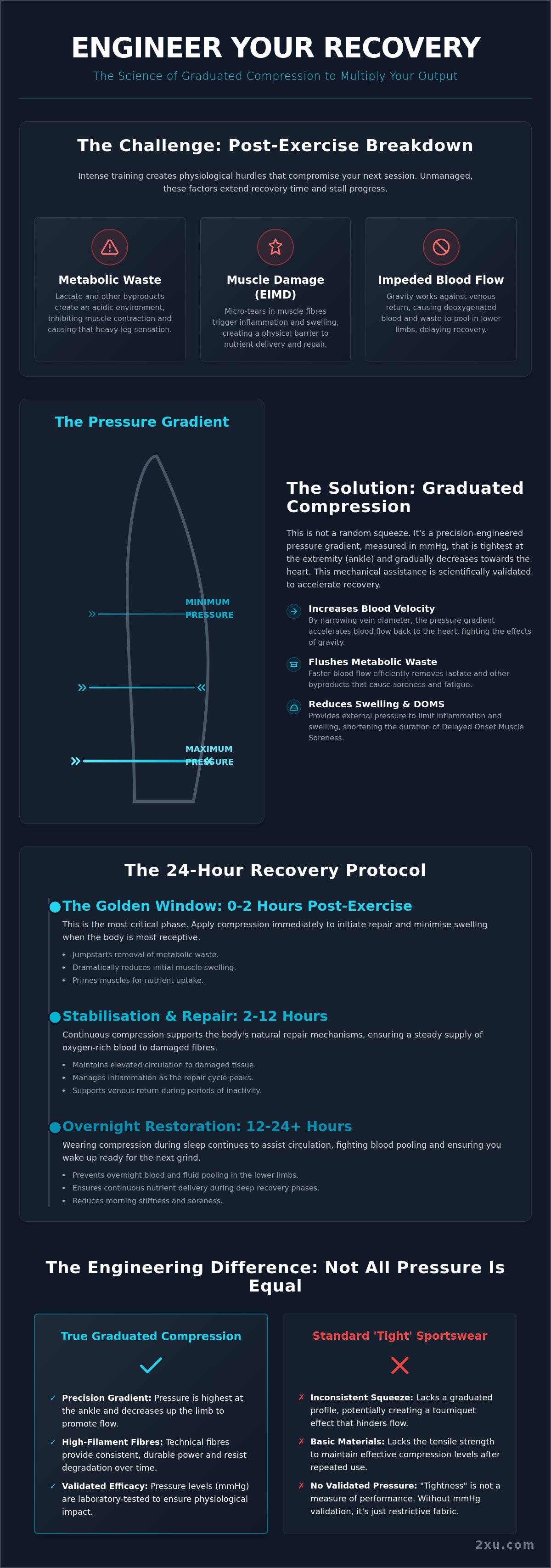
Engineering compression clothing for muscle recovery requires a deep understanding of the pressure gradient. This technology isn't a random squeeze; it's a precision tool defined by pressure that is highest at the extremities and mathematically decreases as it moves toward the heart. By narrowing vein diameter, the graduated profile increases blood velocity according to fluid dynamics principles. We measure this efficacy in millimetres of mercury (mmHg), the gold standard for clinical and athletic pressure validation. To maintain this precise gradient over time, we use high-filament technical fibres that resist over-stretching and ensure consistent power application during every minute of your comeback.
Standard sportswear often confuses "tightness" with "compression". While a tight garment might feel restrictive, it lacks the graduated profile necessary to influence internal blood flow. Effective recovery tools must provide a specific mmHg range to influence physiological change. This pressure must be applied consistently across the limb to avoid creating tourniquet effects. High-filament technical fibres are essential here; they provide the tensile strength needed to maintain these pressure levels without degrading after repeated use or intense training cycles.
The Science of Venous Return
The "muscle pump" effect is the body's primary driver for returning deoxygenated blood, and graduated compression amplifies this mechanism by providing a firm external surface for muscles to contract against. This mechanical assistance prevents the pooling of blood in the ankles and calves, which is the root cause of that heavy-legged sensation after endurance training. The Science of Compression for Recovery highlights how these cardiovascular responses facilitate the rapid delivery of repair nutrients to damaged tissue. Faster nutrient exchange means a shorter window between your last rep and your next peak performance.
Stabilising Muscle Oscillation
Stability is the foundation of efficiency. Compression wraps specific muscle groups to significantly reduce micro-vibrations, or muscle oscillation, that occur during the grind of high-intensity training. This mechanical stability is crucial during the cool-down phase to prevent further micro-trauma to the fibres. By reducing these vibrations, you lower overall fatigue and improve post-workout proprioception, keeping your body aware and aligned even when you're pushed to the limit. If you're ready to upgrade your recovery protocol, exploring high-grade compression clothing is the next logical step in your performance engineering.
Recovery Protocols: Maximising the 24-Hour Window
Discipline doesn't end when you finish your final set. The most elite athletes treat the post-workout period as an engineered extension of their training session, not a passive break. The first two hours after exercise represent the 'Golden Window' for recovery initiation. This is the period when your physiological systems are most receptive to mechanical assistance. By applying compression clothing for muscle recovery during this critical timeframe, you effectively manage the inflammatory response before it can compromise your next session. You've earned the right to recover, but you must do it with the same intensity you brought to the track.
While the immediate window is vital, the benefits of extended wear up to 24 hours are supported by rigorous performance data. Continuous pressure maintains the increased blood velocity required for deep-tissue repair and the removal of metabolic waste. However, your results are entirely dependent on the integrity of the fit. If the garment doesn't provide a firm, graduated squeeze, it is failing to influence your internal physiology. You aren't wearing leisurewear; you're wearing a technical recovery system. Proper fit is the difference between a mathematical improvement in output and a wasted opportunity.
The Immediate Post-Workout Phase
To maximise your return to peak power, follow this three-step protocol immediately after your session:
- Step 1: Transition into clean recovery gear within 30 minutes of session completion to capture the peak of your circulatory response.
- Step 2: Maintain wear for a minimum of 2-4 hours to aggressively manage initial swelling and accelerate metabolic clearing.
- Step 3: Elevate your limbs while compressed; this uses gravity as a secondary force to assist venous return and reduce fluid accumulation.
Sleep and Long-Term Recovery
Sleep is the ultimate anabolic state, and it's where the most significant muscle repair occurs. Wearing compression tights during rest can optimise growth hormone delivery by ensuring blood continues to circulate efficiently through repair sites while your heart rate is at its lowest. You must select a pressure level that provides mechanical support without restricting circulation or disrupting sleep quality. High-performance compression clothing for muscle recovery is designed to offer this balance, providing stability to damaged fibres throughout the night.
Assess your recovery quality the next morning using this checklist:
- Reduced joint stiffness and muscle tenderness upon waking.
- Absence of "heavy" or "fluid-filled" sensations in the lower limbs.
- Restored range of motion in the targeted muscle groups.
- Consistent performance metrics during your morning warm-up.
If you aren't hitting these markers, your recovery protocol needs adjustment. Average standards have no place in a high-performance programme.
Targeting the Grind: Gear for Specific Muscle Groups
Precision is the difference between an amateur and an elite athlete. You don't train your entire body the same way, so you shouldn't treat your recovery with a one-size-fits-all approach. The physiological requirements of the lower body, typically taxed by high-volume endurance, differ significantly from the power and strength demands of the upper body. Utilising specific compression clothing for muscle recovery allows you to target the muscle groups most impacted by your specific discipline. This isn't just about comfort; it's about mechanical alignment and biological efficiency, which is why many athletes learn more about specialized equipment for strengthening the upper back and neck region to ensure total body stability.
For the upper body, compression shirts are essential tools for more than just muscle repair. They provide the structural support needed for posture and respiratory recovery, especially after sessions that tax the diaphragm and core. Similarly, high-performance running shorts with integrated compression liners are vital for the grind. They provide the necessary stability to prevent groin and quad strain by limiting lateral muscle movement during high-impact phases. Targeted sleeves for the calves and forearms offer a modular solution for athletes who need to focus on specific high-wear areas without a full-body commitment.
Lower Body Dominance: Tights and Socks
Full-length tights remain the gold standard for total leg recovery. By covering the major muscle groups from the ankle to the waist, they ensure the most efficient venous return across the largest surface area. For athletes who must travel immediately after competing, flight pressure socks are non-negotiable. They combat travel fatigue and Deep Vein Thrombosis (DVT) by maintaining circulation when you're forced into a sedentary state post-race. If you're managing specific issues like shin splints, calf sleeves provide targeted pressure to the tibialis anterior and gastrocnemius, managing inflammation while you're on the move.
Upper Body Recovery and Core Stability
Heavy lifting and swimming sessions leave the trapezius and lats in a state of high metabolic stress. Compression tops provide the external support these large muscle groups need to initiate the repair cycle. Core compression is equally critical; it maintains trunk stability when fatigue begins to compromise your form. For throwing and racquet sports, arm sleeves accelerate the removal of waste products from the forearms and biceps, ensuring your peak power is restored for the next match. Don't leave your results to chance. Invest in the right compression clothing to ensure every muscle group is engineered for its comeback.
The 2XU Difference: Why Our Compression Multiplies Your Output
The pursuit of peak performance requires tools that are as unyielding as your discipline. We don't design apparel; we engineer technical systems designed to multiply human capability. Our proprietary fabric technology is engineered to deliver the highest power-to-weight ratio in the industry, providing maximum muscle support without compromising mobility. When you invest in compression clothing for muscle recovery from 2XU, you're choosing a product validated by independent, peer-reviewed research. We reject the average standards of the mass market, opting instead for rigorous laboratory testing to ensure every stitch contributes to your comeback.
Durability is a core requirement for any athlete living through the grind. Our performance fibres are engineered to withstand the most intense training programmes, maintaining their tensile strength long after inferior garments have failed. This mechanical longevity ensures that the pressure gradient remains precise, session after session. We view our gear as a critical technical tool for the serious athlete. If you're committed to pushing your physical limits, you require equipment that is equally committed to your biological restoration.
Laboratory Validated Performance
Precision is our baseline. We have a long-standing history of collaborating with elite sports institutes to ensure our garments deliver precise mmHg pressure levels that actually influence physiological change. Our circular knit technology is a key differentiator, providing a consistent 360-degree stretch that eliminates pressure "dead zones" found in standard warp-knit products. This advanced construction method ensures that the graduated profile remains uniform across the entire muscle group. 2XU gear maintains its compressive power longer than standard athletic wear, ensuring your investment continues to deliver results over hundreds of training cycles.
Earning Your Place in the 2XU Community
We have a fundamental respect for the grind and for those who understand that victory is earned in the hours between sessions. Choosing high-performance gear is a statement of intent; it shows you value your long-term athletic longevity as much as your immediate results. By managing inflammation and accelerating nutrient delivery today, you're securing your ability to perform at peak power tomorrow. This is the mathematical reality of recovery. Don't leave your potential to chance. It's time to Explore the 2XU Compression Collection and secure the tools required to dominate your next performance.
Engineer Your Next Breakthrough
Recovery is the most critical phase of the grind. You've seen the data: effective restoration requires more than just sitting on the couch. It demands an active approach to clearing metabolic waste and managing the inflammatory response through graduated pressure. By mastering the 24-hour recovery protocol and using high-filament technical fibres, you ensure your body returns to peak power without the delay of heavy, sluggish legs. This is how you multiply your output and prepare for the next challenge.
We don't settle for average standards, and neither should you. Our compression clothing for muscle recovery is independently researched and laboratory tested to meet the rigorous requirements of world-champion triathletes and elite teams. We use circular knit technology to provide consistent 360-degree pressure, ensuring the graduated gradient remains effective throughout the entire repair cycle. It's a technical investment in your athletic longevity that standard gear cannot replicate.
Shop 2XU Recovery Compression and Multiply Your Performance
The work doesn't stop when the timer ends. Respect the grind, trust the science, and prepare to dominate your next session.
Frequently Asked Questions
How long should I wear compression clothing for recovery?
Wear your gear for a minimum of two to four hours immediately following your session to capture the peak of the inflammatory response. For elite level results, extended wear for up to 24 hours is recommended to maintain blood velocity and ensure complete metabolic clearing. Consistency is the foundation of the grind; don't cut your recovery window short.
Can I sleep in my compression tights?
Yes, sleeping in compression is a scientifically validated method to optimise nocturnal repair. While your heart rate drops during rest, the graduated pressure provides the mechanical assistance needed to keep blood circulating through damaged muscle tissue. This ensures growth hormones reach repair sites efficiently while you sleep, making your rest period more productive.
Is it better to wear compression during or after a workout?
Both phases are essential parts of the tripartite athletic framework and serve distinct physiological purposes. During training, compression reduces muscle oscillation and micro trauma to preserve power. Post workout, compression clothing for muscle recovery focuses on venous return and the rapid removal of lactate and carbon dioxide. Use both to multiply your total output.
How tight should recovery compression gear actually feel?
The garment should feel firm and supportive, providing a clear squeeze without causing numbness, tingling, or skin irritation. It must be a graduated fit, meaning the pressure is highest at the ankle and decreases as it moves up the limb. If it feels like standard leisurewear, it lacks the pressure required to influence your internal physiology.
Does compression clothing help with muscle soreness (DOMS)?
Yes, it significantly reduces the severity of Delayed Onset Muscle Soreness by managing exercise induced muscle damage at a cellular level. By applying external pressure, you limit the physical space available for swelling and inflammation to take hold. This allows for a faster return to peak power and keeps your training schedule on track.
Should I size down for recovery compression gear?
Never size down based on the assumption that tighter is better. Our gear is mathematically engineered to provide specific mmHg pressure based on our size charts. Sizing down can lead to a tourniquet effect, which restricts circulation and negates the benefits of compression clothing for muscle recovery. Trust the data and use the recommended size.
What is the difference between performance and recovery compression?
Performance gear is designed for activity, prioritising muscle stability and power output during high intensity movement. Recovery gear features a more aggressive graduated pressure profile specifically engineered to assist venous return while the body is at rest. Each tool has a specific role in your performance engineering and should be used accordingly.
How do I care for my compression gear to ensure it lasts?
Wash your gear in cold water on a gentle cycle and always avoid fabric softeners, which can degrade the technical fibres. Air dry your garments out of direct sunlight to maintain the integrity of the circular knit technology. Proper maintenance ensures your equipment remains as unyielding as your discipline over hundreds of training cycles.