
Benefits of Compression Socks for Runners: The Science of Multiplying Performance
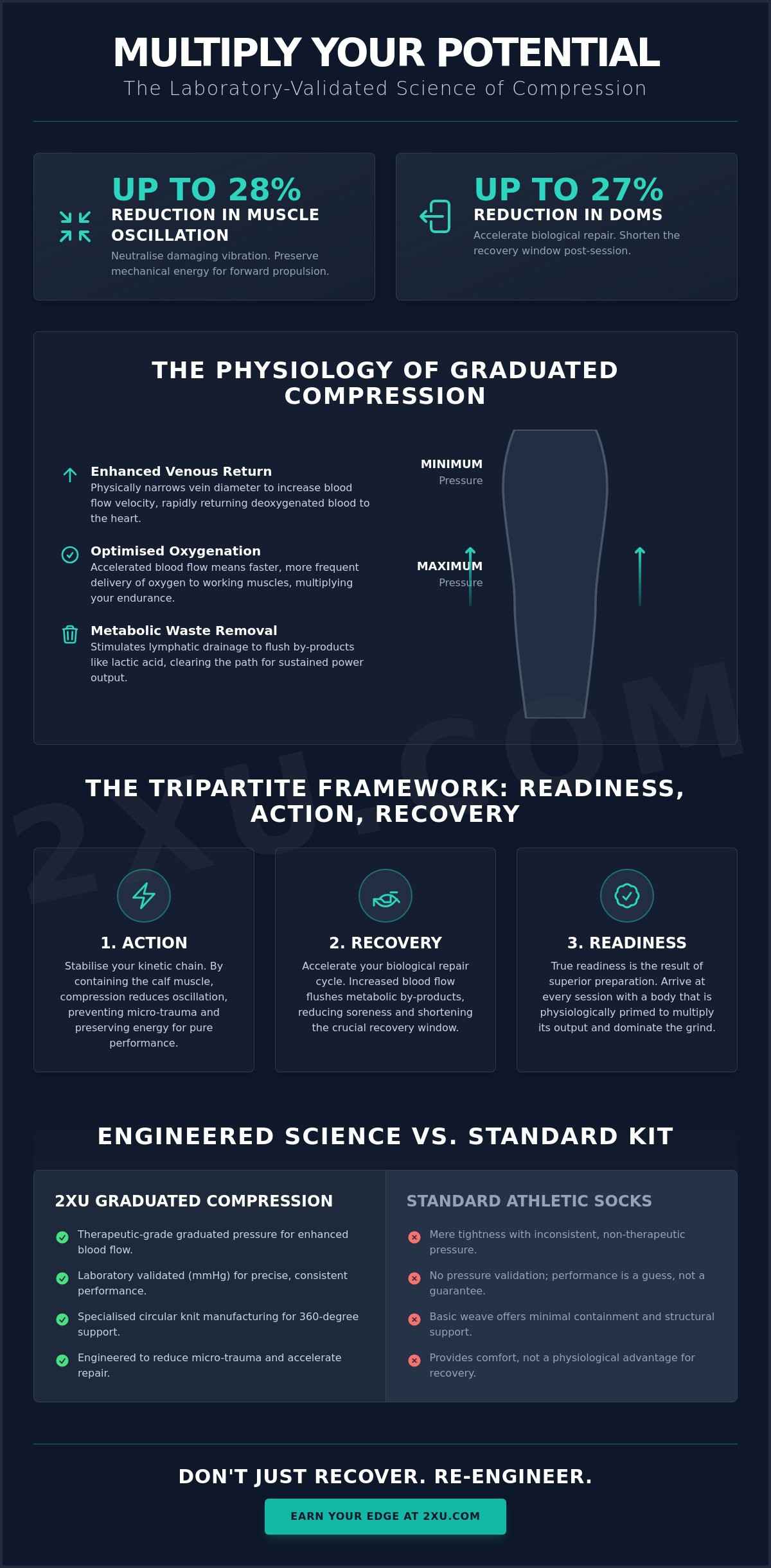
Research indicates that graduated compression garments can reduce muscle vibration during impact activities by up to 28 per cent. This isn't just about comfort; it's about the mechanical preservation of your power. You've likely felt the heavy, leaden fatigue that sets in during the final kilometres of a long session. Understanding the scientific benefits of compression socks for runners allows you to move past the limits of average endurance. This technology serves as a physiological tool designed to optimise your body's efficiency by managing the mechanical stress of every stride.
You know that the real battle is won in the hours between sessions where most athletes simply wait to heal. We're here to change that timeline. Discover how graduated compression technology physiologically enhances venous return, reduces muscle oscillation, and accelerates your recovery cycle. This article examines the laboratory validated mechanisms that reduce Delayed Onset Muscle Soreness (DOMS) by up to 27 per cent compared to passive recovery. We will detail the specific engineering required to reduce micro-trauma and provide you with a scientific edge over the competition. Prepare to multiply your physical potential through superior biological recuperation.
Key Takeaways
- Stabilise your kinetic chain by understanding how to neutralise muscle oscillation and preserve mechanical energy during high-impact sessions.
- Master the physics of blood flow through graduated pressure technology that systematically enhances venous return and vascular efficiency.
- Accelerate your biological repair cycle by leveraging the benefits of compression socks for runners to flush metabolic by-products and shorten the recovery window.
- Distinguish between mere tightness and true compression by examining the specialised circular knit manufacturing required for therapeutic-grade performance.
- Implement the tripartite framework of Readiness, Action, and Recovery to ensure your body is physiologically prepared to multiply its output every day.
The Physiology of Compression: How Venous Return Multiplies Performance
Compression socks are not standard hosiery; they are precision-engineered garments designed to apply specific pressure gradients to the lower limbs. This engineering focuses on graduated compression, where the highest pressure is applied at the ankle and decreases as it moves upward. This gradient is the foundation of The Physiology of Compression. By physically narrowing the vein diameter, the garment increases blood flow velocity back to the heart. This creates a multiplication effect for the athlete. When blood moves faster, oxygen is delivered to the muscles with greater frequency. This isn't a minor tweak; it's a fundamental shift in how your body manages energy. Our garments are validated using specific pressure-measurement instrumentation to ensure the millimetres of mercury (mmHg) are exact. This laboratory validation ensures that the mechanical pressure is consistent across every square centimetre of fabric. Understanding the benefits of compression socks for runners is essential for any athlete who refuses to accept average standards of endurance. By optimising the internal vascular environment during the Action phase of your run, you are effectively multiplying your potential for sustained power. The science is clear: better blood flow leads to better results. We don't guess at these numbers; we engineer them to ensure your output remains uncompromised during the most punishing segments of your training.
Understanding Venous Return and Oxygenation
Gravity forces blood to pool in your lower limbs during the grind, causing vascular inefficiency and swelling. One of the primary benefits of compression socks for runners is the active prevention of this pooling through mechanical pressure. By assisting the calf pump, these garments ensure your tissues are saturated with fresh, oxygenated blood. Venous return is the rate of blood flow back to the heart, which is critical for aerobic efficiency.
Metabolic Waste Removal: Clearing the Path for Power
Peak performance requires the rapid removal of metabolic waste like lactic acid and carbon dioxide. Compression garments stimulate the lymphatic system to flush these by-products more effectively than the body can manage alone. This maintains biological cleanliness within the muscle tissue even during demanding intervals. By accelerating waste removal, you preserve your mechanical integrity and push past previous thresholds of exhaustion. You are cleaning the engine while it runs.
From Stability to Speed: The Action Benefits of Compression Socks
Action is the crucible where your preparation meets the pavement. During this phase, your body is subjected to repetitive mechanical stress that most athletes simply ignore. Every foot strike generates a shockwave that radiates through your soft tissue, a phenomenon known as muscle oscillation. This vibration is not just a byproduct of movement; it's a primary source of micro-trauma and energy leakage. By applying a firm, engineered wrap around the calf, you effectively neutralise these vibrations. Research indicates that graduated compression garments can reduce muscle vibration during impact activities by up to 28 per cent. This mechanical lockdown ensures that your muscle fibres remain aligned and stable, preserving energy for forward propulsion rather than internal dissipation.
The benefits of compression socks for runners extend beyond simple vibration dampening. A comprehensive meta-analysis has established evidence-based benefits for runners, highlighting how these garments mitigate the mechanical strain of high-volume training. When you eliminate the 'wobble' in your gait, you reduce the cumulative fatigue that typically leads to overuse injuries. This is about structural integrity. You are reinforcing your body's natural architecture to withstand the grind of elite-level output. To achieve total lower-body stability, consider the synergy of your kit. Integrating these socks with technical running shorts creates a comprehensive support system that protects your kinetic chain from the hip to the ankle.
Reducing Muscle Oscillation and Damage
Energy efficiency is the difference between a podium finish and a mid-pack result. When your calf muscles vibrate uncontrollably upon impact, your body wastes metabolic resources trying to restabilise the tissue. Compression garments act as an external ligament, bracing the muscle and reducing the risk of micro-tears. This structural support allows you to maintain a higher intensity for longer durations. It's a mathematical advantage: less damage during the run equals more power available for the final sprint. Optimise your entire kit by pairing these socks with high-performance athletic sportswear to achieve total mechanical stability.
Enhanced Proprioception: The Mind-Muscle Connection
Proprioception is your body's ability to perceive its position and movement in space. Compression garments stimulate sensory receptors in the skin, creating a heightened feedback loop between your limbs and your brain. This improved spatial awareness is critical for maintaining technical form when fatigue sets in. For trail runners, this translates to faster reaction times on uneven terrain, significantly reducing the likelihood of ankle strain. You aren't just running; you're operating with greater mechanical precision. Every watt of energy you generate is directed exactly where it belongs: into the ground to drive you forward.
Engineered Recovery: Accelerating Biological Repair Post-Run
The grind continues long after the finish line. Elite athletes understand that the interval between sessions is not just downtime; it's an active biological repair phase. Real performance multiplication occurs when you shorten the window required for cellular reconstruction. One of the primary benefits of compression socks for runners is the management of exercise-induced oedema, which is the accumulation of fluid in the lower limbs following high-intensity load. By maintaining sustained pressure gradients, you facilitate the removal of metabolic waste and prevent the pooling that leads to heavy, unresponsive muscles.
The scientific evidence for compression socks demonstrates a clear correlation between graduated pressure and the reduction of perceived muscle soreness. This isn't a placebo effect. It's the result of physical containment that limits the expansion of muscle tissue and the subsequent inflammatory response. When you are deep into a high-volume training block or a multi-day event, these tactical advantages become the difference between maintaining your pace and hitting a physiological wall. The benefits of compression socks for runners are most evident when you observe the speed at which an athlete can return to peak power output. Discipline in your recovery protocol ensures that your muscle fibres are repaired and ready for the next session faster than those of your competitors.
Combating DOMS and Inflammation
Delayed Onset Muscle Soreness (DOMS) is the consequence of micro-trauma caused by eccentric loads during the Action phase. Compression gear reduces the inflammatory markers associated with intense eccentric load. By restricting the space available for fluid buildup, you effectively dampen the body's inflammatory response. While your legs are the priority, total systemic repair is enhanced when you apply these principles to the upper body, as detailed in our guide to compression shirts. Shortening the inflammatory window allows for a more rapid return to high-intensity training.
The Passive Recovery Advantage
Your recovery doesn't require you to be horizontal. Many athletes spend long hours on their feet or sitting at desks post-training, which can impede vascular efficiency. Wearing compression socks while sedentary keeps the blood moving, preventing the stagnation that leads to stiffness. This passive recovery is a critical component of the tripartite framework. We utilise the same rigorous engineering found in our flight pressure socks to ensure that even during travel or work, your recovery cycle remains uninterrupted. Respect the recovery. It's the only way to earn the right to push harder tomorrow.
The 2XU Framework: Graduated Compression vs. Standard Athletic Socks
Average athletes settle for tightness; elite performers demand precision. A standard athletic sock might feel restrictive, but without a specific pressure gradient, it's merely a piece of fabric obstructing your comfort. True compression is a product of advanced engineering, not just a smaller size. We use specialised circular knit machinery to create a variable weave that applies precise pressure across the limb. Standard looms cannot replicate this level of mechanical detail. Our manufacturing process is grounded in laboratory validation, ensuring that every pair provides the exact millimetres of mercury (mmHg) required to influence blood flow. This level of precision is why the benefits of compression socks for runners are often discussed in elite circles; it's the difference between a tool and a gimmick.
The durability of our compression is non-negotiable. High-quality elastomeric yarns are woven into the structure to maintain their tension over hundreds of kilometres. While inferior products lose their elasticity after a few cycles in the wash, our gear is built to withstand the rigours of daily training. We reject average standards in favour of uncompromising quality. Every stitch is designed to support your mechanical output and biological recovery. If you're serious about your progress, you need gear that respects the grind as much as you do. Invest in professional-grade compression clothing to experience the difference that laboratory-grade engineering makes.
Uniform Tightness vs. Graduated Pressure
Uniformly tight socks are a liability. When a garment applies the same pressure at the top as it does at the bottom, it creates a tourniquet effect that actually traps blood in the lower leg. This is the opposite of the intended physiological goal. Graduated pressure is the only mechanism that effectively moves blood toward the heart. By applying the highest pressure at the ankle and reducing it as it moves upward, we create a pump-like effect. This design leverages proprietary fabrics with the highest power-to-weight ratio in the industry to ensure maximum efficiency without unnecessary bulk. The benefits of compression socks for runners are only realised when this gradient is mathematically accurate.
Durability and Fabric Integrity
Low-grade materials fail when they're pushed. We avoid inferior yarns that sag or thin out under stress. Instead, we utilise high-stretch, moisture-wicking yarns that maintain their structural integrity through intense friction and sweat. This is essential for preventing blisters and ensuring long-distance comfort. These advanced fibres provide consistent tension, meaning the 20-30 mmHg you feel on day one is the same pressure you'll feel after months of high-volume training. We don't build gear for casual use; we build it for the persistent demands of the elite athlete who understands that quality is a prerequisite for victory.
Earn Your Edge: Integrating 2XU Compression into Your Training Regimen
Owning elite gear is a prerequisite, but deploying it with precision is what separates the dedicated from the average. To maximise your return on investment, you must integrate compression into every phase of your tripartite athletic framework. The benefits of compression socks for runners aren't limited to the minutes you spend on the track. By adopting a Readiness protocol, you can use graduated pressure to increase skin temperature and prep your muscle groups before the first stride. This proactive approach ensures your kinetic chain is warm and responsive, reducing the risk of injury during the initial transition into high-intensity output.
Timing is a critical variable in the recovery equation. For optimal metabolic clearance, we recommend maintaining compression for a minimum of 2 to 4 hours immediately following your session. This sustained pressure keeps the vascular pump active when your heart rate returns to baseline, preventing the stagnation of metabolic by-products. If you've pushed through a particularly punishing long run or a race, extending this period up to 24 hours can significantly diminish the severity of Delayed Onset Muscle Soreness. When you understand the benefits of compression socks for runners, you stop treating your kit as an afterthought and start treating it as a performance multiplier. Respect the grind. Use every mechanical and biological tool at your disposal to multiply your potential. Equip yourself with the world's most advanced compression gear at 2XU.
A Tactical Weekly Schedule
Success requires a structured approach to gear deployment. Integrate these protocols into your weekly programme to ensure consistent results:
- Speed Work: Deploy socks during high-velocity intervals to stabilise the calf and reduce the mechanical energy lost to muscle oscillation.
- Long Run: Utilise graduated pressure to delay the onset of leg heaviness and maintain vascular efficiency over extended durations.
- Rest Days: Commit to 2 to 4 hours of wear to facilitate passive repair, ensuring you start your next session from a position of physiological strength.
Choosing Your Gear: Socks vs. Sleeves
The choice between full socks and sleeves depends on your specific performance requirements. Full socks provide the most comprehensive enhancement of venous return by encompassing the foot and ankle, which is the point of highest pressure. Sleeves offer greater versatility, allowing you to pair them with technical socks or specific footwear during triathlons. Regardless of the format, a precise fit is mandatory. You must measure your calf circumference and height. Shoe size is a secondary metric that doesn't account for the biological dimensions required for accurate mmHg delivery. Precision is the only path to multiplication.
Master the Mechanics of Human Potential
Average athletes ignore the physics of the gait cycle. You won't. By leveraging graduated pressure, you've learned how to increase blood velocity and stabilise soft tissue against the destructive force of muscle oscillation. These benefits of compression socks for runners are not theoretical; they are laboratory-validated tools designed to multiply your physical output. You now understand that true performance is a tripartite process involving readiness, action, and recovery. Settling for standard athletic gear is a choice to remain stagnant while your competition optimises every stride.
Our technology is independently validated by university research and trusted by elite athletes globally to ensure every kilometre counts. It's time to stop waiting for recovery and start engineering it through superior venous return. Maximise your performance with 2XU Compression Socks. Every session is an opportunity to sharpen your edge and prove that human capability can be multiplied through discipline and science. The grind rewards those who refuse to compromise on their equipment. Respect the work, trust the data, and earn your place at the front of the pack.
Frequently Asked Questions
How long should I wear compression socks after a run?
Wear your compression socks for a minimum of 2 to 4 hours immediately following your session to maximise metabolic clearance. For high-volume training blocks or marathon-level recovery, extending wear time to 24 or even 48 hours is scientifically supported to reduce Delayed Onset Muscle Soreness (DOMS). This sustained pressure ensures that venous return remains elevated while your body is in a sedentary state, preventing the fluid pooling that leads to post-run stiffness.
Is it better to wear compression socks or sleeves for running?
Socks are the superior choice for maximising venous return because they apply graduated pressure starting from the foot and ankle, which is the point of highest vascular resistance. Sleeves are a tactical alternative if you have specific footwear preferences or need to transition quickly during a triathlon. While sleeves stabilise the calf, they don't prevent blood pooling in the feet as effectively as full-length garments during the recovery phase.
Can I wear compression socks every day?
You can wear compression socks daily to manage vascular health and reduce lower limb fatigue, particularly if your profession requires long periods of standing or sitting. Daily use maintains biological cleanliness in the tissues and prevents the cumulative swelling that can compromise your next training session. Ensure you rotate through multiple pairs to maintain the structural integrity of the high-performance yarns and allow the fibres to rest between uses.
Do compression socks help with shin splints?
Compression socks mitigate the symptoms of shin splints by dampening the muscle oscillation that pulls on the periosteum during every foot strike. By stabilising the calf and tibialis anterior, the garment reduces the mechanical stress placed on the bone. While they aren't a substitute for proper load management, they are an essential tool for protecting your lower legs from the micro-trauma associated with high-impact running on hard surfaces.
Should I sleep in my compression socks?
Sleeping in compression socks is typically unnecessary because gravity no longer impedes venous return when you are in a horizontal position. If you choose to wear them overnight for extreme recovery, ensure the pressure level is moderate to avoid restricted circulation while sedentary for long periods. Most athletes find that 4 hours of post-run wear provides the necessary biological repair without needing to wear garments during the sleep cycle.
How tight should running compression socks be?
Your socks must feel firm and supportive but never painful or restrictive to the point of numbness. For active running, a moderate pressure of 15 to 20 mmHg is standard; for post-run recovery, a firmer medical-grade gradient of 20 to 30 mmHg is more effective. The fit should be determined by your calf circumference and height rather than shoe size to ensure the graduated pressure is mathematically accurate.
Do compression socks actually improve race times?
Recent scientific meta-analyses indicate no significant evidence that compression socks directly improve race times or speed during the run. The primary benefits of compression socks for runners are found in the reduction of muscle damage and the acceleration of the recovery cycle. By finishing a race with less soft tissue vibration and lower inflammatory markers, you can return to high-intensity training sooner, which leads to long-term performance multiplication.
How do I care for my compression socks to maintain their elasticity?
Wash your garments in cold water using a gentle cycle to preserve the mechanical tension of the high-performance fibres. Avoid using fabric softeners or bleach, as these chemicals break down the elastomeric yarns and compromise the graduated pressure. Always air dry your socks in the shade; high heat from a tumble dryer is the fastest way to destroy the elasticity and render the technical engineering useless.