
Best Tops for Running in Humidity: Engineered for the Grind (2026 Guide)
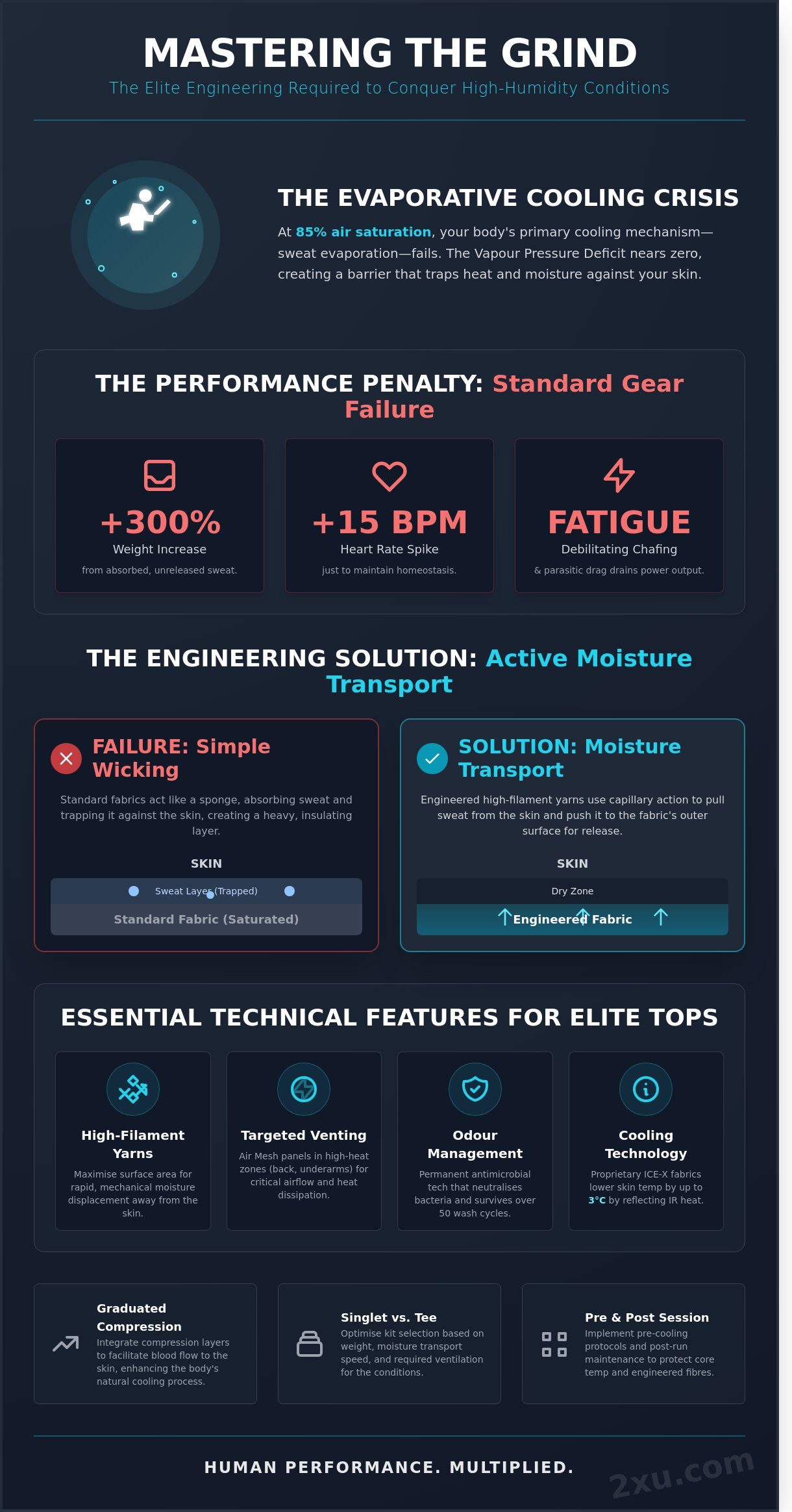
At 85% air saturation, your body's primary cooling mechanism fails as sweat refuses to evaporate, forcing your heart rate to spike by up to 15 beats per minute just to maintain homeostasis. You've experienced the suffocating reality of "The Grind" where standard gear becomes a water-logged anchor, causing debilitating chafing and a significant weight penalty that drains your power output. Finding the best tops for running in humidity is a technical necessity for any athlete who refuses to let external conditions dictate their results.
We promise to help you master the complex science of moisture management and introduce you to the elite technical tops engineered to multiply your performance in the most oppressive conditions. This 2026 guide provides a meticulous breakdown of proprietary fabric structures designed to regulate core temperature, eliminate skin irritation, and remove the drag of sweat-soaked apparel. You'll discover the exact specifications required to maintain your pace while others succumb to the heat. Prepare to outwork the elements and realise your potential with gear that works as hard as you do. Human performance. Multiplied.
Key Takeaways
- Master the physics of Vapour Pressure Deficit to understand why standard gear fails and how moisture-logged apparel compromises your running economy.
- Identify the elite engineering required in the best tops for running in humidity, specifically focusing on high-filament yarns that maximise surface area for rapid moisture displacement.
- Optimise your kit selection by comparing singlets and tees based on weight, moisture transport speed, and essential ventilation for oppressive conditions.
- Utilise graduated compression to facilitate blood flow to the skin surface, proving that technical layers are a vital tool for cooling during the grind.
- Implement professional pre-cooling protocols and post-run maintenance to protect your core temperature and the integrity of your engineered fibres.
The Physics of Performance: Why Humidity Demands Elite Engineering
Humidity is the ultimate test of discipline. When the air is thick, your body fights a two-front war against external heat and internal metabolic output. To identify the best tops for running in humidity, you must understand the Vapour Pressure Deficit. This scientific metric defines the pressure difference between the moisture on your skin and the moisture in the surrounding air. In 90% humidity, that deficit narrows to near zero. Sweat cannot evaporate; it simply sits. It pools in the fabric. It stalls your cooling system.
The mechanical toll of inferior gear is measurable and destructive. Standard apparel can increase in weight by up to 300% as it absorbs sweat without releasing it. This creates a parasitic drag on your running economy. Every extra gram of water-logged fabric requires additional oxygen to move, forcing your heart rate to climb by 10 to 15 beats per minute just to maintain pace. You aren't just fighting the distance; you're fighting your own equipment. 2XU engineers garments to prevent this failure by ensuring moisture moves even when the air is saturated.
The Evaporative Cooling Crisis
Endurance athletes rely on the phase change of liquid sweat into vapour to dump heat. When wet-bulb temperatures exceed 26 degrees Celsius, this physiological safety valve fails. Mediocre gear becomes a thermal insulator. It traps a layer of hot, stagnant air against your torso, causing core temperatures to spike. This isn't just uncomfortable; it's a performance killer that leads to premature fatigue and decreased power output. Respect the grind by choosing gear that facilitates heat dissipation rather than blocking it.
Moisture Transport vs. Simple Wicking
Don't confuse basic wicking with active moisture transport. Many brands use the term "wicking" to describe fabrics that simply soak up sweat like a sponge. This leads to heavy, sagging shirts that chafe and cling. True moisture management properties utilize capillary action within engineered filament yarns to pull liquid away from the skin and push it to the outer face of the garment. This mechanical process works independently of evaporation. 2XU uses high-filament yarns and proprietary knit structures to ensure your skin stays dry even when the atmosphere is not. Moisture transport efficiency is the primary metric for humid-weather gear because it dictates the rate of skin-to-fabric transfer.
We don't settle for "breathable" claims. We rely on data and technical fibres to ensure your performance is never capped by the weather. Human performance. Multiplied.
Essential Technical Features for High-Moisture Environments
Humidity turns a standard run into a battle against thermal regulation. When the air is saturated, your body's primary cooling mechanism, sweat evaporation, stalls. To maintain your power output, you need gear that works harder than the environment. Identifying the best tops for running in humidity requires looking beyond aesthetics to the underlying science of the fibre. These garments must utilise advanced yarn structures to maximise surface area. High-filament yarns are critical in this equation. These fibres are engineered to displace moisture rapidly, ensuring the fabric doesn't cling or become a heavy, waterlogged burden. This displacement is achieved through capillary action, pulling sweat from the skin to the garment's outer layer in seconds.
Odour management is a non-negotiable requirement for the grind. We integrate permanent antimicrobial technologies that neutralise bacteria at the molecular level; these treatments survive over 50 wash cycles without losing efficacy. Mechanical venting through Air Mesh panels is strategically mapped to high-heat zones like the centre back and underarms. This allows for targeted airflow where the body generates the most thermal energy. Taking preventative steps against heat-related stress starts with selecting apparel that facilitates this constant air exchange and keeps your core temperature stable according to 2026 performance standards.
ICE-X and X-VENT Technology
Our proprietary ICE-X fabric is engineered to lower skin temperature by up to 3 degrees Celsius. It utilises a specialised cooling yarn that reflects infrared heat while drawing moisture away with clinical efficiency. When paired with the X-VENT structure, it creates a high-flow environment for your skin. These fabrics are built to resist sagging. Even when fully saturated, the technical knit maintains its structural integrity, ensuring your performance isn't compromised by heavy, shifting fabric.
Anti-Chafe Construction
Damp skin is highly susceptible to friction. We use low-profile flatlock seams to create a smooth surface that eliminates the risk of abrasions during high-intensity sessions. Fabric weight, measured in GSM (Grams per Square Metre), is equally vital. Selecting a top with a GSM below 120 ensures the garment remains breathable and light even when humidity levels exceed 90%. Sleeveless designs are the elite choice for maximum ventilation and an unrestricted range of motion. You can optimise your training kit by selecting gear specifically designed for these punishing conditions.
Top Recommendations: The Best Running Tops for Humidity in 2026
Humidity is a relentless opponent. When the air is saturated, your body's primary cooling mechanism, sweat evaporation, stalls. To maintain elite output, your gear must bridge the gap between biological limits and environmental demands. Choosing the best tops for running in humidity is a technical decision based on three critical metrics: garment weight, moisture transport speed, and ventilation surface area. You don't just wear these tops; you deploy them to manage your thermal load.
The choice between a singlet and a short-sleeve tee depends on your specific mission parameters. Singlets provide the maximum surface area for direct skin-to-air evaporation, which is essential when the dew point climbs. Short-sleeve tees offer a different advantage. They provide a barrier against UV radiation and prevent the chafing often caused by hydration pack straps during long-range efforts. Research into the science of performance apparel in humidity proves that fabric architecture, not just material, dictates how effectively moisture moves from the skin to the atmosphere. We've engineered our 2026 collections to ensure that every gram of fabric serves a purpose in this heat exchange.
Elite Singlets for Maximum Airflow
The Light-Speed Singlet is the pinnacle of our weightless engineering. Weighing less than 100 grams, it uses a near-invisible 3D mesh structure to facilitate rapid air movement across the chest and back. It's designed for the athlete who demands zero distractions during high-intensity intervals. For sustained endurance, the Aero Singlet utilizes high-filament yarns that pull sweat away from the body with mechanical precision. The racerback design is the gold standard for humid-weather mobility. It clears the scapula entirely, ensuring your arm swing remains fluid while maximizing the exposure of your back to any available breeze. This isn't about style; it's about optimizing the human radiator.
Technical Tees for Sun Protection and Performance
When the grind takes you into direct sunlight for hours, the Aero Tee is your primary tool. It balances full shoulder coverage with extreme breathability through targeted ventilation zones. We've engineered these zones based on heat-mapping data to ensure the areas of highest sweat production receive the most airflow. The technical yarns don't hold onto water, so the shirt won't double in weight halfway through your session. This tee is built for the long haul. To complete your kit and ensure total moisture management from head to toe, pair your top with the right lower-body gear by consulting the ultimate guide to running shorts. Every piece of your kit must work in unison to multiply your performance in the heat.
- Light-Speed Collection: Best for race day and elite speed work where every gram counts.
- Aero Collection: Best for high-volume training and long-distance endurance in peak summer.
- Gender-Specific Fit: Our 2026 patterns are cut to follow the specific heat-signature profiles of male and female athletes, ensuring airflow is directed where it's needed most.
Beyond the Top: Integrating Compression for Thermal Regulation
Don't fall for the myth that extra layers equate to extra heat. In high-humidity environments, your body's primary cooling mechanism, evaporation, is stifled by the moisture-saturated air. To maintain performance, you must prioritise internal cooling through efficient blood flow. While the best tops for running in humidity provide an external shield, a high-performance compression shirt acts as a physiological engine. It doesn't just sit on the skin; it actively manages your core temperature by accelerating the movement of deoxygenated blood back to the heart.
Every stride you take on the pavement creates vibrations that ripple through your muscle tissue. This muscle oscillation is more than a distraction; it is a source of metabolic heat. When your muscles shake, they burn energy to stabilise themselves, increasing your internal temperature. 2XU compression reduces this oscillation by up to 33 per cent, allowing you to direct your energy toward forward propulsion rather than heat production. Respect the grind by giving your body the tools to stay cool under pressure.
The Science of Graduated Compression in Heat
Thermoregulation depends on venous return. Graduated compression applies the highest pressure at the extremities, narrowing the veins and increasing the velocity of blood flow. This process ensures that heat-carrying blood reaches the skin surface faster, where it can be cooled by the environment. Our proprietary PWX fabrics are engineered with high-filament yarns that provide 360-degree stretch and powerful support without trapping heat. Unlike standard knit materials, PWX is highly breathable and moisture-wicking. For those pushing elite limits, Muscle Containment Stamping (MCS) provides a targeted structure that traces key muscle groups, further reducing strain and heat-generating friction during endurance events.
Layering for the Grind
Choosing between a compression base layer and a standalone technical top depends on the intensity of your session. For high-output intervals in 90 per cent humidity, a standalone compression top provides the most direct benefit for sweat transition. The fabric pulls moisture directly from the pores, spreading it across a wide surface area for rapid drying. If you prefer a looser silhouette, ensure your outer layer is a high-ventilation mesh that complements the compression underneath. 2XU compression multiplies performance by optimising thermal efficiency. This synergy ensures that sweat moves seamlessly from the skin through the compression layer to the outer atmosphere, keeping you light and focused on the mile ahead.
Executing the Session: Preparation and Maintenance for Humid Climates
Preparation for high-intensity output in 80% humidity begins 60 minutes before the first stride. Research indicates that pre-cooling strategies can delay the rise in core temperature by approximately 0.5 degrees Celsius, providing a critical buffer during the first 30 minutes of exertion. Consuming 500ml of ice-slushie electrolyte solution or using cold water immersion prior to the session allows your body to start from a lower thermal baseline. This physiological head start ensures the best tops for running in humidity can do their job effectively before your sweat rate exceeds the fabric's evaporative capacity.
Respecting the conditions means acknowledging that the dew point dictates your pace, not your ego. When the air is saturated, evaporation slows. Your gear is engineered to facilitate this process, but you must manage the workload. Execute your intervals with precision, but monitor heart rate drift. A 5% to 10% increase in heart rate at a standard aerobic pace is common in these environments. Adjust your expectations to the data, not the clock. This is the essence of the grind.
The Athlete’s Maintenance Protocol
Technical performance textiles are precision instruments. They require a specific maintenance regime to remain effective. You must never use fabric softeners. These substances leave a waxy coating on the engineered fibres, effectively sealing the microscopic channels designed to transport moisture away from the skin. Once these channels are blocked, even the best tops for running in humidity will fail to perform, leading to heat entrapment and increased garment weight.
- Wash Cold: Always use a 30-degree Celsius cycle to protect the elastane integrity.
- Zero Softeners: Preserve the moisture-wicking capillary action of the yarn.
- Air Dry Only: High heat from dryers breaks down the molecular bonds of the fabric, reducing compression and fit.
Maintaining the integrity of the fibre is essential for long-term power output. A garment that loses its shape loses its ability to manage moisture and reduce muscle oscillation.
Human Performance Multiplied
The conditions don't change, but your gear can. Elite preparation isn't about finding the easy path; it's about equipping yourself to dominate the difficult one. Every humid session is an opportunity to sharpen your mental resilience and physiological efficiency. When the air feels heavy and the friction increases, remember that you're building a version of yourself that is harder to break. Mediocrity doesn't come into our minds, and it shouldn't come into yours. Earn your results through discipline and the right technology. Explore the latest 2XU running collection to find the tools required to multiply your performance. Human Performance. Multiplied.
- X-VENT engineered moisture-wicking top
- Anti-chafe balm for high-friction zones
- Pre-chilled 500ml electrolyte solution
- Lightweight, breathable running cap
Own the Heat: Command Your Performance
Humidity is a physiological barrier that demands respect and elite engineering. To maintain high power output when the air is thick with moisture, you need more than standard gear; you need equipment that manages thermal regulation through rapid moisture transport. Our high-filament yarns are specifically designed to move sweat away from the skin faster than traditional fibres, ensuring your core temperature remains stable during the most intense sessions. Success in 2026 is built on discipline and the right technical foundation.
By integrating scientifically proven ICE-X cooling technology, we've created the best tops for running in humidity to help you sustain your pace. These garments are trusted by elite IRONMAN athletes globally to perform under the most brutal conditions. Don't let the climate dictate your results. Respect the grind, trust the data, and prepare to multiply your potential on the road. Every kilometre earned in the heat is a deposit into your future performance.
Shop the 2XU High-Performance Running Collection
The road doesn't get easier, you just get stronger. Stay focused.
Frequently Asked Questions
Is it better to wear a singlet or a t-shirt in high humidity?
A singlet is the superior choice for high humidity because it maximises skin surface area for evaporative cooling. When humidity levels exceed 80%, sweat cannot evaporate efficiently; reducing fabric coverage by 30% compared to a standard tee allows for better thermoregulation. Choose the best tops for running in humidity that feature wide armholes and racerback designs to prevent heat from being trapped around your core.
Why does my running shirt feel so heavy when it gets wet?
Your shirt feels heavy because standard fibres can absorb up to 7% of their weight in water. When high humidity prevents evaporation, moisture becomes trapped in the knit, increasing the garment's mass by 200 grams or more during a 60 minute session. Elite gear is engineered with hydrophobic yarns that refuse to hold water, ensuring your kit remains lightweight even when you're deep in the grind.
Can compression gear actually keep me cool in the heat?
Advanced compression gear like our PWX fabrics facilitates cooling by accelerating moisture transfer from the skin to the external environment. Scientific testing shows that graduated compression can reduce muscle oscillation by 33%, which lowers metabolic heat production. This technical advantage allows you to maintain a lower core temperature while pushing for a 5% increase in power output during humid intervals.
How do I prevent chafing when running in humid conditions?
Prevent chafing by using a silicone-based anti-chafe balm and wearing tops with flatlock seams. In 90% humidity, skin friction increases by 40% due to constant moisture. Engineered tops with 360-degree stretch and bonded hems eliminate the abrasive edges that cause skin breakdown. Respect the grind by protecting your skin before the first kilometre to ensure your focus remains on performance, not pain.
What is the best fabric for running in 90% humidity?
The best fabric for 90% humidity is a high-filament, moisture-wicking yarn like our proprietary X-VENT mesh. These engineered materials use a 3D structure to create a microclimate between your skin and the fabric, increasing airflow by 25%. When looking for the best tops for running in humidity, prioritise fabrics that have been tested to dry 50% faster than standard performance materials.
How should I wash my technical running tops to keep them wicking?
Wash your technical tops in cold water using a pH-neutral detergent to preserve the integrity of the moisture-wicking filaments. Avoid fabric softeners at all costs, as they coat the fibres in a waxy residue that reduces breathability by 60%. Air dry your gear to maintain the elasticity and graduated pressure profiles that define elite performance equipment; never use a tumble dryer.
Does the colour of my running shirt matter in the heat?
Colour choice impacts your thermal load, with lighter shades reflecting up to 70% of solar radiation. While dark colours absorb more heat, they often provide a higher UPF rating, frequently exceeding UPF 50+ in engineered fabrics. For maximum performance in direct sunlight and high humidity, choose white or light grey tops to keep your skin temperature up to 2 degrees Celsius cooler than black alternatives.
How often should I replace my high-performance running tops?
Replace your high-performance tops every 50 to 70 wash cycles or roughly every 12 months of consistent training. Over time, the elastane in technical garments degrades, leading to a 15% loss in moisture management efficiency and shape retention. Discipline in your gear maintenance ensures that your equipment never becomes a bottleneck for your potential. If the fabric stays wet longer than usual, it's time to upgrade.