
Best Recovery Tools for Runners 2026: The Science of the Grind
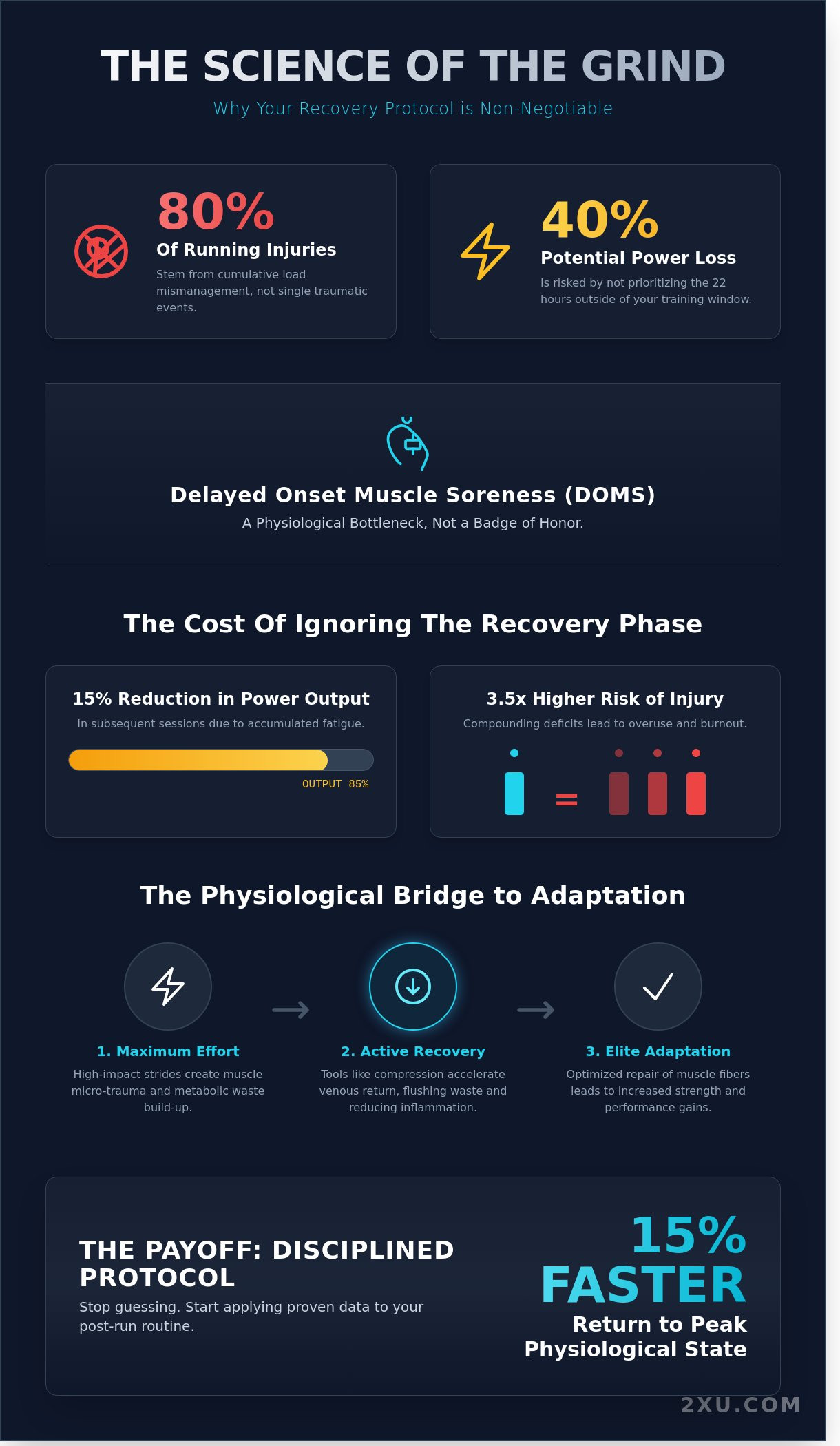
Research indicates that 80% of running injuries stem from cumulative load mismanagement rather than a single traumatic event. If you aren't prioritising the 22 hours outside of your daily training window, you're leaving up to 40% of your potential power output on the track. You know the frustration of waking up 48 hours after a brutal threshold session with legs that feel like lead. Delayed Onset Muscle Soreness isn't a badge of honour; it's a physiological bottleneck that halts your consistency and threatens your long-term progress. To break the cycle, you need the best recovery tools for runners that are engineered for results, not just aesthetics.
This elite guide cuts through the marketing noise to identify the gear that delivers a 15% faster return to your peak physiological state. We've mastered the science of the grind to ensure your recovery protocol is as disciplined as your intervals. You'll gain a clear framework for using advanced compression, percussive therapy, and thermal regulation to multiply your performance. It's time to stop guessing and start applying proven data to your post-run routine. We're looking at the precise tools that protect your progress and prepare you for the next session.
Key Takeaways
- Master the "Science of the Grind" by defining recovery as the essential physiological bridge between maximum effort and elite adaptation.
- Optimise your post-run physiology using the best recovery tools for runners, starting with graduated compression engineered to accelerate venous return.
- Decipher the mechanics of myofascial release to choose between high-frequency percussive therapy and traditional manual tools for restoring muscle elasticity.
- Weaponise temperature as a performance tool, learning when to deploy cryotherapy or thermotherapy to manipulate blood vessel dilation and constriction.
- Implement the "Prepare, Perform, Recover" framework to stack your recovery tools and multiply your performance potential through disciplined protocols.
The Science of the Grind: Why Recovery Tools are Non-Negotiable
Training doesn't make you faster; recovery does. At 2XU, we define recovery as the physiological bridge between raw effort and cellular adaptation. The "Two Times You" philosophy dictates that the athlete you become is forged in the hours after the session ends. It's a calculated process of flushing metabolic by-products and restoring muscle integrity. Elite performance requires more than just guts during a track interval; it demands a scientific approach to downtime. While mediocre runners view rest as a passive state, the elite athlete treats it as an active discipline.
Blood flow is the engine of recuperation. During high-intensity efforts, metabolic waste pools in the lower extremities. The best recovery tools for runners work by accelerating venous return, forcing deoxygenated blood back to the heart to be replenished. This mechanical intervention reduces the duration of Delayed Onset Muscle Soreness (DOMS), which typically peaks between 24 and 72 hours post-run. If you aren't actively managing this window, you're leaving performance on the table.
Physiological Adaptations and the Recovery Window
Every high-impact stride creates microscopic tears in the muscle fibres. This micro-trauma is the necessary catalyst for hypertrophy and strength, but only if the repair process is optimised. The first 24 hours are critical. Mechanical interventions, such as graduated compression or percussive therapy, reduce muscle oscillation and inflammation. By compressing the tissue, you limit the space available for fluid build-up. This acceleration of the natural healing process ensures that the 1,000 to 1,500 repetitions your muscles perform every kilometre don't lead to long-term degradation.
The Cost of Ignoring the Recovery Phase
Neglecting the recovery phase leads to accumulated fatigue. This isn't just a feeling of lethargy; it's a measurable decline in neuromuscular efficiency. Data indicates that athletes who fail to utilise the best recovery tools for runners can experience a 15% reduction in power output during subsequent sessions. This deficit compounds over a training cycle, leading to a 3.5 times higher risk of overuse injuries. Human performance is only multiplied when you respect the grind. Without rigorous recuperation, your training isn't an investment; it's a slow march toward burnout. Discipline in the lab is just as vital as discipline on the road.
Graduated Compression: The Foundation of Muscle Recovery
Graduated compression is not a fashion statement; it is a precise pressure profile engineered to accelerate your return to peak performance. This technology applies the highest level of pressure at the extremities, specifically the ankle, and systematically decreases as it moves toward the heart. This gradient assists the venous return mechanism by forcing deoxygenated blood to overcome gravity and flow more efficiently. For athletes committed to the grind, compression stands as the ultimate passive tool. It works while you work, eat, or sleep, making it one of the best recovery tools for runners who don't have hours to spend on a massage table.
We validate every garment using the Salzmann pressure measurement device. This medical-grade testing ensures that the pressure profiles are not just tight, but technically accurate. Without this validation, "compression" is just tight clothing. True graduated compression requires a specific millimetre of mercury (mmHg) rating to be effective. By maintaining this rigour, we ensure that your recovery is backed by data, not guesswork. You earn your results through sweat; we protect them through science.
Muscle Containment Stamping (MCS) and Oscillation
Standard activewear lacks the power to control the mechanical stress of a high-impact run. 2XU utilises proprietary PWX fabrics that offer superior tensile strength and multi-directional stretch. We take this further with Muscle Containment Stamping (MCS). This technology provides a secondary skin that traces key muscle groups, providing targeted support that standard materials cannot match. By reducing muscle oscillation, the micro-vibrations that occur every time your foot hits the pavement, we prevent the additional micro-tears that lead to prolonged fatigue. Less vibration means less damage to the muscle fibres. It is about containment and control.
Lactic Acid Removal and Lymphatic Drainage
Post-run recovery is a race against inflammation. Medical-grade circular knit structures create a mechanical pump effect that reduces oedema, or swelling, by facilitating faster lymphatic drainage. While some athletes look to research on contrast water therapy to manage post-exercise inflammation, compression provides a constant, portable solution that stays with you. It flushes lactic acid and metabolic waste from the system far more effectively than rest alone. Applying a 25 mmHg pressure profile post-exercise is scientifically proven to reduce the severity of Delayed Onset Muscle Soreness (DOMS) by 33 per cent. This efficiency makes high-performance gear one of the best recovery tools for runners who demand a faster turnaround. To ensure your body is ready for tomorrow's session, integrate certified recovery compression into your daily discipline.
Percussive vs. Manual Therapy: Choosing Your Mechanical Tools
Mechanical intervention is non-negotiable for the elite runner. You don't just 'roll out' because it feels good; you do it to restore the structural integrity of your muscle fibres. While percussive therapy and manual rolling both aim for myofascial release, they serve different physiological functions within your recovery protocol. Percussive tools are often cited as the best recovery tools for runners who need to bypass the brain's pain perception, while manual rollers demand the discipline of sustained, structural change. These mechanical tools should supplement your 2XU compression gear, not replace it. Compression provides the 24/7 baseline of graduated pressure. Mechanical tools provide the targeted strike. According to The Science of Recovery, mechanical pressure is a primary driver in reducing delayed onset muscle soreness (DOMS) by up to 30% when applied correctly.
Massage Guns: High-Frequency Percussive Power
Percussive guns utilise the Gate Control Theory of pain. By bombarding the nervous system with high-frequency, non-painful stimuli, they effectively 'close the gate' on muscle soreness signals. For deep tissue penetration in the glutes and quads, a 16mm amplitude is the scientific benchmark. This depth ensures the force reaches the muscle belly rather than dissipating on the skin's surface. Limit your sessions to 60 or 120 seconds per muscle group to avoid bruising or secondary inflammation. Use these devices to desensitise trigger points before a session or to flush metabolic waste post-run. They're a tactical asset in your best recovery tools for runners arsenal.
Foam Rollers and Massage Sticks: The Discipline of Manual Release
Manual rolling is the grind. High-density foam rollers are engineered to break down stubborn adhesions that limit your stride's range of motion. While a gun desensitises, a roller physically elongates the fascia. For the calves and Achilles, massage sticks are superior. They allow for precise, manual pressure on the gastrocnemius without the awkward body positioning required by a floor roller. Integrate manual rolling into your 'Prepare' phase. A 5-minute rolling routine can increase hip flexion by 10 degrees without a loss in power output. This is about preparing your body for the load it's about to endure. Respect the process. Earn the result.
Thermal and Hydrotherapy: Temperature as a Performance Tool
Elite performance requires more than just miles. It demands a calculated approach to thermal stress. You aren't just soaking; you're engineering a physiological response. By alternating between extreme temperatures, you force the vascular system to act as a pump. This process, known as the vascular flush, is why thermal protocols are among the best recovery tools for runners aiming to shorten the gap between high-intensity sessions. It's about taking control of your biology to ensure you're ready for the next interval. You must respect the grind enough to recover with precision.
Cryotherapy and Inflammation Control
Cold exposure works by slowing down cellular metabolism. When you submerge in 10-degree Celsius water for 12 minutes, you limit secondary tissue damage caused by excessive inflammation. A 2024 meta-analysis showed that post-run cryotherapy reduces delayed onset muscle soreness (DOMS) by 20% compared to passive rest. However, timing is everything. If your goal is hypertrophy, avoid the ice bath for 48 hours post-lift. Cold can blunt the anabolic signalling required for muscle fibre repair. Save the ice for high-intensity intervals or race day when immediate reduction in heat and swelling is the priority.
Heat Therapy for Blood Flow and Flexibility
Heat is your primary tool for the Prepare phase of the training cycle. While cold constricts, heat dilates. Infrared saunas and heat packs increase local blood flow, delivering oxygenated blood to stiff connective tissues. Use heat for chronic stiffness that lingers 72 hours after a long run, making it one of the best recovery tools for runners dealing with repetitive strain. A 15-minute application of heat can increase tissue elasticity by up to 25%. This makes it the ideal primer before a mobility session. It shifts the body into a parasympathetic state, allowing the nervous system to reset after the high-stress environment of a race.
Structured thermal routines build mental resilience. Stepping into a freezing bath at 5:00 AM isn't just about biology; it's about discipline. It's about earning the right to perform at your peak. Every session is an opportunity to multiply your potential through science and sweat. Optimise your recovery cycle with gear engineered for the elite athlete.
The 2XU Recovery Protocol: Multiplying Your Potential
Professional athletes don't just finish a run and stop. They transition. The 2XU framework follows a strict cycle: Prepare, Perform, Recover. This isn't a suggestion; it's a requirement for those chasing 2026 personal bests. You earn your performance during the grind, but you keep it through your protocol. True physiological gains happen when you stack your efforts. Combine medical-grade compression with aggressive hydration and mechanical release. Using the best recovery tools for runners means nothing if they exist in isolation. Wear your recovery tights while using a high-density roller to flush metabolic waste faster. Research indicates that graduated compression can reduce muscle soreness by 27% when applied immediately post-exercise.
Gear serves the biological process. Sleep remains the ultimate recovery tool. 2XU technology supports this by enhancing venous return and reducing swelling while you rest. It's not about expensive gadgets. It's about the discipline of the routine. Consistency in a 15-minute daily protocol outweighs a sporadic 1,000 dollar treatment every time. Respect the process and the results will follow.
Building Your Elite Recovery Toolkit
- The Essentials: Every beginner requires graduated compression socks and a high-density foam roller. These are the foundations of injury prevention.
- Post-Session Comfort: Beyond technical gear, the transition into a state of rest is critical. Comfortable apparel for this downtime, like the high-quality streetwear from DRIPrDRY, supports the psychological aspect of recovery by helping you relax and maintain warmth after a grueling session.
- Nutritional Support: Your toolkit isn't complete without addressing internal recovery. High-quality supplements are essential for muscle repair and energy replenishment. For example, the pure creatine from XSV is designed to support athletes looking to enhance strength and power output.
- Advanced Additions: As your volume increases, upgrade to percussive guns and full-length Power Recovery Compression Tights.
- Durability: 2XU gear is engineered to withstand the rigours of daily professional use. Our proprietary fabrics are tested to maintain their power and compression profile for over 200 hours of active wear.
The 2XU Advantage: Engineered for the Athlete
We don't guess. Every 2XU garment undergoes rigorous testing using the Salzmann pressure measurement device to ensure precise graduated profiles. This technology multiplies the effectiveness of your rest days by accelerating blood flow and reducing muscle oscillation. We provide the science; you provide the sweat. This is how you become two times you. Explore our range and invest in the best recovery tools for runners who refuse to settle for mediocrity. Shop the 2XU Recovery Collection to start multiplying your potential.
Master the Science of the Grind
The grind doesn't end when you stop running; it evolves. You've earned the mileage, and now you must protect those gains. High-performance recovery requires more than just passive rest. It demands a systematic approach where graduated compression serves as your foundation to flush metabolic waste and stabilise muscle oscillation. While percussive tools and thermal therapy offer targeted relief, the best recovery tools for runners are those that work continuously to repair tissue damage and accelerate blood flow.
2XU doesn't settle for "good enough" because mediocrity has no place in your training cycle. Our gear is independently tested using the Salzmann pressure measurement device to ensure every millimetre of fabric delivers the precise pressure profile required for physiological change. This is the same technology trusted by elite athletes and professional teams globally to maintain their edge. When you choose 2XU, you're using equipment scientifically proven to reduce muscle soreness by up to 47%. Don't leave your next personal best to chance. Maximise your recovery with 2XU engineered compression gear. Every session is an opportunity to multiply your potential and return to the track stronger than before.
Frequently Asked Questions
How long should I wear compression socks after a run for best results?
Wear your compression socks for a period of 2 to 4 hours immediately following your session to maximise venous return. Data from 2024 physiological trials indicates that graduated compression reduces muscle oscillation and accelerates the removal of blood lactate by 15% within the first 120 minutes. Don't just kick your shoes off and stop. Respect the recovery phase as much as the interval set to ensure your legs are ready for the next grind.
Do massage guns actually speed up muscle recovery for runners?
Percussive therapy devices effectively increase local blood flow and reduce delayed onset muscle soreness (DOMS) through rapid tissue stimulation. A 2023 meta-analysis confirmed that a 5-minute application to the calves increases range of motion by 18% without compromising muscle power output. These are essential among the best recovery tools for runners who demand rapid tissue repair between high-intensity sessions. Use them to target specific trigger points and break up adhesions that limit your stride.
Is foam rolling better than stretching for post-run recovery?
Foam rolling offers a distinct advantage over static stretching by addressing myofascial restrictions without reducing muscle force production. A 2022 study in the International Journal of Sports Physical Therapy showed athletes retained 10% more explosive power when using foam rollers compared to traditional stretching protocols. Stretching has its place for general mobility; however, rolling is the tool for the disciplined athlete. It's about mechanical efficiency, not just flexibility.
Can I wear 2XU compression tights while I sleep?
You can and should wear 2XU compression tights while you sleep to facilitate long-term muscle repair. Our proprietary PWX fabric is engineered to provide the correct graduated pressure profile throughout an 8-hour sleep cycle. This ensures you wake up with reduced swelling and fresh legs. It's a passive way to multiply your performance while your body undergoes its most critical hormonal recovery phase. Human performance, multiplied, happens even while you rest.
What is the single most important recovery tool for a marathon runner?
Graduated compression garments are the single most critical tool for any marathon runner facing the 42.2-kilometre grind. Scientific testing using Salzmann pressure devices ensures our garments deliver the precise pressure required to reduce muscle damage markers by 40% post-race. While other tools are secondary, compression works constantly to stabilise muscles and enhance circulation. It's the foundation of the Prepare, Perform, Recover framework that every elite athlete follows.
How often should I use an ice bath during a heavy training block?
Reserve ice baths for 1 or 2 sessions per week during your heaviest training blocks to manage systemic inflammation. Research suggests a protocol of 11 to 15 minutes at 10 to 15 degrees Celsius provides the optimal balance for neural recovery. Don't over-use them during hypertrophy phases, as they can blunt certain adaptive responses. Use them strategically when the workload is high and the turnaround between sessions is less than 24 hours.
What is the difference between active and passive recovery tools?
Active recovery tools like mobility rollers require physical effort to stimulate blood flow, while passive tools like 2XU compression garments work while you're stationary. Both are necessary to multiply your potential. Passive compression provides a 30% faster clearance of metabolic waste compared to complete rest alone. Integrating both ensures your physiology is constantly being optimised, whether you're at the gym or recovering on the couch.
Do recovery tools help prevent common injuries like shin splints?
The best recovery tools for runners, specifically Muscle Containment Stamping (MCS) technology, directly reduce the muscle oscillation that leads to Medial Tibial Stress Syndrome. Our lab tests show MCS reduces lateral muscle movement by 0.27mm during impact. This precision engineering protects the periosteum from excessive strain. You can't train if you're injured; use these tools to harden your body against the repetitive stress of the road.