
Best Fabric for Workout Clothes: The Science of Performance Engineering
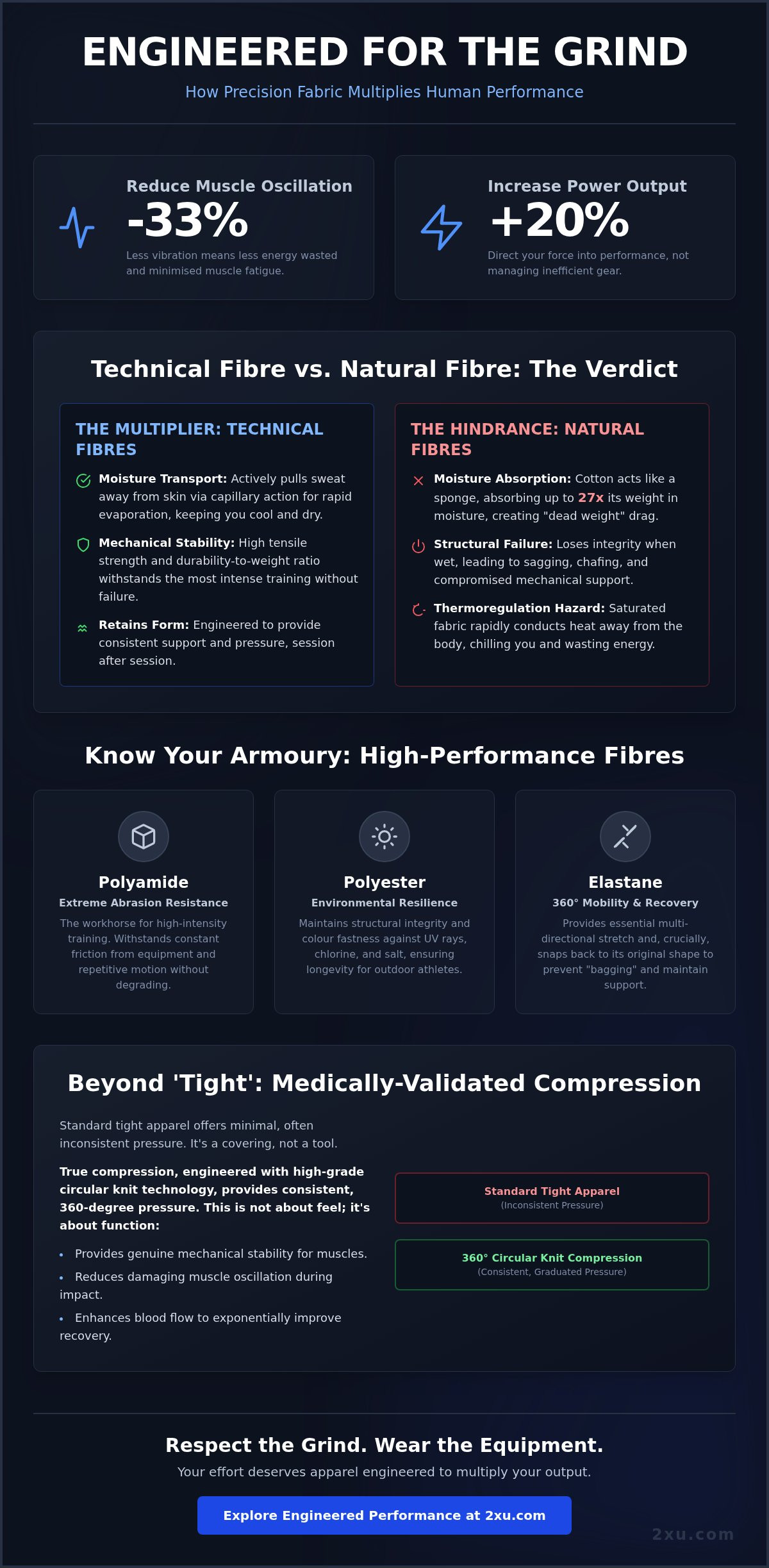
Did you know that precision textile engineering can reduce muscle oscillation by 33% and increase your power output by 20%? Most athletes treat their apparel as a mere covering, but the best fabric for workout clothes is actually a technical tool designed to multiply your physical potential. You've likely experienced the heavy, waterlogged sensation of inferior gear or the nagging fatigue caused by excessive muscle vibration during an intense endurance session. We understand that average standards are unacceptable when you're chasing mathematical improvements in your results.
This guide will help you master the technical specifications of high-performance fibres to optimise your thermoregulation, mechanical stability, and recovery. We'll examine the laboratory-validated science of moisture management and the specific mechanical properties required to sustain peak output. You're about to learn how to select gear that acts as a biological partner, ensuring every watt of energy you expend is directed toward your progress rather than wasted on friction or heat. It's time to respect the grind with equipment that works as hard as you do.
Key Takeaways
- Learn why the best fabric for workout clothes is an engineered interface that prevents waterlogged weight and manages your biological output.
- Compare the durability-to-weight ratios of high-performance polyamides against natural fibres to ensure your gear survives the grind.
- Master the distinction between standard tight apparel and medically-validated compression to provide genuine mechanical stability for your muscles.
- Tailor your kit to your specific discipline by identifying the unique textile requirements for long-distance endurance versus explosive power.
- Explore how high-grade circular knit technology provides consistent 360-degree pressure to exponentially enhance your recovery and performance.
The Mechanical Role of Fabric in High-Performance Training
Serious athletes don't just wear clothes; they wear equipment. The best fabric for workout clothes acts as a precision-engineered interface between your physiology and the environment. This interface must manage thermoregulation and mechanical stability under the extreme stress of "the Grind." If your gear fails to regulate your core temperature, your cardiovascular system works harder to cool you down. This diverts oxygenated blood away from the working muscles and toward the skin, directly reducing your power output and slowing your recovery times.
High-intensity training demands gear that can withstand extreme mechanical tension. Every stride, lift, and rotation puts stress on the seams and fibres. Choosing the wrong material doesn't just impact comfort; it creates a mathematical disadvantage that compounds over the course of a session. To multiply your output, you need textiles that support your biology rather than hindering it, and using Transfers by MoreTranz ensures that even custom branding maintains the flexibility and durability required for elite performance gear.
Why Cotton is the Enemy of Endurance
Natural cellulose fibres are inherently hydrophilic. At a molecular level, these fibres have a massive affinity for hydrogen bonds, meaning they actively seek out and hold onto moisture. Cotton can absorb up to 27 times its dry weight. During an endurance session, this creates "dead weight" that increases the metabolic cost of every movement. Beyond the weight-drag, saturated cotton loses its structural integrity and its ability to insulate. This often leads to a "chilled-to-the-bone" effect as wet fabric conducts heat away from the body far too rapidly, compromising your cardiovascular efficiency and focus.
The Physics of Moisture Management
Technical yarns are engineered for transport rather than storage. They utilise capillary action, a physical process where liquid is pulled through the narrow channels of the yarn cross-section to the outer surface of the garment. This is where The Science of Textile Performance proves its value. By moving sweat away from the skin and spreading it across a larger surface area, the fabric facilitates rapid evaporation. This evaporative cooling is the primary mechanism your body uses to stay within an optimal temperature range. When you select the best fabric for workout clothes, you're investing in a cooling system that allows you to push through the hardest intervals without overheating.
Technical Fibres vs. Natural Blends: A Performance Comparison
High-performance training is an exercise in managing mechanical stress. While natural fibres might offer a soft hand-feel, they lack the durability-to-weight ratio required for elite output. The best fabric for workout clothes must withstand the friction of a knurled barbell or the repetitive motion of a marathon without losing its structural integrity. Technical polyamides and polyesters are the workhorses here, providing high tensile strength that natural alternatives simply cannot match. These materials ensure that your gear remains a performance multiplier rather than a liability during your most intense sessions.
Polyamide and Polyester: The Workhorses of the Athlete
Nylon, or polyamide, is prized for its extreme abrasion resistance. It's the material of choice for high-intensity training where gear is subjected to constant scraping and stretching. Polyester, on the other hand, excels in environmental resilience. It offers superior UV protection and maintains colour fastness even after hundreds of washes and exposure to harsh sunlight. Recent research on moisture management properties confirms that engineered fibres facilitate significantly better moisture transport than their natural counterparts. In 2026, technical blends outperform single-source fabrics by strategically layering different deniers to optimise both sweat evaporation and garment longevity.
Elastane: Engineering 360-Degree Mobility
Unrestricted movement is a non-negotiable requirement for any serious athlete. Elastane is an elastomeric yarn that allows for multi-directional stretch, which is essential for maintaining a full range of motion. However, the presence of elastane isn't enough; the quality of the "recovery" is what separates elite gear from the average. Recovery refers to the fibre's ability to snap back to its original shape after being stretched to its limit. Poor quality gear leads to "bagging" at the knees and elbows, which compromises the mechanical support provided to the muscles and creates drag.
High-grade technical fibres also offer resilience against salt, chlorine, and UV degradation. This is critical for triathletes and outdoor runners who face varied environmental conditions. If your gear loses its elasticity after a few sessions in the sun or salt, it's failing to support your grind. You can explore how these advanced materials are integrated into high-performance running apparel to ensure your equipment never dictates your limits. Elite athletes demand fibre memory that lasts as long as their discipline does.
Beyond Wicking: Why Compression Fabric is the Ultimate Multiplier
Stop settling for apparel that simply feels tight. There's a fundamental scientific distinction between a snug fit and medically-validated compression. While basic moisture management is a baseline requirement, the best fabric for workout clothes must act as a mechanical multiplier for your physiology. High-filament yarns are engineered to provide the specific tensile strength required to wrap and protect major muscle groups during high-intensity movement. This isn't about aesthetics; it's about providing the power to stabilise your body under extreme load. For a deeper dive into the specific benefits for your torso, consult our scientific guide to compression shirts.
Reducing Muscle Oscillation and Fatigue
Every foot strike during a run sends a shockwave through your soft tissue, causing muscle oscillation. This involuntary vibration is a primary driver of micro-trauma to the muscle fibres, leading to accelerated fatigue and post-workout soreness. Performance textiles engineered for compression act as a dampening system for these vibrations. By containing the muscle, the fabric reduces the energy cost of maintaining posture and mechanical stability. You waste less energy stabilising your limbs and more energy driving your physical output. This mechanical dampening is essential for joint longevity and sustaining your discipline during long-endurance sessions where form often breaks down.
Graduated Pressure and Venous Return
Engineering true graduated pressure requires advanced knit technology to ensure that pressure is highest at the extremities and decreases toward the heart. This pressure gradient assists the valves in your veins, facilitating the return of deoxygenated blood to the heart more efficiently. It's a biological hack that keeps your muscles supplied with fresh, oxygenated blood during the most demanding parts of your session. By increasing the rate of blood flow, you ensure that essential nutrients reach your working muscles faster. Compression fabric accelerates the removal of blood lactate to minimise post-exercise inflammation and muscle stiffness. This technical advantage allows you to return to your training schedule with minimal downtime, ensuring your recovery is as intense as your performance.
Matching Fabric to Your Discipline: From Endurance to Explosive Power
Selecting the best fabric for workout clothes isn't a matter of preference; it's a matter of rigorous engineering. Your textile choices must align with the specific kinetic demands of your discipline to ensure peak performance. An endurance athlete requires vastly different mechanical properties than a powerlifter. If you use a high-stretch, low-denier fabric meant for low-impact work during high-intensity barbell sessions, the material will fail under the abrasion of the knurling. You must match the fibre to the grind. Efficiency is won in the details of the weave.
Endurance and Aerodynamics
Long-distance performance relies on thermal efficiency and the reduction of mechanical friction. For marathons and triathlons, you need lightweight, high-wicking technical fibres that facilitate rapid moisture transport over several hours. Low-profile seams are critical to preventing "the burn" caused by thousands of repetitive motions. In cycling and triathlon, aerodynamics become a primary performance factor. Fabrics must be engineered with specific surface textures to reduce drag and optimise airflow across the body. Understanding the technical requirements of triathlon suits is essential for anyone looking to shave seconds off their personal best through better equipment management.
Strength and Power: Durability Requirements
Explosive power sessions demand fabrics with high tensile strength and density. When you're performing deep squats or lateral plyometrics, the material must maintain its mechanical stability and opacity. High-density knit structures ensure your gear is "squat-proof" while providing the necessary containment for your muscles during rapid eccentric and concentric phases. These fabrics are engineered to withstand the friction of barbell contact and the high-intensity stress of the gym floor. You need gear that respects your discipline and protects your output, and for those in the heavy lifting community, Team Industry provides the specialized accessories needed for maximum stability.
Environmental conditions also dictate your selection. Cold-weather training requires thermal-conductive knits that retain heat without compromising moisture transport. Extreme heat demands maximum breathability and UV protection. For runners, the choice of equipment is a science in itself. Explore our guide on running shorts engineering to refine your kit and ensure the best fabric for workout clothes is working for you, not against you. Don't let your gear be the weak link in your preparation. Master your environment with elite trisuits and running apparel designed to survive the most demanding training sessions.
The 2XU Engineering Approach: PWX Fabric and Human Multiplication
At 2XU, we don't just select textiles; we engineer solutions. Our proprietary PWX fabric represents the pinnacle of technical textile development, designed specifically to be the best fabric for workout clothes for those who refuse to compromise. PWX stands for Power, Weight, and Flexibility. This tripartite framework ensures that every garment provides maximum muscle containment while remaining exceptionally lightweight and versatile. We utilise high-grade circular knit technology to deliver consistent 360-degree pressure, a feat that traditional warp-knit fabrics cannot replicate. This engineering choice ensures that the compression is uniform, providing the mechanical stability required to protect your muscles during high-velocity movements.
Validation is the cornerstone of our process. We don't rely on vague marketing claims; we rely on tangible data. Our fabrics undergo rigorous testing using specialised laboratory instrumentation, such as the Salzmann pressure measurement device, to ensure medically-validated compression levels. By collaborating with independent research teams and elite athletes, we've proven that our gear reduces muscle strain and increases power output. This commitment to the grind ensures that your equipment lasts as long as your discipline does, maintaining its mechanical properties through every wash and every session. We reject average standards to provide you with a performance multiplier that withstands extreme stress.
PWX Technology: The Scientific Advantage
The secret to PWX lies in its high-filament technical yarns. These fibres are engineered to provide unparalleled power and moisture management, ensuring you stay dry and supported during peak output. Unlike competitor materials that lose their elasticity over time, 2XU fabric is designed for longevity, retaining its compressive power even after extreme mechanical stress. We also integrate antibacterial and anti-odour treatments at the fibre level. This prevents the growth of bacteria that thrive in high-moisture environments. This is not a surface treatment; it is a permanent part of the fabric's DNA, ensuring your gear remains fresh through the most punishing training cycles.
Earning Your Place: Gear for the Dedicated
2XU gear is not for the casual observer. It is for the athlete who respects the rigour of training and the necessity of discipline. We promise that our material science will lead to "human multiplied," representing a mathematical improvement in your physical results. You've done the work; now wear the gear that proves it. Elevate your performance and Shop 2XU Performance Gear to experience the absolute standard in athletic engineering. Your potential is exponential. Don't let inferior gear hold you back from achieving your next breakthrough.
Master Your Mechanical Advantage
You now understand that the best fabric for workout clothes is a precision-engineered tool designed to stabilise your physiology and optimise your biological recovery. We have analysed how high-filament yarns and medically-validated graduated compression manage muscle oscillation and venous return to ensure your output is never compromised by inferior textiles. Every training session is a direct investment in your physical potential. You earn your results through relentless discipline and respect for the grind. Your equipment must be as unyielding as your commitment to your goals.
2XU advanced compression is validated by independent AIS research and utilised by elite IRONMAN champions worldwide to maintain peak performance under extreme stress. Our high-filament PWX technical fibres are specifically built to survive the most demanding athletic disciplines while multiplying your natural capability. Multiply your performance with 2XU advanced compression gear and take absolute control of your biological limits. Push harder. Recover faster. Your next breakthrough is waiting.
Frequently Asked Questions
What is the best fabric for workout clothes to prevent sweating?
No fabric can physically stop your body from sweating, as this is a vital biological cooling mechanism. However, the best fabric for workout clothes to manage this output is a high-filament technical polyester or polyamide blend. These engineered fibres utilise capillary action to pull moisture away from the skin to the garment's surface for rapid evaporation. This process ensures you remain dry and prevents the apparel from becoming heavy and waterlogged during intense sessions.
Is polyester or nylon better for high-intensity gym workouts?
Nylon, also known as polyamide, is generally superior for high-intensity gym sessions due to its exceptional tensile strength and abrasion resistance. It withstands the friction from barbells and floor work far better than polyester. While polyester offers excellent UV protection and colour fastness, nylon provides the mechanical durability required to survive extreme stress without losing its structural integrity or its ability to snap back into shape.
How do I stop my workout clothes from smelling after a session?
Select gear with permanent antibacterial treatments integrated at the fibre level rather than surface coatings. Odour is caused by bacteria breaking down sweat; high-performance textiles often use silver or mineral-based ions to inhibit this biological process. To maintain these properties, rinse your gear immediately after your session and avoid fabric softeners. Softeners can clog the technical knit and trap odour-causing microbes within the yarn.
Why should I avoid cotton for running or endurance training?
Cotton is hydrophilic and can absorb up to 27 times its own weight in moisture. During endurance training, this creates excessive dead weight and increases friction against the skin, which leads to severe chafing. Saturated cotton also loses its ability to regulate temperature. This causes a rapid chill that forces your cardiovascular system to work harder to maintain core stability, directly reducing your power output.
What does "moisture-wicking" actually mean in technical terms?
In technical terms, moisture-wicking refers to capillary action facilitated by the yarn structure. Engineered fibres are often manufactured with non-circular cross-sections that create microscopic channels. These channels pull liquid sweat away from the skin and transport it to the outer surface of the fabric. This increases the surface area of the moisture, allowing for the rapid evaporation required for effective biological cooling and thermoregulation.
Can the right fabric really help with muscle recovery?
Yes, medically-validated compression fabrics accelerate recovery by enhancing venous return. By applying graduated pressure, the fabric assists the return of deoxygenated blood to the heart and speeds up the removal of blood lactate. This process reduces post-exercise inflammation and muscle stiffness. Choosing a technical fabric that provides consistent mechanical stability ensures you can return to peak output with minimal downtime between sessions.
How often should I replace my technical workout gear?
You should replace your gear when the mechanical properties begin to degrade or the elasticity fails. For high-performance compression, this occurs when the fabric loses its ability to maintain consistent 360-degree pressure. While inferior materials may fail after 30 washes, elite technical fibres are engineered to withstand hundreds of cycles. Monitor your garments for bagging at the joints or a noticeable reduction in muscle containment.
Are technical fibres safe for sensitive skin during long workouts?
Technical fibres are specifically engineered to be hypoallergenic and smooth to prevent irritation during long-endurance sessions. High-filament counts provide a soft hand-feel that reduces mechanical friction against the skin. When combined with flatlock or low-profile seams, these materials minimise the risk of contact dermatitis or chafing. This ensures your focus remains entirely on your performance rather than skin discomfort or irritation.