
4/3 Wetsuit Explained: The Science of Thickness, Temperature, and Performance
In the pursuit of peak performance, there is no room for guesswork. Yet, athletes continually compromise their power output by misunderstanding the critical engineering behind their equipment. The numbers '4/3' are not a mere suggestion; they are a precise technical specification dictating thermal efficiency and biomechanical freedom. Selecting the incorrect suit leads to a direct loss of performance-either through the energy-sapping chill of inadequate insulation or the restrictive binding of excessive neoprene. The choice is a calculated one.
This is the definitive guide to the 4 3 wetsuit. Here, we dissect the science behind zoned neoprene thickness, mapping it to precise water temperature ranges for optimal physiological function. We will analyze the advanced engineering that balances uncompromising warmth with the dynamic flexibility required for maximum power transfer. By the end, you will possess the data required to select the precise equipment engineered to multiply your human performance, eliminating compromise and unlocking your true potential in the water.
Key Takeaways
- Decode the '4/3' designation to understand the strategic placement of neoprene for core warmth and extremity mobility.
- Identify the precise water temperature range engineered to maximize your performance in a 4 3 wetsuit.
- Understand the critical balance between thermal efficiency and hydrodynamic flexibility to maintain peak power output.
- Discover which advanced construction technologies are non-negotiable for unlocking a wetsuit's true performance potential.
Deconstructing the Numbers: What Does '4/3' Scientifically Mean?
The numerical designation on a wetsuit is not a suggestion; it is a precise blueprint for human performance. When you see '4/3' on a wetsuit, it signifies a multi-thickness construction engineered for a specific physiological outcome. This is not an arbitrary standard but a data-driven solution to the challenge of maintaining peak athletic output in cold water environments.
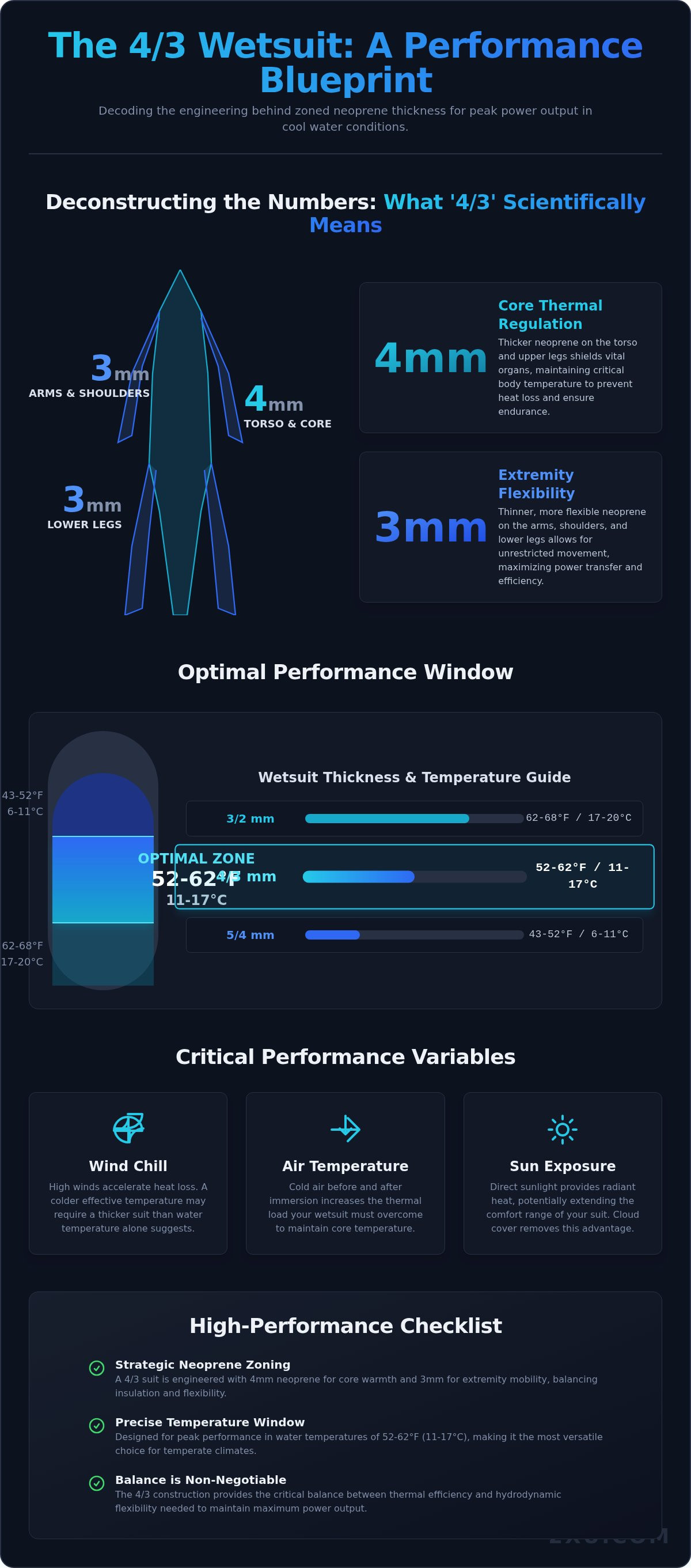
The numbers directly correspond to the neoprene thickness in millimeters (mm) in different zones of the suit:
- The '4' indicates that the neoprene panels covering your core-the torso and upper legs-are 4mm thick.
- The '3' indicates that the panels on your extremities-the arms, shoulders, and lower legs-are 3mm thick.
This differential design is the key to unlocking your performance potential, strategically balancing core thermal regulation with the biomechanical demands of your sport.
The Science of Neoprene Thickness
Neoprene is an advanced synthetic rubber, specifically a closed-cell foam containing thousands of inert nitrogen gas bubbles. These bubbles are poor conductors of heat, which is why neoprene is an exceptional insulator. The thickness of the material directly correlates to its thermal resistance; a thicker panel contains more trapped gas, thus preventing your body heat from escaping into the colder water. Each millimeter provides a quantifiable increase in thermal protection, a core principle detailed in The Science of Wetsuits that dictates how athletes can perform longer in demanding conditions.
Engineering Core Warmth vs. Extremity Flexibility
A 4 3 wetsuit is a product of meticulous bio-mechanical engineering. The thicker 4mm torso panel is designed to shield your vital organs, maintaining critical core body temperature and preventing the onset of cold shock and hypothermia. This is your primary defense system. Conversely, the 3mm panels on the arms, shoulders, and lower legs are engineered for maximum mobility. Thinner neoprene offers less resistance, allowing for an unrestricted and powerful swim stroke or paddling motion. This reduction in material density minimizes fatigue and maximizes power output, ensuring your mechanics remain efficient when it matters most.
The Optimal Performance Window: Water Temperature for a 4/3 Wetsuit
A 4/3 wetsuit is not a preference; it is a scientifically engineered tool for a specific operational window. Its design is calibrated for absolute dominance in cool water conditions, targeting a precise temperature range of 52-62°F (11-17°C). Within this window, the 4mm core and 3mm extremity panels provide critical thermal insulation without compromising the flexibility required for maximum power output. Scientific analysis of the performance properties of wetsuits validates that this thickness strikes a calculated balance, preventing both performance-degrading heat loss and restrictive overheating. For the dedicated athlete in temperate climates, this makes the 4 3 wetsuit the most versatile and strategic choice for year-round peak performance.
Wetsuit Thickness & Temperature Chart
This data provides a baseline for wetsuit selection. Your final decision must be calibrated against the external variables and personal physiological factors detailed below.
| Thickness | Water Temp (°F) | Water Temp (°C) |
|---|---|---|
| 3/2 mm | 62-68°F | 17-20°C |
| 4/3 mm | 52-62°F | 11-17°C |
| 5/4 mm | 43-52°F | 6-11°C |
Factoring in External Variables
Elite performance demands accounting for all variables. Water temperature is the baseline, but environmental factors directly impact your body's thermal efficiency and the functional demands on your equipment. Consider these critical inputs:
- Wind Chill: High winds accelerate convective heat loss from the body, making the effective temperature feel significantly colder than the reading on a thermometer.
- Air Temperature: Cold air before and after immersion will pre-cool or rapidly cool your body, increasing the thermal load your wetsuit must overcome.
- Solar Radiation: Direct sunlight provides radiant heat, which can extend the comfort range of your suit. Conversely, persistent cloud cover eliminates this advantage.
Assessing Your Personal Cold Tolerance
Your unique physiology is the final input in the performance equation. An honest assessment of your body's response to cold is non-negotiable for selecting the correct equipment to multiply your output.
- Metabolism & Body Composition: Athletes with higher muscle mass and a faster metabolic rate naturally generate more heat. Body fat percentage also contributes to insulation.
- Activity Level: High-intensity exercise like competitive surfing or triathlon swimming generates substantial body heat, potentially allowing for a thinner suit. Lower-intensity activities demand more insulation.
- Personal Baseline: Objectively determine if you typically run 'hot' or 'cold'. This innate sensitivity will dictate whether you should select a suit at the upper or lower end of its recommended temperature range.
Performance Impact: How a 4/3 Wetsuit Affects Flexibility & Buoyancy
A wetsuit is not merely insulation; it is an engineered tool designed to multiply human performance. A 4/3 suit represents a calculated balance between thermal efficiency and advanced hydrodynamics. By providing significantly more buoyancy than a thinner suit, it fundamentally alters your body position in the water. Understanding this impact is the first step toward leveraging it for a competitive advantage.
The Flexibility-to-Warmth Ratio
The core principle of wetsuit design is a trade-off: thicker neoprene delivers superior thermal retention but is inherently less flexible. The science of neoprene dictates this fundamental relationship. A 4 3 wetsuit is engineered to solve this equation. Placing 3mm neoprene through the arms and shoulders is a critical design choice, meticulously calculated to reduce stroke fatigue and maximize power output. While a 3/2 suit offers greater raw flexibility, the 4/3 provides the optimal ratio for athletes who refuse to compromise on performance in cool water conditions.
Engineered Buoyancy Zones
The 4mm core panel is a strategic hydrodynamic asset. Its primary function is to lift the torso and hips higher in the water, creating a more streamlined and efficient swimming posture. This elevated position drastically reduces form drag, allowing you to conserve critical energy over long distances. Less drag equals greater speed and endurance. This is not passive insulation; it is active performance enhancement. See how 2XU wetsuits are engineered for maximum buoyancy.
Sport-Specific Considerations
While a premium 4/3 wetsuit is a versatile performance tool, elite athletes must consider features specific to their discipline.
- Triathlon: Buoyancy in the core and legs is paramount to save energy for the bike and run. Unrestricted shoulder flexibility is non-negotiable for an efficient, powerful swim stroke.
- Surfing & Paddling: The key demands are maximum flexibility in the paddle zones (shoulders and back) and enhanced durability in high-abrasion areas like the chest and knees.
Always analyze a suit’s paneling and features to ensure its design is optimized for your specific athletic demands.
Key Features to Demand in a High-Performance 4/3 Wetsuit
A wetsuit's thickness is a critical variable, but it is not the sole determinant of performance. The true measure of an elite suit lies in its construction technology. Inferior materials and permeable seams will systematically negate the thermal advantages of a 4/3 design, compromising your endurance and power output in cold water. A superior 4 3 wetsuit is an integrated system of meticulously engineered technologies designed to work in unison. To achieve maximum thermal efficiency and hydrodynamic performance, you must scrutinize three core components: seam construction, entry system, and the quality of the neoprene itself.
Seam Construction: Engineered for Zero Water Ingress
The integrity of a wetsuit's seams dictates its ability to prevent cold water flushing. For peak performance, non-negotiable features include:
- Glued and Blind-Stitched (GBS) Seams: This construction method involves panels being glued together and then stitched from the inside, without the needle fully penetrating the neoprene. This process fundamentally minimizes water entry.
- Internal Taping: As a superior reinforcement, internal taping is applied over GBS seams. This provides a redundant seal against water ingress and drastically increases the durability of high-stress areas, ensuring the suit's longevity.
Conversely, avoid flatlock stitching at all costs. This permeable stitch is designed for warm-water conditions and is wholly unsuitable for a performance-grade cold-water suit.
Entry Systems: Optimizing Seal and Flexibility
The entry system directly impacts both water seal and upper-body mobility. While back zips offer easier entry, the chest zip is the scientifically superior choice for athletic performance. A chest zip utilizes a shorter zipper across the chest, which eliminates the long, rigid panel of a back zip. This results in unparalleled flexibility through the back and shoulders, allowing for an unrestricted range of motion. Furthermore, the smaller opening and overlapping collar design of a chest zip create a far more effective seal against water flushing.
Advanced Neoprene Technology
The foundation of any high-performance wetsuit is the neoprene. Demand premium, limestone-based neoprene, such as Japanese Yamamoto, which offers a scientifically proven higher stretch-to-insulation ratio. This advanced material provides maximum thermal retention without restricting movement, allowing you to maintain optimal power output. Look for proprietary hydrophobic coatings that not only reduce hydrodynamic drag but also increase durability by repelling water and resisting UV degradation. A superior 4 3 wetsuit is defined by its material science-choose the one engineered to multiply your performance. For a complete analysis of advanced wetsuit technologies, explore the engineered collection at 2xu.com.
Is a 4/3 Wetsuit Your Optimal Choice? A Performance Checklist
Choosing your wetsuit is a tactical decision, not a matter of comfort. It is a calculated assessment of environmental conditions versus performance demands. Use this data-driven checklist to determine if a 4 3 wetsuit is the engineered solution to multiply your output in cool water conditions.
Your selection is validated if your operational parameters align with the following metrics:
- Primary Water Temperature: Your training and competition environment is consistently between 52-62°F (11-17°C).
- Engineered Balance: You require superior thermal insulation than a 3/2 provides, but demand greater flexibility and range of motion than a restrictive 5/4 allows.
- Performance Demands: Your discipline requires absolute core warmth to maintain power output, coupled with significant upper-body mobility for an unrestricted stroke, paddle, or rotation.
When to Choose a 4/3 Over a 3/2
A 3/2 wetsuit becomes a liability when your body expends critical energy on thermoregulation instead of performance. Upgrade to a 4/3 if you experience a drop in power output or noticeable chill after 30-45 minutes of exertion. It is the superior choice for shoulder season campaigns (spring/autumn) or any session where the water drops below 62°F / 17°C, ensuring your core temperature remains stable and your muscles stay primed for maximum effort.
When to Upgrade to a 5/4 Wetsuit
Do not compromise your performance in genuinely cold conditions. If your environment regularly dips below 52°F / 11°C, a 5/4 is non-negotiable. For athletes with a lower tolerance for cold or those executing winter sessions in temperate climates, the advanced thermal protection of a 5/4 is required to prevent significant performance degradation and ensure physiological safety during prolonged exposure.
Maintaining Your 4/3 Wetsuit for Longevity
Your equipment is an investment in your performance. Execute this maintenance protocol without fail to protect its structural integrity and maximize its operational lifespan.
- Rinse Immediately: Flush the suit inside and out with fresh, cold water after every single use to eliminate corrosive salt and chlorine.
- Dry Correctly: Hang the suit inside-out on a proper wide-shouldered wetsuit hanger. Dry it completely in a shaded, ventilated area, away from direct UV radiation which degrades neoprene.
- Store Properly: Never leave it folded or compressed. Once dry, store it on its wide hanger to prevent permanent creasing and material stress in the shoulders.
Your ambition demands the right equipment. Explore our range of scientifically engineered wetsuits to find your performance advantage.
From Science to Superior Performance: Your Wetsuit Solution
Understanding your equipment is the first step toward unlocking your potential. A wetsuit's thickness is a precise calculation for thermal efficiency, and knowing the optimal temperature window for a 4 3 wetsuit is critical for maximizing power output. The difference between a standard suit and an advanced one lies in the science of its construction-affecting everything from your flexibility to your buoyancy in the water.
Your ambition demands equipment that is scientifically validated. 2XU wetsuits are meticulously engineered for optimal buoyancy and hydrodynamic efficiency, utilizing only premium Japanese Yamamoto neoprene for unparalleled performance. This commitment to technical excellence is why our gear is trusted by world champion athletes who refuse to compromise on their path to victory.
It is time to translate knowledge into action. Shop Engineered 4/3 Wetsuits for Peak Performance and experience the tangible advantage of superior technology. The water is your arena. Equip yourself to win.
Frequently Asked Questions
Can you wear a 4/3 wetsuit in the summer?
A 4/3 wetsuit is engineered for cold water, typically in the 50-60°F (10-16°C) range. Attempting to wear it in warmer summer conditions will induce rapid overheating, which severely compromises athletic performance and increases dehydration risk. For peak summer output, a 2mm or 3/2mm suit is the scientifically superior choice. Reserve the 4/3 for its intended thermal operating window to maintain maximum endurance and power without unnecessary thermal stress.
What should I wear under a 4/3 wetsuit?
For optimal performance and minimal drag, the standard is to wear nothing. This ensures a second-skin fit, preventing fabric bunching that can impede biomechanics and cause chafing. If necessary, a minimalist, form-fitting swimsuit or triathlon suit made from technical, quick-drying fabric is an acceptable alternative. Avoid cotton or loose garments, as they retain water, add weight, and will critically inhibit your performance and the suit's thermal efficiency.
How tight should a 4/3 wetsuit fit?
A performance wetsuit must fit like a second skin. It should be tight with no excess room, folds, or air pockets, particularly in the lower back, crotch, and underarms. This compressive fit is critical for minimizing water entry and maximizing the suit's thermal insulation properties. While it will feel restrictive on land, your range of motion should be largely uninhibited in the water. An improper fit directly negates the suit's engineered capabilities and your athletic output.
What is the main difference between a surfing and a triathlon 4/3 wetsuit?
The primary engineering distinction lies in their specific performance demands. A triathlon wetsuit is optimized for speed and hydrodynamics, featuring extremely flexible neoprene in the shoulders for an efficient swim stroke and slick outer coatings to reduce drag. Conversely, a surfing suit prioritizes durability and impact resistance, utilizing tougher, abrasion-resistant neoprene panels in areas of high wear from board contact. The material selection and panel construction are fundamentally different to meet these separate objectives.
How do I know if I need a 4/3 or a 5/4 wetsuit?
The decision is dictated by environmental data. A 4/3 wetsuit is engineered for water temperatures of approximately 50-60°F (10-16°C). A 5/4 is designed for colder conditions, typically 43-52°F (6-11°C). You must assess your specific conditions, including air temperature and wind chill, which significantly impact thermal loss. Choosing the correct thickness is a critical calculation to prevent hypothermia and maintain core muscle function for sustained peak performance.
Does a 4/3 wetsuit thickness make you float more?
Yes. The neoprene in any wetsuit provides positive buoyancy due to the thousands of trapped nitrogen gas bubbles within its structure. A 4 3 wetsuit offers more buoyancy than a thinner 3/2 suit simply due to its greater volume of neoprene. This engineered lift improves body position in the water, reducing hydrodynamic drag and conserving critical energy. This allows energy to be reallocated to power and endurance for a superior athletic output.