

You rolled out of bed for a Tuesday session and your knees felt like they needed a software update.
Not injured. Just behind. Stiff in a way they were not a decade ago, calves tight in a way that says, clearly and a little rudely, we are not 25 anymore.
You went ahead with the run because you always do. But the truth had already landed. You are training as consistently as you did at 40. You are doing the strength work. And the times keep sliding anyway.
Most runners your age quietly reach the same conclusion at this point. They decide they are past their best, that this is simply what running becomes after 50, and they make a slow peace with getting slower.
That conclusion is wrong. Not kind-of wrong. Mechanically, physiologically wrong. And the reason it is wrong is the most useful thing a masters runner can learn.
What actually changed
Here is what shifted, and it is not your talent. After 50, two things happen. Your tendons and connective tissue lose some of their springiness, the way an old rubber band dries out and stiffens. And your recovery window stretches. A hard session that used to leave you fresh by the next morning now takes 48 to 72 hours to clear, because the inflammation from hard efforts resolves more slowly and your cells repair at a gentler pace than they used to.
The problem is not that you got slower. The problem is that you recover slower. Those are not the same problem at all.
Why both instincts backfire
Which is why the two things every masters runner reaches for both fail.
The first instinct is to train harder. Push through, add mileage, hammer the sessions like you used to. But if your body now needs 48 to 72 hours to absorb a hard effort and you keep loading it every second day, you never complete a repair cycle. You just accumulate fatigue and call it ageing. Training harder makes the exact problem worse.
The second instinct is to accept it. Decide the good days are behind you and dial everything down. That feels like wisdom. It is really just surrender with better PR.
Both instincts miss the lever, because the lever is not in the training at all. It is in the recovery.
Recovery arithmetic
The masters runners who keep getting faster, and they absolutely exist, the ones setting age-graded personal bests in their 50s, are not the ones training the hardest. They are the ones recovering the fastest.
The logic is simple. If you can compress that 48-to-72-hour window even a little, you can put in more quality sessions per month without breaking down. More quality sessions is what drives adaptation. Adaptation is what makes you faster. So the single highest-leverage thing you can do after 50 is not add another hard run. It is recover faster between the ones you already do.
The runner who recovers fastest wins the training block.
Muscle Containment Stamping
One of the most established ways to speed recovery is compression, and the most advanced version comes from an Australian company called 2XU, founded in Melbourne in 2005 by a former professional triathlete. The name is pronounced two times you. Their reason for existing is written on everything they make: human performance, multiplied.
Their compression does two jobs, which map neatly onto the two things that changed in your body. During a run, a system called Muscle Containment Stamping, a web of silicone stamped inside the fabric, traces your quads and calves and grips them, reducing the oscillation that stiffer older tissue tolerates far worse than young tissue does. Less oscillation means less micro-damage, which means less to repair afterwards.
After a run, firm graduated compression rated at 23 to 25 millimetres of mercury, highest at the ankle, drives blood back up out of the legs and speeds the clearance of the waste products that make recovery drag. That is the half that matters most to you, which is why 2XU makes a dedicated recovery tight, the Refresh, designed to be worn after the session and even overnight, so the repair window is working while you sleep.
What the AIS found
None of this is marketing you have to trust on vibes. 2XU is the official supplier of compression garments to the Australian Institute of Sport, and the AIS tested the gear independently.
Blood lactate cleared about 4.8 percent faster across a 60-minute recovery, and a 2025 systematic review found graduated compression preserved muscle strength and power for more than 72 hours after hard exercise. Every garment is pressure-tested on Salzmann devices so the graduation is exact.
That 72-hour figure is your window. The exact one that got longer when you turned 50 is the one this was built to shorten.
Runners describe the effect in blunt terms. One masters athlete wrote that after a hard weekend they pulled the tights on, felt instant relief through the whole lower body, and woke the next morning with legs that were not sore at all, something they could not say before. Another said sleeping in them seemed to have them ready for the next session faster.
Two things worth saying straight
This is not a mobility aid, and it is not gear for people who have given up. It is the opposite. It is the same equipment elite athletes and Olympians use to squeeze more quality out of a training week, applied to the exact bottleneck that opens up with age. If anything it belongs to the runner who refuses to coast.
And on price: a perform pair and a recovery pair together are a real investment, around AUD$170 each. But you are not buying leggings. You are buying back training days, the quality sessions you currently lose to a recovery window that runs too long. Runners report wearing the same pairs for years. Measured per session recovered, it is not expensive. It is efficient.
Age changes the game. It does not end it. You cannot train like you are 25, and you do not have to, because training like you are 25 was never the point.
The point is to become dangerous in a different way: the runner who recovers smarter than everyone around him and quietly keeps improving while they resign themselves to slowing down. You are not past your best. You have just been fighting the wrong battle, the one against your training load, when the one that matters is the one for faster recovery.
Win that, and the fast 50-something in the results, the one the younger runners glance at and wonder about, is you.
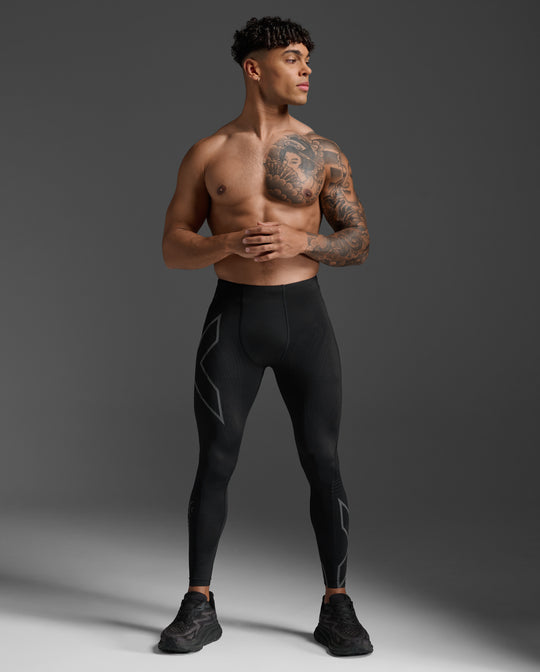
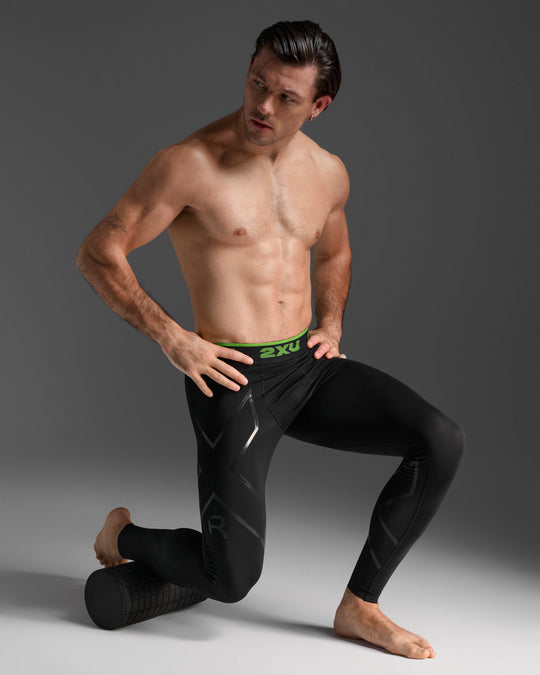
Recover smarter, not slower
Turn your recovery window into your advantage.
Shop Light Speed and Refreshor 4 payments from AUD$32.50 per garment · Free standard shipping over AUD$80