
Triathlon Cycling Gear: Engineering Peak Output for the Middle Leg
Your bike leg is not a recovery period; it is a high-stakes engineering challenge where the right triathlon cycling gear determines if you arrive at T2 ready to run or physically depleted. Most athletes respect the grind of training but overlook the mechanical fatigue caused by sub-optimal equipment. You have felt the burn of inefficient moisture management and the distraction of a poor chamois design during a long-distance haul. We understand that discipline alone cannot overcome the laws of physics.
Master your mechanics. This technical guide provides the data-driven framework needed to multiply your output through jerseys, bibs, and gilets engineered for the elite. You will learn how to reduce aerodynamic drag, optimise muscle stability through advanced compression, and manage temperature spikes with high-filament cooling fibres. We are here to move beyond average standards by exploring the laboratory-validated gear that ensures your physical potential is multiplied, not wasted, before you hit the pavement for the final leg.
Key Takeaways
- Engineering the middle leg requires a focus on both aerodynamics and biological recovery to protect your output for the run.
- Elite performance jerseys utilise high-filament yarns and streamlined construction to manage moisture and reduce drag during high-intensity efforts.
- Minimise mechanical fatigue with bibs featuring ergonomic chamois designs that provide stability on the saddle while allowing for a seamless transition to the run.
- Master the elements with versatile gilets that provide windproof protection for early starts without compromising the breathability required for peak performance.
- Discover how the 2XU collection of 32 items allows you to customise your triathlon cycling gear to multiply your physical potential across any race distance.
Engineering the Middle Leg: The Role of Triathlon Cycling Gear
The middle leg of a triathlon is a relentless, high-velocity grind that demands more than just raw grit. It is a calculated test of efficiency where your triathlon cycling gear functions as a specialised performance system rather than mere apparel. The cycling phase requires you to maintain an aggressive aerodynamic profile while simultaneously managing biological recovery for the final run. Every watt you save through reduced drag is a watt you can spend on the pavement later. We engineer our gear to provide a mechanical advantage, using technical fabric selection to prove the concept that the human is multiplied. Our commitment to an elite standard is designed for every athlete willing to respect the work required to reach the finish line. Whether you are aiming for a podium or a personal best, your equipment must be as disciplined as your training schedule.
The Science of Aerodynamics and Drag
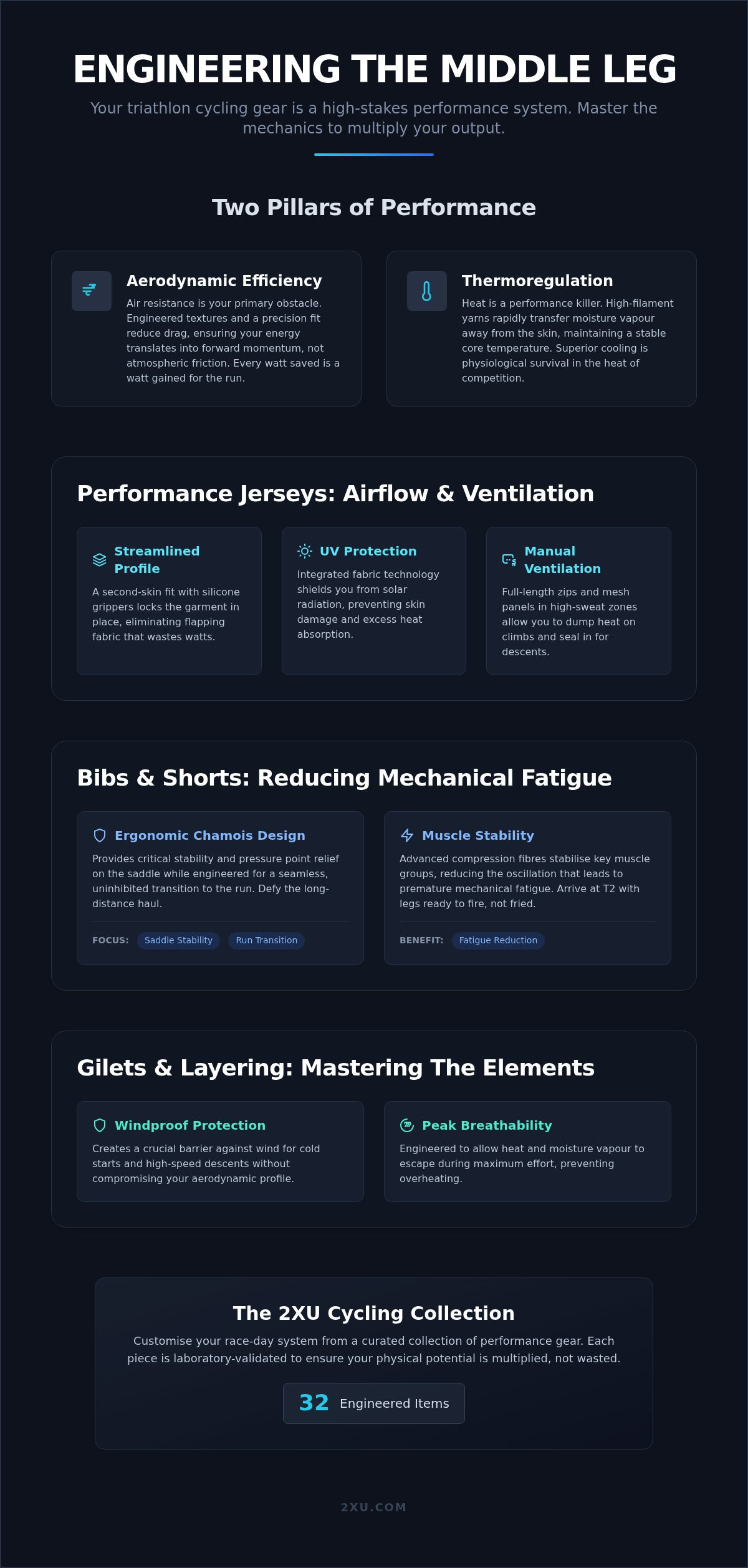
Air resistance is the primary obstacle to speed on the road. Engineered textures on performance jerseys are designed to disrupt the boundary layer of airflow, creating a small amount of turbulence that actually helps the air stay attached to the body longer, reducing the low-pressure wake behind the rider. A precision fit is equally vital; loose fabric creates massive watt losses through flapping and air entrapment. By eliminating these inefficiencies, you ensure that your energy translates directly into forward momentum rather than fighting the atmosphere. We use rigorous testing to validate these gains, ensuring the equipment meets the demands of high-speed racing. Aerodynamic drag reduction is the mathematical process of minimising the surface area and air-friction coefficient of the athlete through the application of advanced performance fibres.
Moisture Management and Thermoregulation
Heat is a performance killer. Our technical apparel utilises high-filament yarns to rapidly pull moisture vapour away from the skin to the external surface of the fabric for evaporation. Effective wicking is critical for maintaining a stable core temperature, preventing the spikes that lead to premature muscle fatigue. If your body is struggling to cool itself, it cannot effectively fuel your legs. Proper thermoregulation ensures you arrive at T2 ready to execute your run strategy. Superior cooling is not just about comfort; it is about physiological survival in the heat of competition. For those focused on total system readiness, integrating compression shirts into your pre-race protocol can further prepare the cardiovascular system for the intensity of the middle leg.
Performance Jerseys: Optimising Airflow and Ventilation
Your jersey is the interface between your torso and the atmosphere. In the high-velocity environment of the middle leg, every square centimetre of fabric must work to reduce drag. Elite triathlon cycling gear prioritises a streamlined silhouette to ensure you aren't fighting your own apparel. Silicone grippers at the hem and sleeves are non-negotiable; they lock the garment in place, preventing the ride-up that destroys your aerodynamic profile. When you are pushing through the grind of a 180km leg, stability is a mechanical requirement.
Long-course events subject you to hours of intense solar radiation. Integrated UV protection in the fabric isn't a luxury; it's a physiological requirement to prevent skin damage and excessive heat absorption. We utilise high-filament yarns that facilitate rapid moisture vapour transfer. Unlike standard materials that become heavy and sodden with sweat, these advanced fibres maintain their structural integrity and lightness throughout the ride. This ensures your power-to-weight ratio remains optimised, proving that your potential is multiplied by the gear you choose.
Selecting the right fit is a matter of tactical intent. A 'Pro' cut offers a second-skin fit designed for maximum watt savings, ideal for athletes with a lean, aggressive racing posture. Conversely, a 'Performance' cut provides a slightly more accommodating silhouette for athletes who prioritise a balance of comfort and speed over the course of several hours. Respect your body type and race distance when making this selection. If you are looking to refine your setup, you might consider how elite cycling jerseys can transform your thermal management on the road.
Zipping and Ventilation Tactics
Full-length zips allow for manual thermoregulation during fluctuating intensities. Open them completely on steep, low-speed climbs to dump excess heat, then secure them for high-speed descents to maintain your aerodynamic seal. Mesh panelling in high-sweat zones, such as the underarms and central back, ensures targeted ventilation where it's needed most. Flapping fabric is wasted energy. Ensure your jersey is taut across the chest and shoulders to maintain laminar airflow and avoid common drag penalties.
Storage Solutions for Endurance
Nutrition is your fuel, but bulky pockets act as parachutes. Streamlined rear pockets are engineered to sit flat against the lower back when empty and expand only to hold essential gels or bars. Discipline your packing. Carry only what is necessary to sustain your physical output; excessive weight or bulk will compromise your efficiency. You can find these precision-engineered storage solutions within the cycling collection, which is designed to support the athlete from the first pedal stroke to the final transition.
Bibs and Shorts: Reducing Mechanical Fatigue
The middle leg is where the run is won or lost. Integrating high-performance bibs into your triathlon cycling gear setup is a tactical decision that pays dividends in the final kilometres of the race. While many athletes focus solely on the bike, we view this stage as a critical period of active recovery for the run. This is where advanced compression technology becomes your greatest asset. By applying graduated pressure to the primary muscle groups of the legs, we can significantly reduce muscle oscillation. This reduction in vibration prevents micro-trauma to the muscle fibres, effectively delaying the onset of fatigue and ensuring your legs remain fresh for the transition. While separate bibs offer superior support for the middle leg, you can find a detailed comparison with one-piece alternatives in the ultimate triathlon suit guide.
Mechanical fatigue is not just about muscle soreness; it is about the energy wasted through inefficient movement. Standard cycling shorts often lack the structural integrity required for the intense grind of a triathlon. High-performance bibs use ergonomic panelling to support the body in an aggressive aero position for hours. This support allows you to maintain peak power output without the constant micro-adjustments that drain your glycogen stores. Respect the work you have put into training by choosing gear that protects your physical investment.
Bib Shorts: The Choice for Stability
Stability is the foundation of power. Bib shorts are the preferred choice for long-distance events like the 90km or 180km leg because the strap design eliminates the need for a restrictive waistband. This allows for unrestricted diaphragmatic breathing, which is essential for maintaining oxygen saturation during high-intensity efforts. The mechanical benefit of bib straps is that they keep the chamois perfectly positioned against the body, regardless of how much you move in the saddle. In the heat of the grind, a shifting chamois leads to chafing and lost focus. Bibs ensure your focus remains entirely on the road ahead.
Anatomy of a High-Performance Chamois
Padding is a matter of science, not just thickness. A common mistake is assuming more padding equals more comfort. In reality, excessive thickness can lead to a "nappy" feel that interferes with your running gait during the transition. We prioritise density over bulk. A high-density chamois provides the necessary skeletal support for long-distance riding while remaining low-profile enough to disappear during the run. Anti-bacterial properties and moisture-wicking top layers are essential for maintaining skin health in high-friction zones. A 2XU chamois is engineered for long-distance stability, using graduated density to provide structural support where skeletal pressure is highest without impeding the biomechanics of the run.
Gilets and Layering: Mastering the Elements
Mastering the elements is a matter of tactical discipline. Early morning race starts often present a thermal challenge that can compromise your power output before the first hour is complete. A gilet is a vital component of your triathlon cycling gear, acting as a lightweight barrier against wind chill and light precipitation. By protecting your core, you prevent the body from wasting energy on thermoregulation, allowing those calories to be converted into mechanical force. Packability is the elite standard here. Your equipment must be capable of compressing into a minimal volume, fitting seamlessly into a jersey pocket once the ambient temperature rises. We engineer these pieces to be efficient, ensuring that your performance is multiplied by intelligent preparation rather than hindered by the environment.
Layering is not just about staying warm; it's about maintaining physiological equilibrium. When the body gets too cold, muscles tighten and blood flow to the extremities is reduced, leading to a drop in efficiency. Conversely, overheating leads to excessive sweating and cardiovascular strain. The goal is to stay within a narrow thermal window. Discipline in your layering strategy ensures you don't arrive at the run transition depleted by the simple act of trying to stay warm. Respect the grind by preparing for every possible atmospheric variable.
Protection Without the Bulk
A gilet provides targeted insulation where it matters most. By shielding the chest and torso, you maintain a stable internal temperature while allowing the arms to shed excess heat through the jersey sleeves. This creates a balanced thermal profile that prevents overheating during sustained efforts. Our technical fibres are engineered for a natural, high-performance feel that avoids the plasticky sensation of inferior materials. For those training in the margins of the day, integrated reflective details ensure visibility during low-light sessions, because the grind doesn't stop for the sun. You can explore high-performance gilets designed to withstand the most demanding conditions.
Tactical Shedding During the Race
Race-day success is predicated on your ability to adapt without losing momentum. Study the temperature forecast and plan your layers with mathematical precision. If the mercury is expected to climb rapidly, your layering strategy should allow for quick shedding without breaking your tuck. Removing a gilet while maintaining a high pace requires practice and coordination; it's a mechanical skill as much as it's a tactical one. As you approach T2, your focus shifts from the bike to the final leg. Just as you optimise your cycling setup, you must prepare for the transition to running shorts engineered for speed. Every second saved in shedding gear is a second gained on the course.
The 2XU Cycling Collection: Multiplying Your Performance
The 2XU cycling collection is the result of rigorous Australian engineering and a refusal to accept average standards. We offer a range of 32 cycling-specific items, each engineered to serve as a tactical extension of the athlete. This is not just apparel; it is a validated performance system designed to ensure the human is multiplied. Every piece undergoes exhaustive laboratory testing and elite athlete validation to prove its efficacy before it ever reaches the road. We don't guess. We measure. When you choose our triathlon cycling gear, you are investing in equipment that has been proven to enhance power output and accelerate recovery through advanced mechanical support.
Building your kit requires a selection framework based on the specific demands of your race distance. For short-course sprints, prioritise high-velocity aerodynamics and rapid moisture vapour transfer. Long-course athletes must shift their focus toward maximum muscle stability and ergonomic support to withstand the grind of 180km. Respect the distance by equipping yourself with the specific tools required to conquer it. Your results are earned through discipline in training and precision in gear selection.
Standout Products for the Competitive Athlete
Success on the road is a game of marginal gains. Our collection provides the following essential tools for the serious competitor:
- 2XU Cycling Jersey: Engineered with high-filament yarns to facilitate cooling and streamlined pockets to maintain a laminar airflow profile.
- 2XU Bib Shorts: Utilises proprietary fabric technology to reduce muscle oscillation and an ergonomic chamois for skeletal stability during long-duration efforts.
- 2XU Cycling Gilet: A packable, wind-resistant layer that provides essential core protection during fluctuating thermal conditions without adding unnecessary bulk.
Selecting Your Size for Aerodynamic Advantage
A precision fit is the difference between watt savings and wasted energy. To achieve the intended aerodynamic advantage, your triathlon cycling gear must fit like a second skin. Loose fabric creates turbulence, which increases drag and forces your body to work harder to maintain speed. Use a flexible tape to measure your chest, waist, and hips, then consult the 2XU size guide to ensure your gear provides the correct level of compression. This tight interface is what allows our performance fibres to effectively manage moisture and stabilise muscle tissue. Don't settle for "close enough" when mathematical improvements are on the line. Shop the full 2XU Cycling Collection now and equip yourself for the grind ahead. Earn your place on the podium with the gear that multiplies your potential.
Dominate the Road Leg with Precision Engineering
The middle leg is a calculated test of mechanical efficiency and physiological resilience. You have seen how streamlined jerseys and ergonomic bibs reduce drag and delay muscle fatigue, protecting your physical output for the final run. Selecting the right triathlon cycling gear is not a matter of style; it is a tactical requirement for those who respect the grind and refuse to leave their results to chance. Our range of 32 specialized cycling products is built on a foundation of laboratory-validated performance fibres designed specifically for the elite athlete. We don't accept average standards, and neither should you. Every watt saved and every muscle stabilised is a mathematical step toward your next personal best. The road is unyielding, but with the right engineering, you can outpace the competition and arrive at T2 ready to strike. It is time to stop guessing and start multiplying your potential.
Multiply your output with the 2XU Cycling Collection
Respect the work you have put in. Earn your place on the podium through discipline and the best equipment available. The finish line is waiting.
Frequently Asked Questions
What is the difference between triathlon cycling gear and standard road cycling gear?
Triathlon cycling gear is engineered as a specialised system that accounts for the physiological transition from the swim and toward the run. Unlike standard road apparel, these garments prioritise rapid moisture vapour transfer to dry the body after the swim while using technical fibres that maintain a second-skin fit even when wet. The construction is focused on non-drafting aerodynamics, ensuring the athlete remains streamlined during solo efforts against the wind.
Should I wear a gilet during the cycling leg of a triathlon?
Deploy a gilet if the race-day forecast indicates low morning temperatures or significant wind chill on descents. This tactical layer protects your core temperature, preventing the body from wasting energy on thermoregulation that should be used for power output. Ensure your gilet is packable enough to fit into a jersey pocket once the ambient temperature rises, allowing you to maintain physiological equilibrium throughout the grind.
How do I choose between bib shorts and regular cycling shorts for a triathlon?
Choose bib shorts for long-distance stability and unrestricted diaphragmatic breathing. The strap system eliminates the need for a restrictive waistband, which is critical for maintaining oxygen saturation during high-intensity efforts. While regular shorts are acceptable for shorter sprints, the mechanical support and secure chamois positioning of bibs are essential for the 90km or 180km leg to prevent chafing and skeletal discomfort.
Can I use a regular cycling jersey for a triathlon, or do I need a specific one?
Race-day performance demands a triathlon-specific jersey to eliminate the drag penalties associated with loose, flapping fabric. Standard jerseys often lack the streamlined pocket architecture required to carry nutrition without compromising your aerodynamic profile. Specific jerseys utilise high-filament yarns that don't hold water, ensuring you stay light and efficient after the swim transition rather than carrying excess weight into the bike leg.
What features should I look for in a triathlon-specific chamois?
Prioritise graduated density over sheer thickness to ensure skeletal support without impeding your running gait. A high-performance chamois must be low-profile enough to disappear during the final leg while providing enough cushioning to manage road vibration. Look for anti-bacterial properties and moisture-wicking top layers to protect skin health in high-friction zones during several hours of sustained movement.
How does compression in cycling gear help with the final run leg?
Compression stabilises the primary muscle groups to reduce oscillation and micro-trauma caused by road vibration. By minimising this mechanical fatigue during the bike leg, you preserve glycogen stores and arrive at T2 with fresher legs. This graduated pressure facilitates better circulation, ensuring that your triathlon cycling gear acts as a multiplier for your physical potential when you transition to the pavement.
Is it better to have a tighter fit for aerodynamics or a looser fit for comfort?
A tighter, precision fit is non-negotiable for any athlete seeking a mathematical advantage in speed and thermoregulation. Looser gear creates air entrapment and drag, which forces the cardiovascular system to work harder for the same velocity. A second-skin fit ensures the technical fibres remain in constant contact with the skin, allowing the high-filament yarns to effectively pull sweat away for rapid evaporation.
How do I care for my technical cycling gear to ensure it lasts through the Grind?
Rinse your gear in cold water immediately after every session to remove corrosive salts and sweat. Avoid using fabric softeners, as these chemicals clog the high-filament yarns and destroy the moisture-wicking capabilities of the fabric. Always air dry your apparel in the shade; excessive heat from dryers will compromise the elasticity of the performance fibres and degrade the structural integrity of the garment.